


A clutch usually gives you a bit of warning before it gives up completely. The trouble is, those early signs are easy to put down to age, driving style or a one-off bad gear change. If you are searching for clutch replacement Wodonga drivers can rely on, it helps to know what the symptoms mean, what the repair should involve, and where the real cost sits.
For most people, the biggest issue is not just the repair bill. It is the hassle of being without the car, the worry that the problem might get worse quickly, and the uncertainty around whether the clutch actually needs replacing at all. That is why proper diagnosis matters. A slipping clutch, a heavy pedal or trouble selecting gears can all point to clutch trouble, but they can also involve hydraulic faults, worn linkages or related driveline issues.
When clutch replacement in Wodonga is usually needed
A clutch is a wear item, but it does not wear out in exactly the same way on every vehicle. A commuter car used mostly on the highway may get a long life from its clutch. A ute that tows regularly, a 4×4 with larger tyres, or a vehicle that spends a lot of time in stop-start traffic will usually put more load through the system.
The clearest sign that replacement is getting close is clutch slip. You press the accelerator, the engine revs rise, but the vehicle does not pick up speed as it should. This often shows up first in higher gears or when driving uphill. Once it starts happening regularly, the clutch friction material is often near the end of its life.
A clutch that shudders on take-off is another common warning sign. Sometimes that comes from wear on the clutch plate or pressure plate. In other cases, it may point to heat damage, contamination, or a worn flywheel surface. If the pedal feels unusually heavy or the bite point has changed suddenly, that is worth checking as well.
Difficulty selecting gears can also be part of the picture. Drivers often assume this means the gearbox is failing, but that is not always the case. If the clutch is not disengaging properly, the gearbox cannot do its job cleanly. That can be caused by a worn clutch assembly, but it can also be linked to the master cylinder, slave cylinder or other hydraulic components.
Common signs you should not ignore
Some clutch problems build slowly. Others get bad fast. If you notice a burning smell after reversing, towing or climbing a hill, that can be a sign the clutch is overheating. If the pedal starts sticking, feels soft, or drops to the floor, the vehicle should be inspected sooner rather than later.
Noises matter too, but they need to be interpreted properly. A squeal when the pedal is pressed may point to a release bearing issue. Rattling or vibration can suggest broader wear in the clutch or flywheel area. None of these signs automatically mean the same repair on every vehicle, which is why guessing usually costs more in the long run.
It is also worth paying attention to when the issue happens. A vehicle that only slips under load tells a different story to one that is hard to get into first gear at traffic lights. Those details help narrow down the fault before any parts are replaced.
What causes clutch wear?
Normal use is the obvious one, but driving conditions make a big difference. Stop-start commuting wears a clutch differently from open-road driving. Holding the car on the clutch at lights or on hills creates extra heat. Towing caravans, trailers and work loads adds more stress again, especially in regional areas where vehicles often do a mix of town driving and highway kilometres.
Vehicle setup matters as well. Modified 4x4s, larger tyres and increased weight all ask more from the driveline. If the clutch is marginal for the way the vehicle is now being used, it may wear earlier than expected. In those cases, replacing the clutch is only part of the solution. The replacement components need to suit the job.
Oil contamination can also shorten clutch life. A rear main seal leak or gearbox input shaft seal leak can allow fluid onto the clutch surfaces, causing slipping and shudder. If that underlying problem is missed, a new clutch may not last the way it should.
What a proper clutch replacement should include
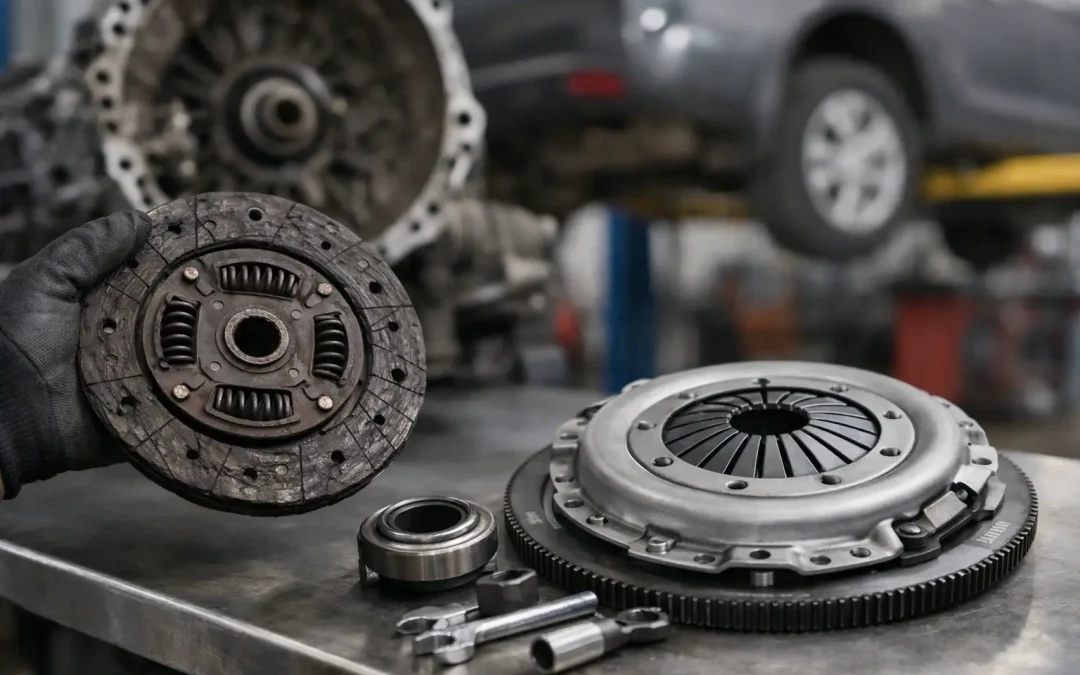
A clutch replacement is not just a matter of swapping one disc for another. Done properly, it starts with confirming the fault and checking for anything else that could affect the repair. Once the gearbox is removed, the condition of the clutch plate, pressure plate, release bearing and flywheel all need to be assessed.
In many cases, the clutch kit includes the main wear components. Depending on the vehicle, the flywheel may need machining or replacement. Hydraulic parts should also be inspected closely, especially if there have been symptoms like a soft pedal or poor disengagement. Replacing the obvious failed part while leaving worn supporting components behind is rarely the cheapest option once labour is factored in.
This is where a specialist workshop approach matters. With clutch work, much of the cost is in labour. If the gearbox has to come out, it makes sense to deal with the components that are likely to cause trouble next. That does not mean replacing parts for the sake of it. It means making sound recommendations based on wear, access and long-term reliability.
Clutch replacement Wodonga drivers often ask about cost
There is no single price for clutch replacement because vehicle type changes everything. A small passenger car is different from a diesel 4×4, and both are different again from a commercial vehicle. Labour time, parts quality, flywheel condition and whether hydraulic components are involved all affect the final figure.
What matters more than finding the cheapest quote is understanding what is included. A low price may not include a quality clutch kit, flywheel work or the parts needed to fix the actual cause of the fault. On the other hand, a higher quote is only worth it if the diagnosis is right and the job is being done properly.
Good workshops explain the difference clearly. They will tell you whether the flywheel needs attention, whether there are signs of fluid leaks, and whether any related parts should be replaced at the same time. Straight answers are especially important when the vehicle is your daily transport or part of your work.
Why quality parts make a difference
Not all clutch components perform the same, particularly in vehicles that tow, carry loads or spend time off-road. The right clutch for a family hatch is not necessarily the right clutch for a touring 4×4 or a work ute. Getting that choice wrong can mean poor pedal feel, premature wear or a repair that does not hold up to real use.
That is why quality brands and correct application matter. A clutch should suit how the vehicle is actually driven, not just what it looked like on paper when it left the factory. For local drivers who need reliability, especially across Albury-Wodonga and surrounding regional roads, durability is not a nice extra. It is the point of the repair.
At Albury Brake and Clutch Centre, that specialist approach matters because clutch and brake work is the core of the business, not a sideline. The aim is simple – diagnose it properly, use quality parts, and get the vehicle back on the road with confidence.
Repair or replace?
Sometimes a customer comes in hoping the clutch can be adjusted or patched up. In a few cases, the issue may be hydraulic rather than mechanical, and that can change the repair path. But if the clutch friction material is worn out, slipping badly, heat-damaged or contaminated, replacement is usually the only sensible answer.
Trying to stretch out a failing clutch often leads to more inconvenience. You may end up stranded, unable to select gears, or dealing with extra damage that could have been avoided. Acting early usually gives you more options and less stress.
Choosing a workshop for clutch work
Clutch repairs sit in that category where experience counts. The symptoms can overlap with gearbox faults, hydraulic issues and driveline wear, so the diagnosis needs to be right from the start. You want a workshop that knows what it is looking at, explains the problem in plain language and does not push work you do not need.
Fast turnaround matters too, but not at the expense of quality. A rushed job that skips flywheel checks or ignores hydraulic wear can leave you paying twice. A proper repair should feel right from the first drive and keep doing its job well after you have left the workshop.
If your vehicle is slipping, shuddering, hard to get into gear or simply not feeling right, getting it checked sooner is the practical move. A clutch rarely fixes itself, but a clear diagnosis can save a lot of guesswork, and that is usually the first step towards getting back on the road without the drama.