


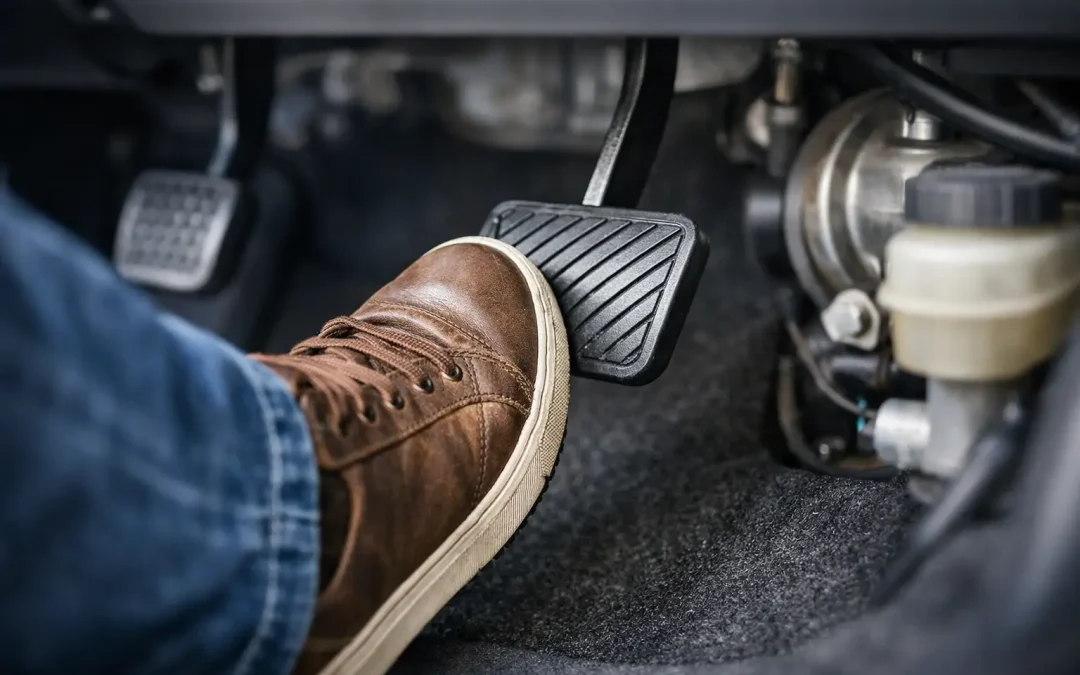
A brake pedal that suddenly takes real effort to push is not something to put off until the next service. Your vehicle may still stop, but if you are asking, “why does brake pedal feel hard?”, the power assistance that makes braking easy and controlled may not be doing its job. That can mean longer stopping distances, more effort in an emergency and a vehicle that is no longer safe to drive normally.
The key detail is when the pedal feels hard. A firm pedal with the engine switched off is normal. A hard pedal while the engine is running and you are driving is a fault that needs proper diagnosis.
What a hard brake pedal usually means
Most modern cars, utes and 4WDs use a brake booster, also called a brake servo, to multiply the force from your foot. It uses engine vacuum, or on some vehicles a dedicated vacuum pump, to provide that assistance. Without it, you can still apply the brakes, but you need to push much harder.
This is different from a spongy pedal, which often points to air in the brake fluid or another hydraulic issue. A hard brake pedal generally points to a loss of brake assistance. The brakes may feel as though they are working, but they can require far more pressure than usual and become difficult to modulate.
If the pedal has gone hard all at once, treat it as a safety issue. Leave more room between your vehicle and traffic, avoid towing or carrying heavy loads, and arrange an inspection as soon as practical.
Why does a brake pedal feel hard while driving?
A failed brake booster
The brake booster is one of the most common causes. Inside the unit is a diaphragm that relies on vacuum to assist your braking effort. If that diaphragm splits, leaks or the booster develops an internal fault, the assistance can disappear.
You may notice the pedal is particularly hard at low speed, when parking, or in stop-start traffic. Some vehicles also produce a hissing noise from around the pedal area when the brake is pressed. A failed booster is not a part to guess at or replace on suspicion. The vacuum supply and related components should be checked first, then the booster itself tested properly.
A split or loose vacuum hose
The hose between the engine or vacuum pump and the brake booster has a simple but important job. If it cracks, collapses, comes loose or leaks at a connection, the booster may not receive enough vacuum.
Heat, age and oil contamination can all damage rubber hoses. Under-bonnet hoses can look acceptable from above but be soft, split underneath or loose at the fitting. A workshop can test the system for leaks rather than relying only on a visual check.
A faulty one-way check valve
Most booster systems include a one-way valve in the vacuum line. This valve stores vacuum in the booster for a short time and stops it flowing back towards the engine. It is why you may have one or two assisted brake applications after switching the engine off.
When the valve fails, brake assistance can be inconsistent or disappear quickly. The pedal may feel normal at first, then become hard after a few presses. It is a relatively small component, but it has a major effect on how the brake pedal feels.
A vacuum pump problem
Many diesel vehicles, and some petrol engines, use a mechanical or electric vacuum pump because they do not create enough intake vacuum for the brake booster. If the pump is weak, faulty or has an electrical supply issue, there may not be enough assistance available.
This is especially relevant for diesel 4WDs used for towing and touring. A brake problem can be easier to miss when the vehicle is unloaded around town, then become obvious when there is a caravan, trailer or full load of gear behind it. A hard pedal under those conditions is not something to test your luck with.
An engine running fault affecting vacuum
A rough idle, stalling issue or serious vacuum leak elsewhere in the engine can reduce brake booster assistance. In some cases, pressing the brake pedal may even alter the engine idle. That does not always mean the booster is definitely at fault, but it is a useful clue for a technician.
The right repair depends on the cause. Replacing brake parts will not fix an engine vacuum problem, and fixing an engine fault alone will not help if the booster or check valve has failed too. This is why accurate diagnosis matters.
Brake binding or mechanical issues
A hard pedal is most often an assistance problem, but it can sometimes be accompanied by a separate braking fault. Seized calipers, restricted flexible brake hoses, incorrectly fitted components or heavily worn brake hardware can make a vehicle feel odd under braking.
These faults more commonly cause pulling, overheating, a burning smell, poor fuel economy or a wheel that is excessively hot after driving. They still need attention quickly, particularly because overheated brake components can lose performance and suffer permanent damage.
A simple check you can do safely
You can carry out a basic booster check while the vehicle is stationary in a safe place. With the engine off, press the brake pedal several times until it becomes firm. Keep steady pressure on the pedal, then start the engine.
If the booster is working, the pedal should sink slightly as the engine starts and vacuum assistance becomes available. If it stays high and hard, there may be a problem with the booster, vacuum supply, check valve or pump.
This is only a preliminary check, not a diagnosis. Do not disconnect brake hoses, spray chemicals around the engine bay or continue driving to see if the issue improves. Brake systems are safety-critical, and a vehicle can have more than one fault at the same time.
When should you stop driving?
If you need both feet to push the pedal, braking response has changed suddenly, the brake warning light is on, or the vehicle does not stop as confidently as usual, do not drive it. Arrange recovery or speak with a brake specialist about the safest next step.
If the vehicle still stops but the pedal is clearly harder than normal, drive only as far as necessary to have it inspected. Keep speeds low, increase following distance and avoid hills, heavy traffic, towing and loads where possible. Never assume the problem is minor because the pedal feels firm. A firm pedal can still mean you have lost most of your power assistance.
How a proper brake inspection finds the cause
A proper inspection starts with the symptom, not a parts list. A technician should check brake pedal operation, booster function, vacuum readings, hoses, fittings and the one-way valve. On vehicles with vacuum pumps, the pump output and related controls may also need testing.
The braking system itself should be checked at the same time. That includes fluid condition, pads, rotors, calipers, flexible hoses and signs of heat damage or binding. This approach avoids replacing a booster when the actual issue is a cracked hose, or overlooking a second fault that could affect braking performance.
At Albury Brake and Clutch Centre, the focus is on straight answers and repairs done properly. Whether it is an everyday family car, a work ute or a 4WD set up for towing, the aim is to identify what has failed, explain the required repair clearly and fit quality parts suited to the vehicle.
Common questions about hard brake pedals
Is a hard brake pedal ever normal?
Yes, when the engine is off. After a few presses, stored vacuum is used up and the pedal will become firm. Once the engine starts, it should soften slightly as brake assistance returns. A hard pedal with the engine running is not normal.
Can low brake fluid cause a hard pedal?
Low brake fluid more often causes a soft, low or inconsistent pedal, rather than a hard one. It can still indicate a serious leak or worn brake components, so it should never be ignored. The fluid level is only one part of diagnosing brake trouble.
Can I drive with a failed brake booster?
Technically, the brakes may still operate because the hydraulic system remains in place. In practice, the pedal can require much more force and emergency braking becomes harder. It is not a fault to live with, particularly around school zones, traffic lights, wet roads or when towing.
Your brake pedal should not make you work for every stop. If it has become hard, get it checked before a routine drive turns into the moment you need maximum braking effort.