


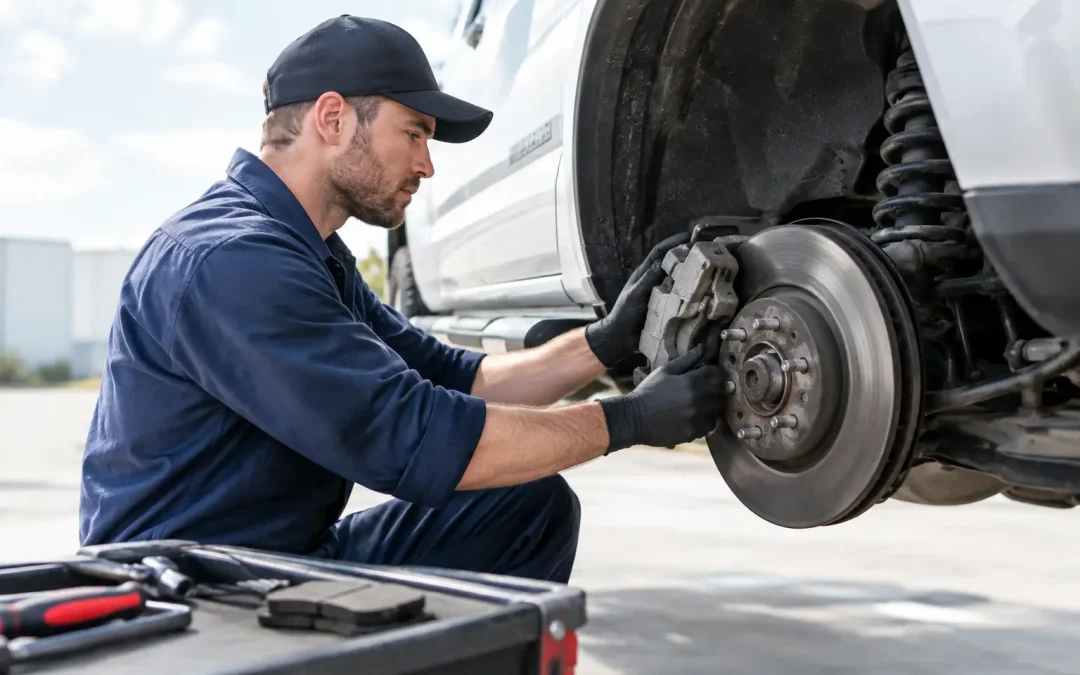
A work ute rarely gets an easy day. It carries tools, stock, ladders, compressors and trailers, then spends hours in stop-start traffic, on job sites and country roads. That workload makes brake service for trade vehicles more than routine maintenance. It is what helps keep your vehicle safe, productive and ready for tomorrow’s run.
For tradies, a vehicle off the road is not just inconvenient. It can mean missed jobs, delayed materials, frustrated customers and a day of earnings gone. Brake problems are also safety-critical, particularly when the ute is loaded or towing. The goal is not to replace parts for the sake of it. It is to identify what is worn, what has caused it, and what needs attention now to prevent a larger repair later.
Why trade vehicles wear brakes differently
A trade vehicle may look like a standard ute or van, but its brakes often work much harder than those on a family runabout. Constant payload, frequent braking between jobs and towing all increase the heat and force going through pads, rotors, calipers and brake fluid.
A loaded tray changes how a vehicle stops. More weight means more momentum, so the brakes need more effort to slow the vehicle safely. Add a trailer, larger tyres, a GVM upgrade or regional driving with long downhill sections, and factory brake components can wear faster than expected.
Driving style matters too. A ute that makes short trips around Albury-Wodonga, stopping at suppliers and sites all day, may wear brakes differently to one doing highway kilometres between towns. There is no one service interval that suits every work vehicle. The right timing depends on the vehicle, its load and how it is used.
Signs your work vehicle needs brake attention
Brake wear is not always obvious from the driver’s seat. Modern vehicles can feel reasonably normal until the issue is well advanced, which is why inspections matter. Still, there are warning signs that should not be ignored:
- A squeal, grinding noise or metallic scraping when braking
- Pulling to one side, a steering wheel shake or vibration through the brake pedal
- A soft, spongy or unusually long brake pedal
- Longer stopping distances, especially with a load or trailer attached
- A brake warning light, burning smell or wheel that feels unusually hot after driving
A squeal can simply be a pad wear indicator, but it can also point to glazed pads, worn hardware or contamination. Grinding usually means the friction material is heavily worn and metal may be contacting the rotor. Leaving it longer can turn a straightforward pad replacement into pads, rotors and possibly caliper repairs.
Pulling or vibration needs proper diagnosis. It may be caused by uneven pad wear, a sticking caliper, rotor run-out, suspension wear, tyre issues or wheel bearing problems. Fitting new pads without checking the full system may hide the symptom briefly, but it does not fix the cause.
What a proper brake service for trade vehicles involves
A proper inspection starts with the way the vehicle is used. Is it carrying a constant load? Does it tow? Has it recently had larger tyres fitted? Is the driver noticing the issue unloaded, loaded or only at highway speed? These answers help narrow down the fault before parts are ordered.
The braking system should then be checked as a complete system, not just through the wheel spokes. That includes pad thickness and condition, rotor wear and surface condition, caliper operation, hoses, fluid condition and brake hardware. On many vehicles, the rear brakes and parking brake deserve just as much attention as the front brakes, particularly on utes that spend their life loaded.
Brake fluid is often overlooked. It absorbs moisture over time, which reduces its boiling point and can contribute to a soft pedal under heavy braking. Old fluid can also encourage corrosion within components. A fluid flush is not automatically required at every brake job, but it should be assessed against the vehicle manufacturer’s schedule, its age and its working conditions.
When components are due for replacement, quality matters. Cheap pads or rotors may appear to save money upfront, but can bring noise, poor pedal feel, rapid wear or reduced performance under load. The best setup depends on the vehicle and job. A light-duty delivery van, a heavily loaded plumber’s ute and a 4×4 towing a caravan do not necessarily need the same pad compound or rotor specification.
Faster turnaround starts with accurate diagnosis
Trade customers need clear answers and realistic timeframes. The quickest repair is not always the one where parts are fitted first. It is the one where the fault is identified correctly, the required components are available and the work is completed properly the first time.
For example, replacing worn front pads without addressing badly worn rotors can lead to poor bedding-in, noise or reduced braking performance. Replacing pads and rotors without freeing a sticking caliper may lead to the same uneven wear soon after. Good brake work looks beyond the obvious worn item.
At Albury Brake and Clutch Centre, the focus is on straight answers about what is required, what can be monitored and what the repair involves. That gives business owners the information they need to make a sensible decision without pressure or unnecessary upselling.
When standard brakes may not be enough
Some trade vehicles need more than a standard replacement service. If your ute has larger tyres, a regular heavy payload, upgraded GVM or towing duties, the original braking setup may be working at the edge of its intended use.
A brake upgrade can improve heat management, pedal consistency and stopping confidence, but it needs to suit the vehicle. Bigger is not automatically better. Component compatibility, wheel clearance, intended load and legal requirements all need consideration. The right upgrade is one that supports how the vehicle works every day, rather than simply adding parts that look impressive.
This is especially relevant for 4x4s used for both work and weekends away. A vehicle set up for tools during the week and a loaded camper trailer on the weekend asks a lot of its brakes. Addressing that early can make towing less stressful and help avoid accelerated wear.
Simple habits that help brakes last
Drivers cannot prevent normal brake wear, but a few habits can reduce unnecessary strain. Avoid riding the brakes on descents, allow more following distance when loaded and use lower gears where appropriate to control speed. If the vehicle has just been through mud, water or dusty site conditions, pay attention to any new noises or changes in pedal feel.
It also pays to report small changes early. A brief squeal, a vibration only when towing or a brake pedal that feels different after a long day can give a technician useful clues. Waiting until the vehicle is grinding or pulling sharply risks a more expensive repair and more downtime.
Keeping service records is useful for fleet operators and sole traders alike. A pattern of rapid pad wear, repeat rotor issues or uneven braking can reveal a loading problem, a mechanical fault or a component choice that is not suited to the vehicle’s work.
Your ute earns its keep every day. Giving its brakes attention before they become a problem helps protect the driver, the load, the people around the vehicle and the next job on the schedule.