


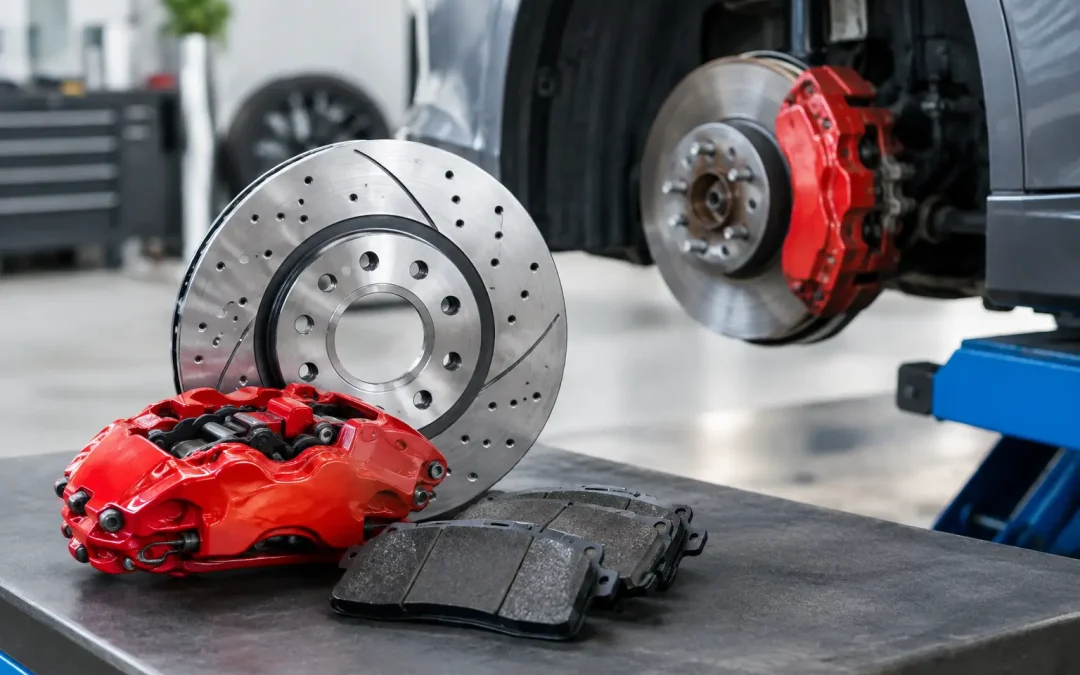
A bigger load, a caravan on the back, larger tyres or long runs through the hills can quickly show up the limits of a standard braking system. Brake upgrades are not about making a vehicle look tougher or fitting the biggest parts available. They are about giving your vehicle dependable, controlled stopping performance for the way it is actually used.
For plenty of everyday cars, quality replacement discs, pads and fluid are all that is needed. For a 4×4 that tows regularly, carries tools, has a GVM upgrade or spends time fully loaded on touring tracks, an upgrade can be a sensible safety investment. The right answer starts with proper diagnosis, not a parts catalogue.
When brake upgrades make sense
Factory brakes are designed around the vehicle’s original weight, tyre size and intended use. They usually do a good job when the vehicle remains close to that specification. The equation changes when the load and demands increase.
Towing is one of the most common reasons drivers consider brake upgrades. A loaded trailer or caravan adds substantial mass and puts more heat into the vehicle brakes, particularly on descents, in stop-start traffic and during emergency braking. Trailer brakes help, but the tow vehicle still has a major job to do.
Larger diameter tyres can also affect braking performance. Bigger tyres increase rotating mass and change the leverage the brakes need to overcome. Add a bullbar, winch, canopy, drawers, fridge, recovery gear and passengers, and a touring 4×4 can be carrying far more than it did when it left the showroom.
You may also benefit from an upgrade if you notice brake fade on long downhill sections, a soft pedal after heavy use, shuddering under braking, longer stopping distances when loaded, or a burning smell around the wheels. These symptoms do not automatically mean you need larger brakes. They do mean the system should be inspected before the issue becomes a safety problem.
Start with the condition of the existing system
Before recommending brake upgrades, a specialist should establish whether the current brakes are working as they should. Worn pads, poor-quality rotors, contaminated brake fluid, sticking calipers, damaged hoses or a fault in the hydraulic system can all reduce braking performance. An upgrade will not fix a maintenance issue that has not been addressed.
This matters because a vehicle with quality standard-specification components in good condition can often brake better than one fitted with expensive performance parts but poor installation or unresolved faults. Brake pedal feel, disc condition, pad wear patterns, caliper operation and fluid condition all tell part of the story.
Tyres also deserve attention. The brakes can only work with the grip available at the road surface. If tyres are worn, incorrectly inflated or not suited to the vehicle’s use, changing the brake hardware alone may not deliver the result you expect.
A proper inspection gives you straight answers. It separates necessary repairs from worthwhile improvements and avoids spending money in the wrong place.
What a proper brake upgrade can include
There is no single upgrade package that suits every vehicle. The best setup depends on the vehicle, its load, tyre size, towing weight and how often it works hard. In many cases, the most effective changes are selected as a matched system rather than fitted one part at a time.
High-quality pads and rotors
Pads and rotors are usually the first place to look. Better friction materials can provide more consistent performance at higher temperatures, while quality rotors are designed to handle repeated heat cycles without premature cracking, distortion or excessive wear.
The trade-off is that aggressive pad compounds can create more dust, more noise or faster rotor wear. A pad suited to a heavily loaded touring ute may not be the best choice for a quiet family SUV used mainly for school runs. The goal is predictable braking in your real driving conditions, not the most aggressive pad on the shelf.
Larger rotors and calipers
For vehicles that regularly tow or carry serious weight, larger rotors and calipers can increase braking torque and improve heat management. More rotor mass helps absorb heat, while increased surface area can help the system shed it more effectively between braking events.
This type of upgrade needs careful fitment. Wheel clearance, brake line routing, master cylinder compatibility, ABS operation and overall component quality all matter. It is not a job for guesswork or a collection of mismatched parts.
Brake fluid, lines and hydraulic components
Brake fluid absorbs moisture over time, which lowers its boiling point. Under sustained braking, old fluid can boil and create a soft or fading pedal. Replacing fluid at the correct intervals is basic maintenance, but it becomes especially important for vehicles used for towing, touring or heavy work.
Depending on the vehicle and upgrade path, quality brake lines and properly operating calipers may also be part of the solution. These items are less visible than big rotors, but they have a direct effect on pedal feel and reliable brake operation.
Heat is the real enemy
Most brake performance problems under load come back to heat. Every time you slow down, the brakes turn motion into heat. The heavier the vehicle, the steeper the descent and the more often you brake, the more heat the system must manage.
Once brakes become excessively hot, pad material can lose effectiveness, rotors can develop hot spots and brake fluid can be affected. That is why a vehicle may feel fine around town but struggle after a long downhill tow.
An upgrade that improves heat capacity can make braking more consistent when the vehicle is working hard. It does not remove the need for sensible driving. Selecting a lower gear on descents, leaving extra space, managing speed before a hill and staying within legal towing and load limits are still essential.
Brake upgrades for towing and touring 4x4s
A 4×4 set up for touring can be very different from its standard showroom form. Larger tyres, extra accessories and a loaded rear end change the vehicle’s weight distribution and braking demands. If it also tows a caravan, camper trailer or work trailer, the demands rise again.
For these vehicles, an upgrade should be planned around the full setup. Consider the GVM, actual loaded weight, tow ball download, trailer weight, tyre size and the terrain you travel. A ute used for occasional light towing may only need quality standard-size components and fresh fluid. A heavily equipped vehicle heading interstate with a caravan may warrant a more substantial engineered brake package.
It is also worth checking whether any modifications have certification or compliance implications in your state or territory. Safety-critical changes should be installed correctly, with suitable parts for the specific vehicle. Saving money on the wrong kit can be costly if it creates clearance, reliability or insurance issues later.
What to expect after an upgrade
A well-chosen brake upgrade should feel controlled and predictable. It may provide firmer pedal response, more confidence under load and better resistance to fade during repeated braking. It should not make the vehicle difficult to drive, overly noisy or prone to pulling to one side.
New pads and rotors need bedding in. This process transfers an even layer of pad material onto the rotor surface and helps establish consistent performance. Follow the workshop’s bedding-in advice, avoid harsh braking where possible during the initial period, and return promptly if you notice vibration, noise or an unusual pedal feel.
Keep in mind that bigger brakes do not override physics. They cannot compensate for an overloaded vehicle, unsafe following distance, poor tyres or an incorrectly adjusted trailer brake controller. They are one important part of a safe towing and touring setup.
Choosing the right workshop
Brake work is not an area to leave to assumptions. The right workshop will ask how you use the vehicle, inspect the current system, explain the options in plain language and tell you if an upgrade is not necessary. You should know what parts are being fitted, why they suit the job and what the expected outcome will be.
At Albury Brake and Clutch Centre, the focus is on matching quality components and proper workmanship to the vehicle in front of us. Whether you need reliable standard brakes for daily driving or a heavy-duty 4×4 setup for towing and touring, the job should be done properly the first time.
If your vehicle feels less confident when loaded than it should, do not wait for the next steep descent to find out why. A brake inspection can give you a clear picture of what is worn, what needs attention now and whether an upgrade is genuinely worth considering.