


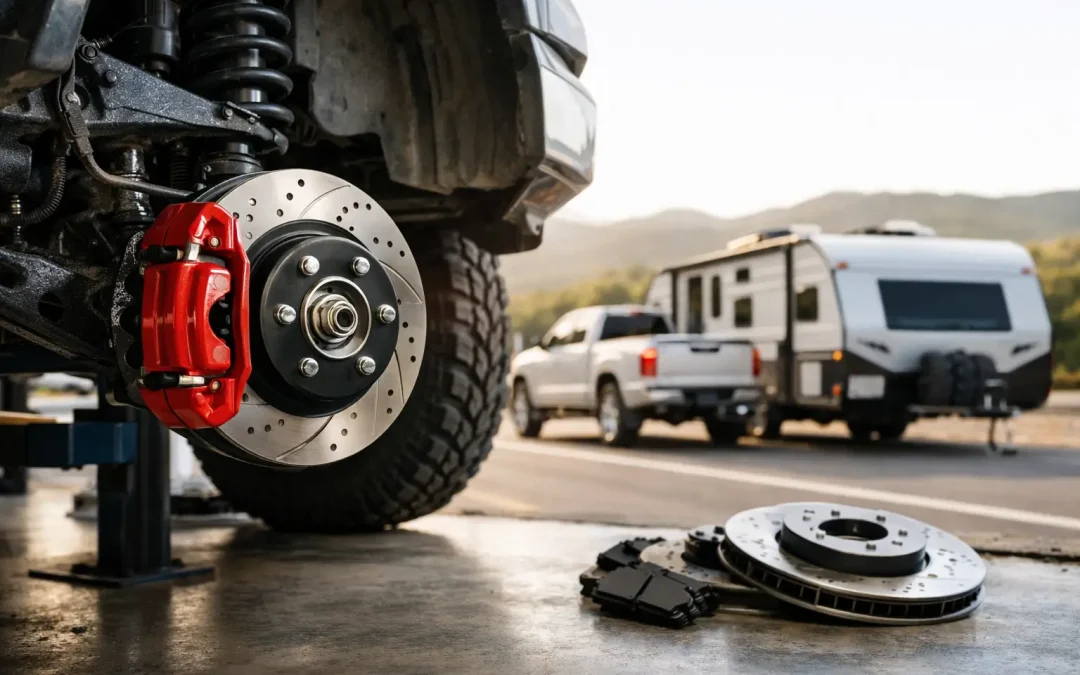
Hook up a van, load the tray, add bigger tyres and head for the highway, and a standard braking system can start feeling ordinary very quickly. That is usually when people begin looking into a 4×4 brake upgrade towing setup – not for looks, but because the vehicle no longer stops with the same confidence it had when it left the factory.
Towing changes the job your brakes have to do. So does extra weight, long descents, regional driving, and the kind of touring many 4×4 owners in Albury, Wodonga and surrounding areas actually do. The right upgrade is not about making a ute feel sporty. It is about improving control, resisting heat, and giving you a better safety margin when the vehicle is working hard.
Why towing exposes brake limitations
A factory braking system is designed around the vehicle in standard trim. Once you add a caravan, camper, boat, tools, accessories, bullbar, drawers, long-range tank or larger wheels, you are asking much more from the same rotors, pads and calipers.
That extra demand shows up in a few predictable ways. Stopping distances can increase. The pedal can start to feel softer after repeated braking. Brakes can overheat more easily on hills or when towing into a headwind. In some vehicles, the system still works, but it feels like it is always close to its limit.
Heat is the real issue. Brakes turn motion into heat, and when you are towing, there is simply more energy to manage. If the system cannot shed that heat efficiently, performance drops away. That is when brake fade starts becoming a genuine concern, especially on long downhill runs or stop-start driving with a loaded vehicle.
Signs you may need a 4×4 brake upgrade for towing
Not every 4×4 needs major hardware changes, but there are clear signs the standard setup is no longer ideal.
If your vehicle struggles to pull up smoothly with a van or trailer behind it, that matters. If the brake pedal feels less consistent once the brakes get hot, that matters too. The same goes for steering shake under braking, burning smells after heavy use, excessive pad wear, or a feeling that the vehicle is doing too much of the stopping work instead of sharing it properly with the trailer brakes.
Tyre size also plays a part. Larger tyres can reduce effective braking leverage, which means the system may need to work harder to achieve the same result. Add increased GVM, touring gear or regular country towing, and the case for an upgrade becomes much stronger.
The key point is this: if the vehicle feels under-braked for how you use it, there is usually a reason. It should be diagnosed properly rather than guessed at.
What a proper brake upgrade actually changes
A worthwhile upgrade is not just about fitting more expensive parts. It is about matching the braking package to the real load and use of the vehicle.
In many cases, that starts with larger or better-designed rotors that can absorb and dissipate more heat. Higher-quality brake pads can improve bite, maintain performance at higher temperatures and reduce fade under repeated use. Depending on the vehicle, upgraded calipers can increase clamping force and improve pedal feel. Brake fluid condition matters as well, because old or low-grade fluid can boil under high heat and create a soft or inconsistent pedal.
That does not mean every towing vehicle needs the biggest kit available. Sometimes a smart combination of premium rotors, the correct pad compound and a full inspection of the existing system is enough. Other times, especially with constant towing, increased GVM or oversized tyres, a heavy-duty upgrade package makes more sense.
The right answer depends on how the 4×4 is actually used. Daily driving with an occasional box trailer is very different from hauling a full-size caravan through hilly country.
4×4 brake upgrade towing options worth considering
There is no single upgrade that suits every vehicle, which is why off-the-shelf advice can be misleading.
For some owners, the best result comes from moving to high-quality slotted rotors and a towing-specific pad compound. This can sharpen braking response and improve heat control without changing the overall system design. It is often a practical option for vehicles that tow regularly but are not heavily modified.
For others, especially those with larger tyres, canopy setups, touring loads or GVM upgrades, a bigger brake package may be the better long-term fix. Larger rotors and matched calipers can make a noticeable difference to braking effort and heat capacity. That can mean more controlled braking on descents and less strain on the system over long distances.
It is also worth looking beyond the front axle alone. Rear brake condition, trailer brake operation, suspension setup and tyre choice all affect how a towing vehicle behaves under brakes. If one part of the system is weak, you will feel it.
Why bigger is not always better
This is where honest advice matters. A larger brake kit sounds appealing, but not every vehicle needs one, and not every kit is well matched to the application.
If the issue is poor-quality pads, worn rotors, contaminated fluid or a sticking caliper, fitting oversized parts will not fix the underlying problem. In fact, it can add cost without delivering the improvement you expected. There can also be compatibility issues with wheel size, offset and overall vehicle setup.
A proper diagnosis should come first. The goal is not to sell the biggest upgrade. The goal is to make the vehicle stop better, more consistently, and in a way that suits the load it carries.
The importance of trailer brakes and brake balance
A lot of towing complaints are blamed on the tow vehicle when the trailer setup is part of the problem.
Electric trailer brakes need to be adjusted and controlled properly. If the trailer is not contributing enough braking force, the 4×4 has to work harder than it should. That increases heat, wear and stopping distance. On the other hand, if trailer brakes are too aggressive, the combination can feel jerky or unstable.
Good towing brakes are about balance. The vehicle brakes, trailer brakes, tyre grip and suspension all need to work together. Upgrading the 4×4 without checking the trailer side can leave a lot of performance on the table.
What to expect from a properly matched upgrade
When a brake upgrade is chosen properly, the result is usually easy to notice. The pedal feels more confident. The vehicle pulls up with less effort. Repeated braking stays more consistent. Towing becomes less tiring because you are not constantly second-guessing stopping distance or brake response.
That does not mean physics disappears. A loaded 4×4 towing a van will always need more room than an unloaded vehicle. But a well-set-up brake system gives you more control and more predictability, which is what matters when conditions change quickly.
For regional drivers, that extra confidence can make a real difference. Long descents, highway overtaking traffic, wet roads and unexpected stops all place demands on the braking system. You want the vehicle to respond the same way every time.
Choosing the right workshop for the job
Brake upgrades for towing are not something to treat as a generic bolt-on accessory. The workshop needs to understand braking performance, heat management, component quality and how the vehicle is actually used.
That means asking the right questions. What do you tow? How often? What does the vehicle weigh when loaded? Does it run larger tyres? Has the GVM changed? Are there current brake symptoms, or are you upgrading before problems start?
A specialist workshop will look at the whole picture rather than pushing a one-size-fits-all package. At Albury Brake and Clutch Centre, that approach matters because safety-critical repairs need to be done properly the first time. Straight answers, quality components and the right diagnosis usually save money compared with replacing parts that were never the real issue.
When it makes sense to upgrade now
If you are already planning towing trips, fitting accessories or moving to larger tyres, it often makes sense to assess the brakes before the vehicle starts showing obvious trouble. Waiting until you feel fade on a steep descent is not ideal.
The better time to look at a 4×4 brake upgrade towing setup is when the vehicle use changes. That gives you a chance to match the brakes to the load, keep wear under control and avoid finding the limits of the standard system at the wrong moment.
A good brake setup will not make a 4×4 invincible, but it will make it more stable, more predictable and better suited to the work you expect it to do. If your vehicle tows regularly and the brakes feel like they are just coping, that is usually worth checking before the next trip rather than after it.