


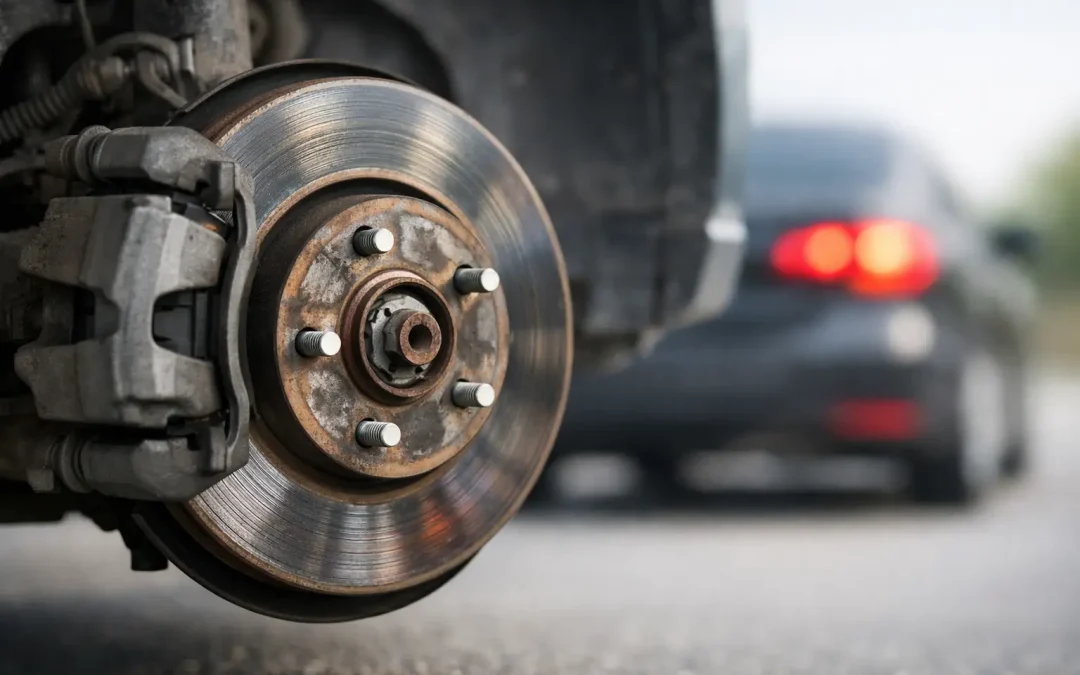
You come up to the lights, press the brake pedal, and the whole vehicle starts to tremble through the pedal, steering wheel or seat. Brake shudder when stopping is one of those faults that can feel minor at first, then quickly turn into something you cannot ignore. More importantly, it is not something to guess your way through, because the real cause is not always as simple as “warped discs”.
A proper brake shudder diagnosis starts with one basic fact: shudder is a symptom, not a repair. Sometimes the problem is in the brake rotor and pad contact area. Sometimes it is in the suspension, wheel bearings, hub face, tyre balance or even how the vehicle has been driven and loaded. If you tow, drive a heavier 4×4, or spend plenty of time on regional roads with repeated braking, that matters too.
What brake shudder when stopping usually feels like
Not every brake vibration feels the same, and those differences help point to the cause. If the steering wheel shakes mainly under braking, that often suggests the issue is being felt through the front end. If the brake pedal pulses, there may be variation in the rotor surface or thickness. If the whole car seems to judder as it slows, the problem may be broader than the brake assembly alone.
The speed you are travelling also matters. Some vehicles shudder lightly only at higher speeds, while others do it every time you stop in traffic. A fault that appears after the brakes have heated up can suggest a different problem from one that is present on the first stop of the day.
That is why a decent inspection matters. The exact conditions of the shudder tell you a lot before any parts come off.
The most common causes of brake shudder when stopping
Brake shudder usually comes back to uneven braking force. The reason that force becomes uneven can vary.
Rotor surface problems and thickness variation
This is one of the most common causes. Brake rotors wear over time, and if the surface becomes uneven, or the thickness varies around the disc, the pads do not grip consistently through each wheel rotation. That creates the pulsing or shudder you feel.
People often call this a warped rotor, but that term gets overused. In many cases the rotor is not bent in the way people imagine. Instead, it may have uneven pad material transfer, thickness variation, heat spotting or runout caused by how it is mounted.
Brake pad issues
Cheap, poor-quality or badly matched brake pads can create problems of their own. Pads that overheat easily, wear unevenly or leave inconsistent deposits on the rotor can all lead to shudder. So can pads that were fitted to a worn or damaged rotor and never bedded in properly.
This is one reason quality parts matter. A brake job is not just about replacing what is worn. The parts need to suit the vehicle and how it is used.
Overheating from load, towing or hard use
Heat is hard on brakes. If you tow a van, carry heavy loads, run larger tyres or use a 4×4 that is heavier than standard, the braking system works much harder. Repeated heat cycles can affect rotor condition, pad performance and overall braking consistency.
For some drivers, a standard replacement setup is enough. For others, especially those towing or touring regularly, a heavier-duty brake package can make more sense for durability and control.
Poor installation or contamination
Brakes need to be fitted properly. If the hub face is not cleaned, wheel nuts are tightened unevenly, sliding components are sticking, or parts are contaminated during fitting, the result can be vibration, uneven wear and early repeat problems.
This is where specialist brake work shows its value. Small fitting issues can create big symptoms.
Suspension or steering faults
Sometimes the brakes reveal a fault rather than cause it. Worn control arm bushes, ball joints, tie rod ends or wheel bearings can allow movement in the front end that shows up most noticeably under braking. In that case, fitting pads and rotors alone may not fix the issue.
That is also why proper diagnosis matters more than assumptions. If the vehicle has movement elsewhere, you need to deal with the source, not just the symptom.
Can you keep driving with brake shudder?
It depends on how severe it is, but treating it as “just an annoyance” is risky. Any brake fault that affects smooth, consistent stopping deserves attention. Even if the vehicle still stops, shudder can mean reduced braking performance, uneven pad contact, longer stopping distances or added wear on other components.
There is also the practical side. A small vibration can turn into a more expensive repair if it is ignored. Rotors can wear further, pads can glaze or crack, and associated components can cop more stress than they should.
If the shudder is sudden, worsening, or comes with noise, pulling to one side, a soft pedal or warning lights, stop driving and have it checked as soon as possible.
Why a quick guess often leads to the wrong repair
One of the most common mistakes with brake shudder is replacing parts based on guesswork. It might be tempting to fit new pads because they are cheaper, machine the rotors because it sounds simple, or replace the front brakes without checking the rest of the vehicle. Sometimes that works. Plenty of times it does not.
A proper diagnosis should include road testing, checking rotor condition and runout, inspecting pad wear patterns, looking at caliper operation, and assessing the surrounding steering and suspension components. Wheel and hub condition matter as well. On some vehicles, even a small issue at the mounting face can cause enough runout to create a noticeable shudder.
That is why experienced brake specialists tend to be more cautious with “simple” answers. The goal is not to sell more parts. The goal is to fix it properly the first time.
What the right repair might look like
There is no single answer because it depends on what is actually causing the problem. In some cases, the fix is a quality set of pads and rotors fitted correctly, with all contact points cleaned and checked. In other cases, the calipers may need attention, the wheel bearings may need inspection, or suspension wear needs to be addressed before the brake issue will disappear.
If the vehicle is used for towing, heavy loads or off-road touring, it may also be worth considering whether the current brake setup is really suited to the job. A heavier-duty upgrade can improve heat management and reduce repeat problems, especially on 4x4s that are working harder than factory standard.
The right repair is not always the cheapest on the day, but it is usually the cheaper path over time if it prevents repeat failures and gives you predictable braking again.
How to reduce the chances of it happening again
Brake shudder is not always preventable, but a few habits and maintenance decisions can reduce the risk. Good quality brake components make a difference, especially on vehicles that do more than basic city driving. Correct fitting matters just as much as the parts themselves.
Driving style also plays a role. Long downhill braking, repeated heavy stops and towing without enough braking capacity all add heat. Heat is one of the biggest contributors to rotor and pad issues. If your vehicle regularly works hard, your braking system needs to match that use.
Regular inspections help catch smaller problems before they become obvious through the steering wheel or pedal. Uneven wear, sticking calipers and worn front-end parts often show signs before the driver notices a serious shudder.
When to book it in
If your brakes shudder once, keep an eye on it. If it happens more than once, or becomes a pattern, get it checked. There is no prize for waiting until the shake gets worse, and braking faults are not the kind of issue to put in the too-hard basket.
For drivers around Albury and Wodonga, this is exactly the sort of problem that benefits from a specialist inspection rather than a general look-over. At Albury Brake and Clutch Centre, the focus is on finding the actual cause, explaining it clearly, and repairing only what needs to be repaired.
If your vehicle feels unsettled every time you stop, trust that feeling. Brakes should be smooth, straight and predictable. When they are not, getting straight answers early is usually the safest and most cost-effective move.