


A clutch that shudders pulling away from the lights, slips when you accelerate or makes selecting a gear feel like hard work is not something to put off. The right answer in the clutch repair vs clutch replacement decision is not always obvious from the driver’s seat. Some faults can be repaired without replacing the whole clutch system. Others require the gearbox to come out, making a complete replacement the more sensible and reliable option.
The key is finding the actual cause before approving work. A worn clutch plate, a hydraulic fault, a damaged flywheel and an oil leak can create similar symptoms, but they do not call for the same repair. Proper diagnosis protects you from paying for parts you do not need – or from fitting a new clutch while the underlying problem remains.
What your clutch is doing every drive
Your clutch transfers engine power to the gearbox while allowing you to change gears and stop without stalling. In a manual vehicle, pressing the clutch pedal separates the engine from the transmission. Releasing it progressively reconnects them.
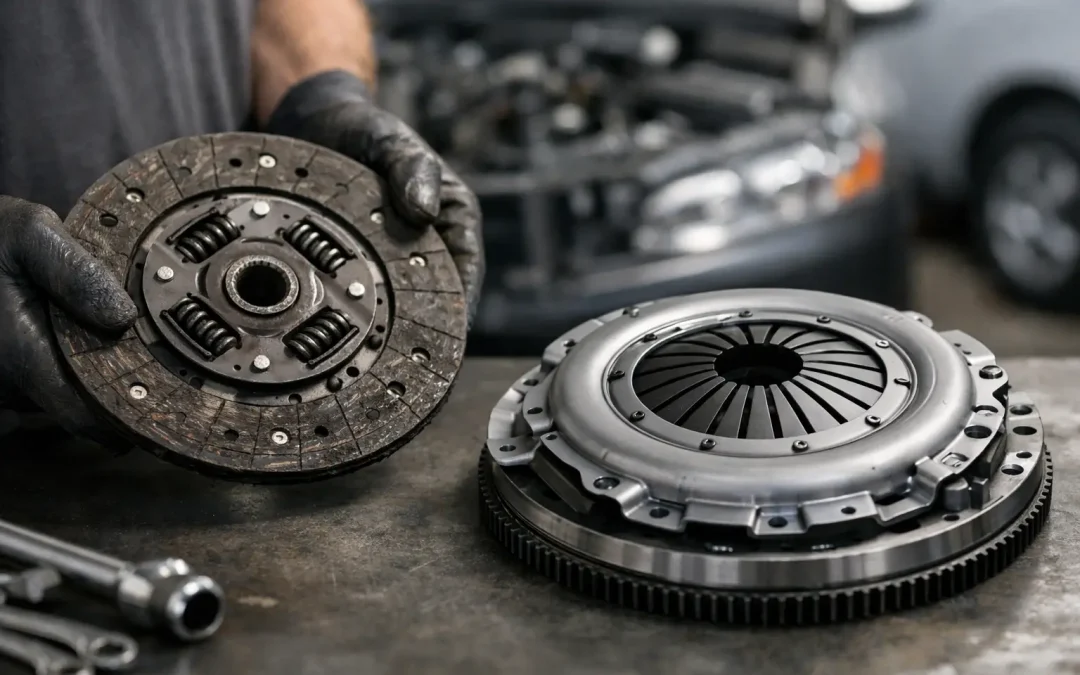
The main wearing components are the clutch disc, pressure plate and release bearing. Depending on the vehicle, the system may also involve a cable or hydraulic master and slave cylinder, a dual-mass flywheel, pilot bearing and associated seals. These parts work together, so a fault in one area can affect how the whole pedal and gear-change system feels.
Clutch wear is normal over time. City driving, hill starts, towing, carrying heavy loads and riding the clutch pedal all shorten its life. A work ute, touring 4×4 or family car regularly used in Albury Wodonga traffic and on regional roads will have very different demands placed on its clutch.
Clutch repair vs clutch replacement: the real difference
A clutch repair usually means fixing a specific component or fault while retaining the existing clutch assembly where it is still serviceable. This may include replacing a leaking clutch master cylinder, slave cylinder, hydraulic line, worn cable or pedal-related component. In some cases, an external adjustment or hydraulic repair restores normal operation.
Clutch replacement involves removing the gearbox to access and replace the clutch kit. A quality kit commonly includes the clutch disc, pressure plate and release bearing. The flywheel is inspected at the same time, then machined or replaced if its condition requires it. Any rear main seal or gearbox input-shaft seal leaks should also be dealt with while access is available.
The difference matters because gearbox removal is labour-intensive. If the clutch disc is near the end of its life, replacing only a release bearing or addressing one internal component can be false economy. Once the gearbox is out, fitting matched quality components is generally the sensible long-term repair.
On the other hand, replacing a complete clutch because a faulty master cylinder is preventing disengagement would be unnecessary. Straight answers come from inspection and testing, not guesswork.
Signs the clutch may only need a repair
A pedal that suddenly feels soft, sinks towards the floor or needs pumping before the vehicle will select a gear often points to a hydraulic problem. Low fluid, a leaking cylinder or air in the system can stop the clutch from disengaging fully, even when the clutch disc itself still has usable life.
Difficulty selecting gears with the engine running, especially reverse or first gear, can also be caused by clutch hydraulics. A mechanic should check fluid condition, pedal travel, external leaks and the operation of the master and slave cylinders before assuming the clutch is worn out.
Noises deserve a closer look too. A squeal, chirp or rumble that occurs only when the clutch pedal is pressed may indicate a release bearing issue. Whether this can be treated as a small repair depends on the design. On many vehicles, the bearing is located inside the bellhousing, so the gearbox must still be removed. If that is the case and the clutch has significant kilometres on it, replacing the full kit is usually better value.
A clutch cable, where fitted, can stretch, bind or break. Replacing it is a targeted repair and far less involved than replacing the clutch assembly. The important point is that a heavy or inconsistent pedal does not automatically mean the clutch plate has failed.
When clutch replacement is the better call
Slipping under load is one of the clearest signs of a worn clutch. You may notice engine revs rise without matching acceleration, particularly when overtaking, climbing a hill, towing a trailer or accelerating in a higher gear. This happens when the friction material can no longer grip properly, and it will not improve with adjustment or a fluid change.
A burning smell after a hill start, shuddering as the clutch engages, a high bite point, or persistent vibration can also indicate a worn or contaminated clutch. Oil contamination from an engine or gearbox seal may make the clutch slip even if the friction material is not fully worn. The leak needs repairing as well as replacing contaminated clutch parts, otherwise the problem can return.
If a dual-mass flywheel is fitted, it must be checked carefully during replacement. Excess movement, heat damage or noise can mean it is no longer fit for service. Reusing a damaged flywheel can shorten the life of a new clutch and leave you with the same vibration or engagement concerns.
For 4x4s used for towing, touring or carrying heavier loads, the correct replacement clutch matters as much as the decision to replace it. A standard kit may not suit the vehicle’s real workload. A specialist can recommend a quality clutch setup matched to the engine, gearbox, towing weight and intended use without fitting an overly aggressive clutch that makes daily driving unpleasant.
Why diagnosis comes before a quote
Clutch symptoms overlap with several other faults. A gearbox issue can feel like a clutch problem. Engine mounts can contribute to shudder. A damaged driveshaft, worn CV joint or differential fault can create vibrations that occur when taking off. Even a poor gear linkage adjustment can make changing gears difficult.
A proper assessment starts with the driver’s description of the symptoms: when they occur, whether the engine is hot or cold, if the issue changes under load, and whether there are noises or fluid leaks. From there, the vehicle can be road-tested where appropriate and inspected for hydraulic faults, external leaks, pedal operation and driveline issues.
Only then is it reasonable to recommend repair or replacement. If gearbox removal is needed to confirm internal wear, that should be explained clearly before work begins. You should know what is being checked, what the likely options are and why a particular repair is recommended.
What affects the cost?
There is no honest one-price answer for clutch work. The vehicle design, parts required and condition of related components all affect the final cost. A cable or external hydraulic repair is generally less expensive because it does not require gearbox removal. A full clutch replacement can vary significantly between a small passenger vehicle, a diesel 4×4 and a vehicle with a dual-mass flywheel.
Parts quality also matters. A clutch is not a job most drivers want to repeat early. Using a proven kit from a reputable manufacturer and replacing necessary related components while the gearbox is out can cost more upfront, but often avoids paying the same labour twice. This is particularly relevant for trade vehicles and vehicles relied on for regular travel.
Be cautious of a quote that focuses only on the lowest initial figure. Ask whether it includes the release bearing, flywheel inspection, fluid, seals if required, and a road test after the work. A clear quote should set out what is included and identify any items that can only be confirmed once the clutch is accessed.
How to help your new clutch last
Clutches wear fastest when they are made to slip for longer than necessary. Avoid resting your foot on the pedal, holding the vehicle on a hill using the clutch or taking off with unnecessary revs. Select neutral at longer stops rather than holding the pedal down, provided it is safe to do so.
For towing and loaded work, use the correct gear and let the vehicle build momentum rather than forcing it to pull hard at low revs in a high gear. If the clutch starts slipping, book it in promptly. Continued driving can overheat the flywheel and pressure plate, turning a straightforward clutch replacement into a larger repair.
At Albury Brake and Clutch Centre, the focus is on identifying what has failed, explaining the options in plain language and carrying out the work properly. Whether the answer is a targeted hydraulic repair or a complete clutch replacement, a sound diagnosis gives you the best chance of getting back on the road with confidence.