


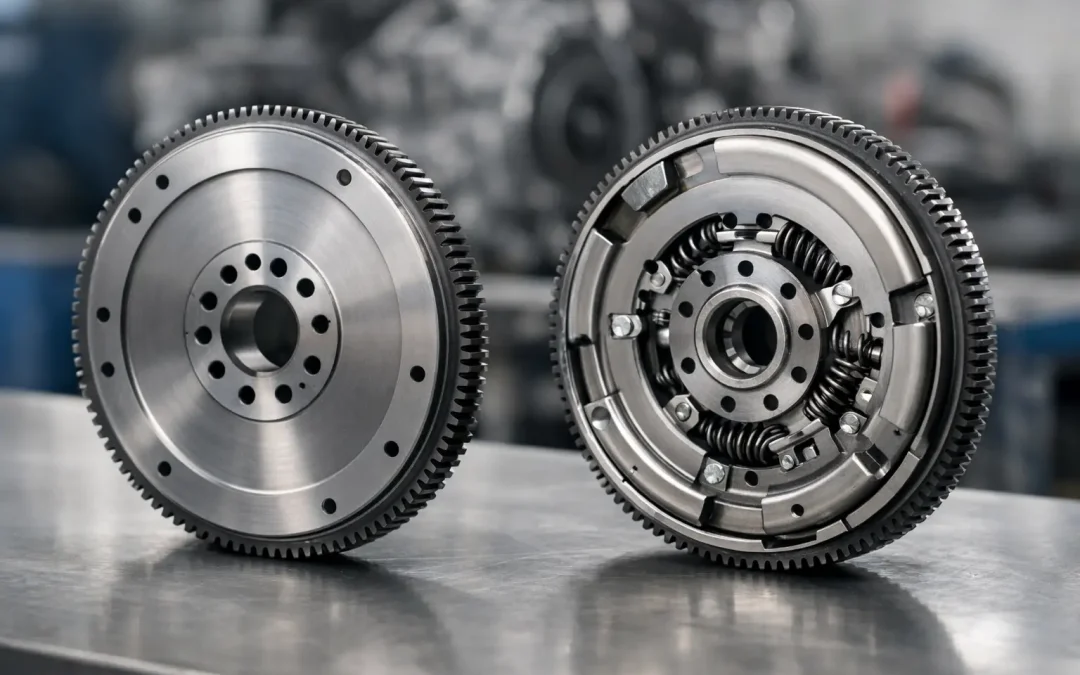
You usually hear about a flywheel only when a clutch job turns into a bigger conversation. A quote comes back, the parts list mentions a dual mass unit, and suddenly the question is whether single mass vs dual mass flywheel really matters. It does – because the choice affects noise, drivability, clutch life and how the vehicle feels every time you take off.
For most drivers, this is not about chasing theory. It is about making the right repair decision once, not paying twice, and ending up with a vehicle that suits how you actually drive.
Single mass vs dual mass flywheel: what is the difference?
A flywheel sits between the engine and clutch. Its job is to help smooth out engine pulses and transfer drive through the clutch into the gearbox. Where the two types differ is in how they manage vibration.
A single mass flywheel is a solid, one-piece unit. It is simpler in design, generally tougher, and has fewer internal parts to wear out. That simplicity is why many people see it as the durable option, especially in hard-working vehicles.
A dual mass flywheel is more complex. It uses two separate masses with springs or damping components between them to absorb engine vibration and torsional shock. The aim is to make the driveline smoother and quieter, especially in modern diesels and vehicles tuned for comfort.
That means the difference is not just the part itself. It changes how the whole clutch and driveline system behaves.
Why modern vehicles use dual mass flywheels
Manufacturers do not fit dual mass flywheels for no reason. In many newer vehicles, especially diesels, they help reduce gear rattle, cabin vibration and harshness at low revs. They also make stop-start driving feel more refined.
If you have driven a modern manual diesel that feels smooth pulling away in traffic, a dual mass flywheel is often part of that story. It helps manage the stronger low-down torque these engines produce. Without that damping, the gearbox and driveline can be exposed to more shock loading and more noticeable vibration.
From a driver’s point of view, the benefit is simple. The vehicle often feels quieter, more civilised and easier to live with.
Why some owners consider converting to single mass
The big reason is cost and durability. A worn or failed dual mass flywheel can be expensive to replace, and when the clutch is already out, many owners ask whether converting to a single mass setup is the smarter long-term move.
In some applications, it can be. A quality single mass conversion kit can offer a more straightforward design and lower replacement cost down the track. For vehicles used for heavy work, towing, regional driving or rougher service conditions, some owners prefer that simpler setup.
But cheaper on paper does not always mean better in practice. The right answer depends on the vehicle, the gearbox, the clutch kit being fitted and what you expect from the vehicle after the repair.
The real trade-offs in single mass vs dual mass flywheel
This is where honest advice matters. A single mass flywheel is often more rugged and can suit drivers who value durability over refinement. It may also be a sensible choice for some older vehicles where keeping costs under control matters.
The trade-off is that you can end up with more noise, more vibration at idle or low speed, and a rougher feel through the driveline. Some vehicles handle that well. Others become noticeably less pleasant to drive. Gear rattle can also become more obvious, particularly in diesels or vehicles with gearbox designs that relied on the original damping effect of a dual mass unit.
A dual mass flywheel usually gives better refinement and a more factory-like feel. It is designed to work with the original clutch and gearbox characteristics. The downside is that it is more complex, and when it wears out, replacement costs are typically higher.
So the question is not which one is best in general. It is which one is best for that vehicle and that owner.
When a dual mass flywheel should usually stay a dual mass
If the vehicle is relatively modern, used as a daily driver, and you want it to feel as it did from the factory, staying with a dual mass flywheel is often the safer option. That is especially true where refinement matters – family vehicles, commuter cars and newer diesels are the common examples.
It is also worth keeping the original style where the gearbox is known to be sensitive to vibration or where conversion kits have a mixed reputation. A proper diagnosis matters here, because you do not want to fit a conversion that solves one cost problem but creates a drivability complaint straight after.
For many owners, the best result is not the cheapest invoice. It is getting the vehicle back with smooth take-up, predictable pedal feel and no surprises.
When a single mass conversion can make sense
There are cases where a single mass conversion is a practical repair. Older vehicles, commercial use, some 4x4s, and vehicles that spend their life towing or working hard may suit a well-matched conversion kit. If the owner values durability, plans to keep the vehicle long term, and can accept a bit more mechanical feel, a single mass setup can be a reasonable choice.
That said, the key phrase is well-matched conversion kit. Not all kits are equal, and not every conversion delivers a good result. The clutch disc, pressure plate and flywheel all need to work together. If the wrong combination goes in, you can end up with chatter, harsh engagement or premature wear.
That is why this job should never be reduced to just swapping one part for a cheaper one.
Common signs the flywheel may be failing
Drivers often assume all clutch problems are clutch plate problems. That is not always the case. A failing flywheel can cause shudder on take-off, vibration through the pedal, rattling noises at idle, clunking during load changes, or a rough engagement feel that was not there before.
In more severe cases, you may hear noise when starting or shutting down the engine. Some dual mass flywheels develop excessive internal movement, and once that happens, the vehicle can feel harsh or inconsistent to drive.
These symptoms overlap with other faults, which is why proper inspection matters. Clutch hydraulics, gearbox issues and engine or transmission mounts can create similar complaints.
Why diagnosis matters before choosing parts
This is where a specialist workshop earns its keep. Before anyone talks about single mass vs dual mass flywheel options, the actual fault needs to be confirmed. Is the flywheel worn? Is the clutch contaminated or slipping? Is there heat damage? Is the release system failing? Has towing or overloading contributed to the problem?
Those answers affect the repair recommendation. They also affect cost. Replacing the right components once is usually cheaper than replacing the wrong ones and pulling the gearbox out again.
At Albury Brake and Clutch Centre, this sort of work is not treated as guesswork. It is diagnosed properly so the repair suits the vehicle, the load it carries and the way it is driven.
Cost matters, but so does the end result
It is fair to ask about price. A dual mass flywheel replacement often costs more than a single mass conversion, and that can be a deciding factor for some owners. But if the cheaper option leaves you with extra noise, vibration or drivability complaints you did not expect, it may not feel like a saving.
On the other hand, paying more for a dual mass replacement in a vehicle that is used hard and kept for years may not always be the best value either. Sometimes a stronger, simpler setup suits the owner better.
This is why straight answers matter more than blanket rules. A good recommendation takes into account the vehicle, the condition of the rest of the clutch system, your budget and how much factory-style refinement matters to you.
What should you choose?
If you want the vehicle to drive as close as possible to original, and it came with a dual mass flywheel from the factory, staying with dual mass is often the best path. If you use the vehicle for work, towing, regional kilometres or tougher conditions, and you are comfortable with a bit more noise or vibration, a single mass conversion may be worth considering – but only if a proven kit suits that application.
There is no one-size-fits-all answer here. The right choice is the one that matches the vehicle, the job and your expectations after the repair.
If your clutch is due and the quote includes a flywheel, ask the extra question before authorising the work. Not just what it costs, but how it will drive afterwards. That is usually where the right decision becomes clear.