


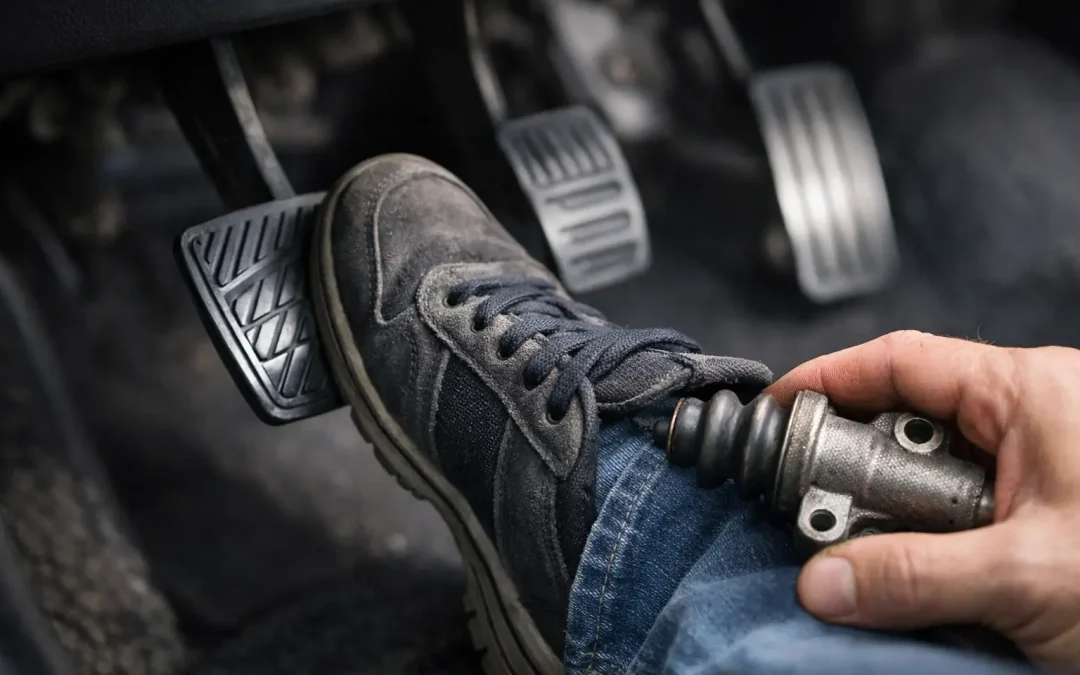
You notice it at the lights first. The clutch goes down too easily, the bite point feels vague, and each gear change starts to feel less predictable than the last. If your clutch pedal feels spongy, that soft, springy or mushy feel is usually a sign something in the clutch system is no longer working as it should.
That does not always mean a full clutch replacement is around the corner. In some cases, the issue is as simple as air in the hydraulic system or a fluid leak that has been caught early. In others, it points to worn internal components that need proper diagnosis before they turn into a breakdown. The main thing is not to ignore it, because clutch problems rarely sort themselves out.
What a spongy clutch pedal usually means
A healthy clutch pedal should feel firm and consistent. You should be able to press it smoothly, feel clear resistance through the pedal travel, and get a predictable engagement point when selecting gears.
When the pedal feels spongy, soft or unusually light, the system is often losing hydraulic pressure or failing to transfer that pressure properly. Most modern manual vehicles use a hydraulic clutch system, which relies on fluid, seals, cylinders and lines to convert pedal movement into clutch operation. If any part of that system starts leaking, drawing in air or wearing out, the pedal feel changes.
Sometimes drivers describe it as the pedal feeling “rubbery”. Others say it sinks lower than normal or comes back up slowly. Those differences matter, because they can point to different faults.
Common causes when the clutch pedal feels spongy
Air in the hydraulic line
This is one of the most common causes. Hydraulic systems are designed to work with fluid, not air. Fluid does not compress the way air does, so when air gets into the line, the clutch pedal can feel soft or springy.
Air can enter the system after previous repair work, during a clutch fluid loss, or through a failing seal. In some cases, a proper bleed restores normal pedal feel. In others, bleeding the system only fixes the symptom for a short time because the real issue is a leaking cylinder or hose.
Low clutch fluid
If the fluid reservoir is low, the clutch may not build pressure properly. That can make the pedal feel weak and can also cause trouble selecting gears, especially reverse or first.
Low fluid is not the fault itself. It usually means the fluid has gone somewhere, and that means there may be a leak. Topping it up without finding the source is only a temporary measure.
Master cylinder problems
The clutch master cylinder sits at the pedal end of the system and creates the hydraulic pressure needed to disengage the clutch. If the internal seals wear out, pressure can bypass inside the cylinder instead of being sent down the line.
That often causes a pedal that feels soft, inconsistent or slow to return. Sometimes the fault develops gradually. Other times, it seems to appear all at once.
Slave cylinder failure
The slave cylinder is the component that receives hydraulic pressure and moves the clutch release mechanism. If it starts leaking or binding, the pedal feel changes quickly.
On some vehicles the slave cylinder is external and easier to inspect. On others it is concentric and sits inside the bell housing. When those internal units fail, the repair can be more involved because access requires gearbox removal.
Flexible hose deterioration
A worn clutch hose can expand under pressure instead of holding firm hydraulic force. That expansion can make the pedal feel soft or vague, even if fluid levels still look acceptable.
It is an easy thing to miss without proper inspection, especially on older vehicles or work utes that have seen heat, age and regular load.
Worn clutch components
Not every spongy pedal is purely hydraulic. A worn pressure plate, release bearing or other internal clutch parts can affect pedal feel as well. If the clutch is nearing the end of its service life, you may also notice slipping under load, shudder on take-off, or a bite point that has changed over time.
This is where proper diagnosis matters. Replacing a cylinder will not fix a worn clutch assembly, and replacing the clutch without checking the hydraulics can leave the original problem behind.
Other signs to watch for
A spongy pedal on its own is worth checking, but the risk goes up if it comes with other symptoms. Hard shifting is a common one, particularly when trying to engage reverse. You might also notice grinding during gear changes, the clutch engaging very close to the floor, or the pedal sticking down and not returning normally.
Fluid stains under the vehicle or around the pedal area can also point to a hydraulic leak. Some drivers notice the problem more when the vehicle is hot, after towing, or during stop-start driving. That does not change the need for repair, but it can help narrow down what is failing.
Is it safe to keep driving?
Sometimes you can still drive for a while with a clutch pedal that feels spongy. That does not mean you should.
A soft clutch pedal can go from inconvenient to undriveable with very little warning. If the system loses more pressure, you may struggle to disengage the clutch completely. That makes gear changes harder, increases wear, and raises the chance of getting stuck in traffic or stranded away from home.
If the vehicle is used for towing, regional travelling or regular highway driving, the stakes are higher. The last thing you want is a clutch that fails when you are pulling out into traffic or trying to manage a loaded vehicle safely. When the clutch feel changes, it is best treated as an early warning rather than something to monitor for weeks.
Why guessing usually costs more
Clutch faults are one of those issues where a rough guess can send you down the wrong path. A driver might assume the clutch itself is worn out, when the real issue is hydraulic. Another might keep topping up fluid, not realising the slave cylinder is leaking and the gearbox will need to come out anyway.
That is why specialist diagnosis matters. The pedal feel, fluid condition, leak points, clutch operation and gearbox behaviour all need to be assessed together. Done properly, that tells you whether the job is a bleed, a cylinder replacement, a hose issue, or a full clutch repair.
At a workshop that deals with clutch systems every day, the process is usually straightforward. Confirm the symptoms, inspect the hydraulic system, check for leaks and pressure loss, and then determine whether the fault is external or inside the bell housing. Straight answers up front save time, parts and repeat visits.
What the repair might involve
The repair depends on the cause. If air has entered an otherwise healthy system, a bleed and fluid service may be enough. If a master cylinder or hose has failed, replacing the faulty part and bleeding the system properly should restore normal operation.
If the slave cylinder is internal, or if the clutch assembly is worn at the same time, the gearbox may need to be removed. In that situation, it often makes sense to look at the whole clutch system rather than replacing one part in isolation. There is no value in paying for labour twice because one worn component was left behind.
Quality parts matter here. Cheap hydraulic components and low-grade clutch kits can cause repeat failures, uneven pedal feel and shorter service life. For a repair you depend on every time you drive, it is worth getting it done properly the first time.
When to book it in
If the clutch pedal feels spongy once and then goes back to normal, it is still worth paying attention. Intermittent faults are often the start of a bigger problem. If the softness is consistent, the engagement point has changed, or the vehicle is getting harder to shift, book it in sooner rather than later.
For drivers around Albury-Wodonga who rely on their vehicle for commuting, family duties, trade work or towing, downtime matters. So does confidence in the repair. A specialist workshop such as Albury Brake and Clutch Centre can tell you what is actually wrong, what needs doing now, and what can wait if there is a genuine choice.
A clutch pedal should not leave you guessing. If it feels soft, vague or different to normal, trust that change. Catching it early usually means a simpler fix, less risk on the road, and a better chance of avoiding a much bigger job later.