


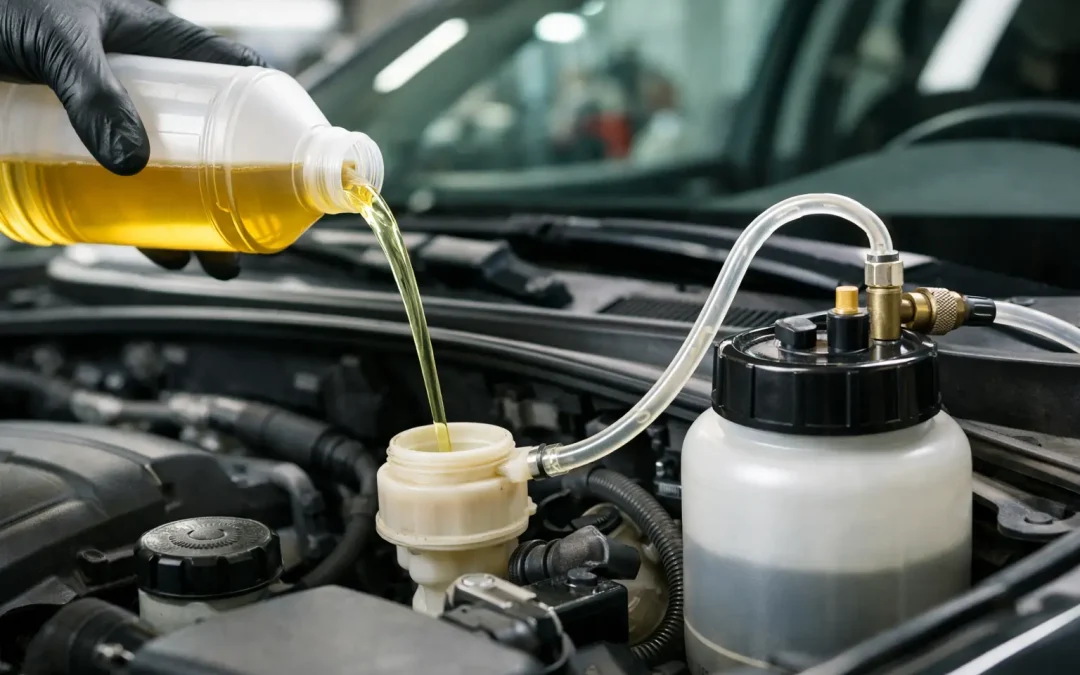
That soft brake pedal that seems to sink a bit further at the lights is easy to put in the too-hard basket. So is a vehicle that still stops, but just does not feel as sharp or confident as it used to. The brake fluid flush importance comes down to this – your braking system can only work properly if the fluid inside it is clean, stable and doing its job under pressure.
A lot of drivers stay on top of pads and discs because they are easier to understand. Brake fluid gets overlooked because you cannot see it wearing out in the same way. But it does deteriorate over time, and when it does, braking performance, component life and overall safety can all be affected.
Why brake fluid matters more than most drivers realise
Your brake system relies on hydraulic pressure. When you press the pedal, brake fluid transfers that force through lines and hoses to the calipers or wheel cylinders, which then apply the brakes. If the fluid is in good condition, that pressure transfer is consistent and predictable.
The trouble is brake fluid is hygroscopic, which means it absorbs moisture from the air over time. That moisture does not need a major leak or obvious fault to get in. It can happen gradually through normal use and ageing seals. Once water content starts to rise, the fluid’s boiling point drops, and that is where problems begin.
Under normal commuting, you may not notice much at first. Under repeated braking, towing, driving in hilly country, carrying loads or using a 4×4 with larger tyres, the system works harder and builds more heat. Old fluid is far more likely to boil under these conditions, creating vapour in the system. Vapour compresses, unlike fluid, which can leave you with a spongy pedal or reduced braking response when you need it most.
Brake fluid flush importance for safety and reliability
When people ask about the brake fluid flush importance, the short answer is safety. The longer answer is that a fluid flush also helps protect the rest of the braking system from avoidable wear and corrosion.
Moisture-contaminated fluid can contribute to internal rust in steel lines, ABS components, calipers and master cylinders. That sort of damage is not always visible from the outside, and it does not always show up as a sudden failure. Sometimes it starts as sticking components, uneven braking, poor pedal feel or expensive repairs that could have been avoided with routine servicing.
This is one of those jobs where prevention is usually far cheaper than waiting for symptoms. A proper flush removes old fluid through the entire system and replaces it with fresh fluid that meets the right specification for the vehicle. That helps restore the system’s heat resistance and reduces the risk of moisture-related internal damage.
What happens if you put it off too long?
Some vehicles can go a fair while before showing obvious signs. That is why brake fluid often gets ignored. The catch is that the system may be degrading before the driver notices anything serious.
You might feel a softer pedal, or you may need to press harder during heavy braking. In some cases, the brakes can feel fine in everyday traffic but become less consistent on a long downhill run or while towing a trailer. That inconsistency matters because braking confidence is not just about whether the car eventually stops. It is about how predictably it responds every time.
Leaving old fluid in place too long can also shorten the life of parts that are expensive to replace. ABS units in particular do not like contaminated fluid. Neither do calipers and master cylinders. If the system has been neglected for years, a flush may improve performance, but it may not reverse wear that has already occurred. That is why timing matters.
When should brake fluid be flushed?
The best starting point is always the manufacturer’s service schedule. Many vehicles are due for a brake fluid flush every two years, though some intervals vary depending on make, model and usage. If your vehicle tows regularly, works hard, carries extra weight or spends time in stop-start or hilly conditions, it makes sense to pay closer attention rather than stretch the interval.
For regional drivers, this matters more than many people think. Long distances, summer heat, caravans, trailers, work gear and country roads all put extra demand on the braking system. A family SUV used for school runs during the week and towing on weekends does not live an easy life. Neither does a touring 4×4 set up with accessories, larger tyres and increased GVM.
If you have just bought a used vehicle and there is no clear service history, brake fluid is one of the first items worth checking. It is a straightforward way to establish a known baseline and remove guesswork.
Signs your vehicle may be overdue
Brake fluid does not always wave a red flag, but there are a few signs that should not be brushed off. A soft or spongy brake pedal is one. So is a pedal that feels inconsistent from one drive to the next. In some cases, the brakes may feel less responsive after sustained use or under load.
Fluid condition can sometimes be seen in the reservoir, but appearances can be misleading. Dark fluid can suggest age and contamination, but even fluid that looks acceptable may still have absorbed enough moisture to reduce performance. That is why proper testing and inspection matter more than guessing by colour alone.
If a warning light is on, if the pedal travel has changed, or if the vehicle does not feel right under brakes, it is worth having it checked properly. Not every issue is fixed with a flush, but fluid condition should always be part of the diagnosis.
A flush is not the same as a quick top-up
This is where a lot of confusion comes in. Topping up the reservoir is not the same as flushing the system. A top-up only adds fluid to the reservoir. It does not remove old contaminated fluid from the lines, calipers, wheel cylinders or ABS components.
A proper brake fluid service pushes the old fluid out and replaces it throughout the system with fresh fluid of the correct type. Done properly, it also gives the workshop a chance to inspect for leaks, check component condition and pick up other brake issues before they become bigger problems.
That matters because low fluid can sometimes point to worn pads or a leak, not just normal fluid loss. Simply topping it up without checking the reason can mask a problem rather than solve it.
Why the right workshop approach matters
Brake work is not an area for shortcuts. The correct fluid specification matters. The flushing process matters. Proper bleeding matters. So does knowing when poor pedal feel is caused by fluid condition and when it points to another fault entirely.
That is where specialist diagnosis makes a difference. A no-nonsense brake workshop will not sell a fluid flush as a cure-all if the real issue is a failing master cylinder, seized caliper, worn hoses or another mechanical fault. At the same time, they will not dismiss fluid service as optional when it is clearly overdue.
For drivers around Albury and Wodonga, that practical approach matters. You want straight answers, the right repair, and work done properly the first time. At Albury Brake and Clutch Centre, that is exactly how brake servicing should be handled – with the system checked properly, the fault identified accurately, and no pressure around work you do not need.
Is a brake fluid flush always urgent?
It depends on the condition of the fluid, the age of the service, and how the vehicle is used. If the fluid is only slightly overdue and the rest of the system is healthy, you may not be facing an immediate safety crisis. But that does not mean it should be ignored.
If the pedal feel has changed, the vehicle is used for towing, or the fluid has been left well beyond schedule, it moves higher up the priority list. In those cases, delaying can increase both risk and repair cost.
The sensible approach is not panic and not procrastination. It is getting the brakes inspected by someone who knows what they are looking at and can tell you clearly what is needed now, what can wait, and why.
Fresh brake fluid will not make headlines, and it is not the most glamorous job on a service invoice. But when you are braking hard with the family in the car, or heading downhill with a trailer on the back, it is one of those maintenance items that quietly proves its value.