


Your engine revs climb, but the car does not pick up speed the way it should. On a steep hill, while overtaking or with a trailer behind you, it can feel as though the vehicle has suddenly lost its pulling power. That is one of the clearest signs of a slipping clutch – and knowing how to identify clutch slipping early can help you avoid being stranded or damaging more expensive driveline components.
A clutch does a hard job every time you move away, change gear or tow a load. Over time, the friction material wears down, heat builds up and the clutch can no longer hold the engine’s power properly. The fault may start subtly, then become obvious very quickly. A slipping clutch is not usually something that fixes itself, so prompt, accurate diagnosis matters.
How to Identify Clutch Slipping While Driving
The most common symptom is a mismatch between engine speed and vehicle speed. You press the accelerator, the revs rise sharply, but the car does not accelerate in proportion. It can feel a little like an automatic transmission changing down, except the revs stay high and the vehicle still feels lazy or strained.
This is often easiest to notice in a higher gear. For example, when travelling at a steady speed in fourth, fifth or sixth gear, a firm press of the accelerator should produce a clean increase in speed. If the tacho jumps first and the vehicle takes a moment to catch up, the clutch may be slipping.
A steep climb is another common place for the problem to show itself. Hills place more load on the clutch, especially in utes, 4x4s and vehicles used for towing. If the engine races when climbing but road speed drops away, do not keep forcing it. Continued load can overheat the clutch and turn a manageable repair into a larger job.
A burning smell after heavy use
A worn clutch can create a sharp, acrid burning smell, particularly after hill starts, stop-start traffic, reversing a trailer or towing. Some drivers describe it as similar to burnt paper or overheated brakes.
One brief smell after an awkward hill start does not automatically mean the clutch has failed. But if the smell returns, is accompanied by poor acceleration, or appears during normal driving, it needs checking. Heat is the enemy of clutch components. Once a clutch has overheated badly, its friction surface can glaze and slip more easily.
Trouble under load, not necessarily around town
A clutch can feel acceptable during a short, flat run to the shops yet slip when the vehicle is loaded, towing or climbing. This is why a fault is sometimes missed until a holiday trip, work run or long drive exposes it.
Drivers with caravans, trailers, tool-laden work vehicles or modified 4x4s should pay close attention to changes in performance. Larger tyres, extra weight and frequent towing increase the demand on the clutch. The right replacement clutch depends on how the vehicle is actually used, not just its make and model.
Other Symptoms That Can Point to a Clutch Problem
Slipping is the best-known clutch issue, but it is not the only sign that something is wrong. A high clutch bite point – where the pedal engages close to the top of its travel – can suggest wear, although it is not a diagnosis on its own. Pedal feel varies between vehicles and can also be affected by hydraulic faults or previous adjustments.
Difficulty selecting gears, a grinding noise when selecting reverse, a clutch pedal that feels spongy or unusually hard, and vibration when moving off all deserve attention. These symptoms may be related to the clutch disc, pressure plate, flywheel, release bearing, clutch hydraulics or gearbox operation.
A clutch that slips is different from a clutch that drags. Slipping means the clutch is not holding power properly. Dragging means the clutch is not releasing fully, making gears difficult to engage. Both can leave you with a vehicle that is unpleasant or unsafe to drive, but the causes and repairs can differ.
What Not to Do When You Suspect Clutch Slip
There are plenty of online ‘tests’ that suggest loading the clutch heavily or trying to stall the vehicle in a high gear. These tests can put unnecessary heat into an already worn clutch, and they are not a substitute for a proper inspection.
Avoid repeated hard acceleration to see whether the problem happens again. Do not tow, carry heavy loads or attempt a long trip if slipping is obvious. If you need to drive the vehicle a short distance to arrange repairs, use gentle acceleration, avoid hills where practical and leave plenty of space in traffic. If the clutch is slipping badly, the safer option is to stop driving and organise transport.
It is also worth avoiding the habit of resting your foot on the clutch pedal. Even light pressure can prevent the clutch from clamping fully, creating heat and premature wear. Holding the vehicle on a hill with the clutch instead of the handbrake has the same effect.
Why Accurate Diagnosis Matters
A rev flare does not always mean the clutch disc is simply worn out. Oil contamination from an engine rear main seal or gearbox input seal can cause a clutch to slip. A damaged pressure plate, worn flywheel surface, incorrect clutch components or a fault in the release system can also contribute.
That is why replacing only the most obvious part can be false economy. The gearbox generally needs to be removed to access the clutch, so it makes sense to inspect the complete system while it is apart. Depending on the vehicle and fault, this may include the clutch kit, flywheel condition, release bearing, slave cylinder, pilot bearing and any signs of fluid or oil leaks.
A specialist workshop should explain what has failed, what is worn, and what needs replacing now versus what can reasonably be monitored. Clear advice matters because clutch repairs involve labour as well as parts. The aim is a repair that lasts, not a cheap fix that requires the gearbox to come out again too soon.
What a Proper Clutch Inspection Involves
A technician will first ask when the fault occurs: under acceleration, on hills, after towing, when cold or only after the vehicle has warmed up. Those details help narrow down the cause. They will road-test the vehicle where safe, assess pedal operation and check for related noises, vibration and gear-selection issues.
From there, the inspection may include checking the clutch hydraulic system for leaks or poor operation, looking for external oil leaks and confirming whether the problem could be caused by another driveline fault. If internal clutch wear or contamination is likely, gearbox removal is required for a definitive assessment.
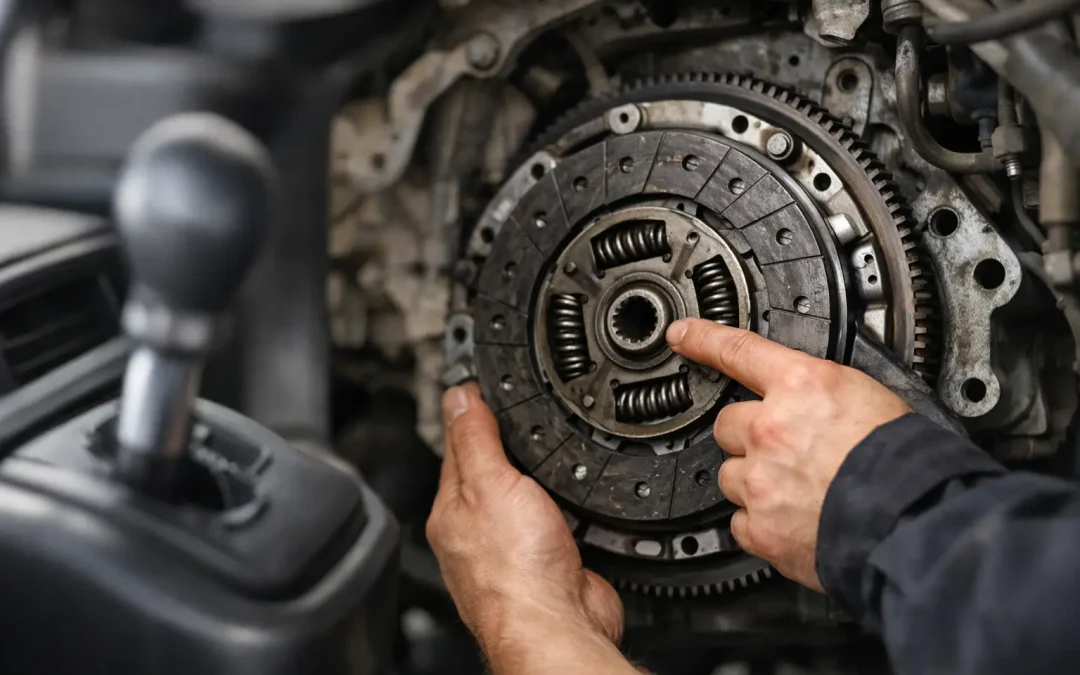
Once the clutch is accessible, the condition of the friction disc, pressure plate and flywheel tells the real story. Heat marks, glazing, uneven wear and oil contamination all point to different causes. This is where quality parts and correct fitting make a difference. A clutch has to suit the vehicle’s engine output and workload, whether it is a family car doing school runs or a 4×4 set up for touring and towing.
When to Book a Clutch Repair
Book an inspection as soon as you notice consistent rev flare, burning smells or reduced drive under load. Early attention may not always reduce the parts required, but it can prevent an inconvenient breakdown and may limit collateral damage caused by excessive heat or slipping.
If you are in Albury Wodonga and your vehicle is losing drive, Albury Brake and Clutch Centre can assess the fault properly and give you straight answers about the repair. There is no value in guessing with a safety-critical driveline issue, particularly if you rely on the vehicle for work, family transport or towing.
A clutch normally gives warning before it gives up completely. Listen to what the vehicle is telling you, ease off the load and have it checked before a small loss of drive becomes a recovery truck problem.