


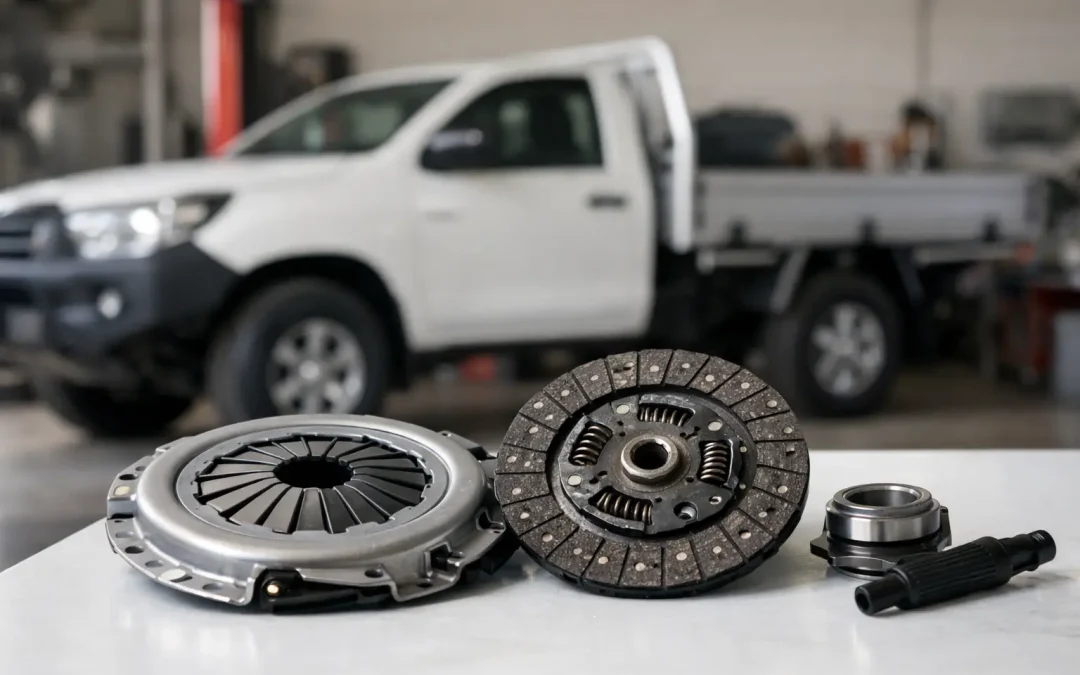
A ute that spends its life backing trailers, hauling gear and crawling through stop-start traffic will chew through a weak clutch faster than most owners expect. That is why choosing the best clutch kits for tradie utes is not really about brand hype or the toughest-sounding box on the shelf. It is about matching the kit to the way the vehicle actually works.
For plenty of tradies, the ute is more than transport. It is the work vehicle, the parts runner, the towing vehicle and often the weekend 4×4 as well. When a clutch starts slipping or shuddering, downtime costs money. The right replacement needs to handle load, heat and repeated take-off under strain without making the vehicle miserable to drive every day.
What matters most in a tradie ute clutch kit
A clutch kit for a work ute has to cope with different stresses than one fitted to a lightly used runabout. Reversing up a slope with a trailer on, carrying tools every day, or spending hours in traffic all put extra heat into the clutch. Heat is what shortens clutch life, and it is also what exposes cheap parts very quickly.
The main things that matter are clamp load, friction material, flywheel condition and overall drivability. More clamp load can improve holding power, but that does not automatically mean it is the best choice. If the pedal becomes too heavy, the vehicle can be harder to use on the job, especially if it spends all day in town. A more aggressive friction material may hold better under load, but it can also make engagement less forgiving.
That is where proper diagnosis matters. Not every tradie ute needs the heaviest-duty clutch available. Some do. Some need a quality OEM-style kit because the real problem is towing habits, flywheel wear, hydraulic issues or excess heat from repeated slipping.
Best clutch kits for tradie utes – the types that make sense
The best clutch kits for tradie utes usually fall into three practical categories rather than one universal winner.
OEM-quality replacement kits
For utes that mainly do metro or regional work without serious towing every day, a quality OEM-style kit is often the smartest option. These kits are designed to restore factory drivability, with smooth take-up and sensible pedal effort. If the vehicle is a late-model HiLux, Ranger, D-Max, Triton or Navara doing general trade duties, this can be the right balance of price, feel and service life.
Brands with a solid reputation in this space matter. Aisin and Exedy are commonly trusted because they tend to deliver consistent fit, reliable engagement and proven durability when the vehicle is used as intended. For many owners, that is a better investment than fitting a cheap unknown kit and hoping for the best.
Heavy-duty clutch kits
If the ute tows regularly, carries serious weight, or has been fitted with larger tyres, a canopy, drawers and a constant load in the tray, a heavy-duty kit is often worth considering. These kits are built to handle higher torque and more heat, which makes a real difference in a working vehicle.
This is where Powerdrive and heavy-duty Exedy options can come into the conversation, depending on the vehicle and use case. A good heavy-duty clutch should offer stronger holding power without becoming harsh or unpredictable. The goal is not just brute strength. It is long-term reliability in real working conditions.
The trade-off is that some heavy-duty kits can have a firmer pedal or slightly more abrupt engagement. That might be fine in a towing ute, but less appealing if the vehicle spends its days in stop-start suburban traffic.
Upgraded kits for towing and modified setups
Some utes sit outside the normal work pattern. They may tow plant equipment, run upgraded engines, carry constant heavy loads or combine trade use with off-road touring. In those cases, an upgraded clutch kit may be necessary, especially when torque output or vehicle weight has moved well beyond factory expectations.
This is also where getting the whole setup checked is important. If the flywheel has hot spots, if the rear main seal is leaking, or if the hydraulics are weak, even a premium clutch kit will not last the way it should. The best result comes from treating the clutch replacement as a system repair, not just a parts swap.
Why brand matters, but only to a point
There is a reason workshops that specialise in clutch repairs tend to stick with proven brands. Consistency matters. So does proper fitment. A clutch kit might look fine in the box, but poor tolerances, weak pressure plates or lower-grade friction materials usually show up once the ute is back at work.
Exedy has long been a dependable choice across many Japanese utes because of its broad range and strong reputation for OEM and heavy-duty applications. Aisin is also well regarded, particularly where factory-like operation and reliability are the priority. Other options can be suitable too, but the right brand still has to be matched to the specific vehicle and use.
That is why there is no honest one-size-fits-all answer to the best clutch kits for tradie utes. The best kit for a plumber’s lightly loaded town ute is not necessarily the best kit for a diesel 4×4 towing a trailer every second day.
Signs your current clutch setup is not up to the job
Sometimes the clutch is simply worn out. Other times, the replacement fitted previously was never right for the vehicle. If the engine revs rise without matching acceleration, the clutch is slipping. If the ute shudders when taking off, especially under load, that points to wear, heat damage or contamination. A high pedal, difficulty selecting gears, a burning smell under strain or a heavy, inconsistent pedal can all suggest the setup needs attention.
These symptoms should not be ignored, especially in a working ute. A failing clutch rarely gets better on its own, and pushing it too long can create extra repair costs if the flywheel, hydraulics or gearbox are affected.
What to ask before fitting a new clutch kit
Before choosing a clutch, it helps to be clear about how the ute is used. Does it tow often? Is it carrying tools and stock every day? Has it been remapped, lifted or fitted with larger tyres? Does the driver want factory-like feel, or is greater load capacity the priority?
These details matter because they change the recommendation. A good workshop will ask the right questions rather than just quoting the cheapest kit available. It should also inspect related components while the gearbox is out, because that is the ideal time to deal with worn hydraulics, machine or replace the flywheel where needed, and make sure the whole job is done properly.
That practical approach is what saves money over time. At Albury Brake and Clutch Centre, that usually means matching quality parts to the vehicle’s actual workload, not upselling a heavier kit unless there is a genuine reason for it.
Cheap clutch kits usually cost more later
A budget clutch kit can seem like a win when the quote comes through. The trouble is that labour is a major part of clutch replacement, especially on modern 4×4 utes. If the cheap kit does not last, the owner often ends up paying for the same job twice.
For a tradie, that can mean extra workshop time, missed work and another period without the ute. In that context, spending a bit more on proven parts and correct installation is usually the cheaper outcome.
There is also the safety and drivability side of it. A clutch that grabs badly, slips under load or performs inconsistently is not just annoying. It makes the vehicle harder to control, especially when towing or manoeuvring in tight spaces.
The right clutch is the one that suits the job
If you are weighing up the best clutch kits for tradie utes, the most sensible starting point is not the toughest option on paper. It is an honest look at how the ute works every week. Daily traffic, towing weight, tray load, tyre size and engine output all shape what the right clutch looks like.
A quality OEM-style kit is often ideal for general trade use. A heavy-duty kit makes sense when the vehicle works harder than standard. And for modified or constantly loaded utes, an upgraded setup may be the only option that will hold up properly.
A clutch should feel right, hold properly and last. If the recommendation does not account for how your ute actually earns its keep, it is probably not the right one. Get the diagnosis right first, fit quality parts, and the vehicle will reward you with fewer headaches when the workday starts early and finishes late.