


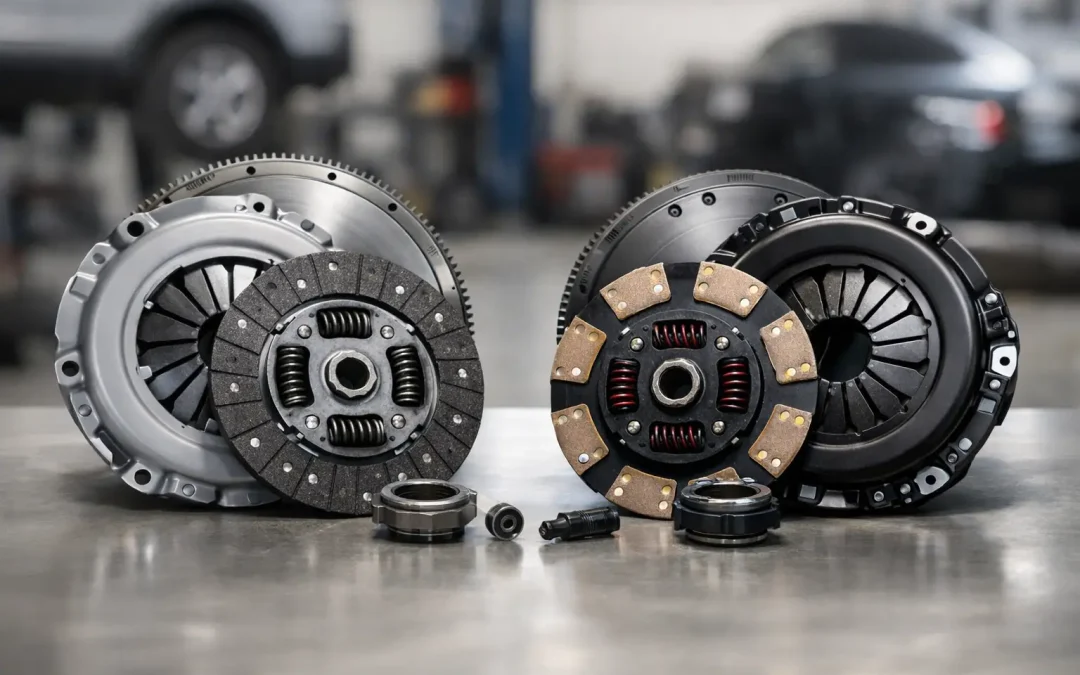
A clutch replacement usually starts with one simple question at the counter – do you want OEM or aftermarket? When people compare OEM vs aftermarket clutch kits, they are usually not chasing theory. They want to know what will last, what will drive properly, and what is worth paying for.
The honest answer is that neither option is automatically better in every vehicle. The right choice depends on how you drive, what the vehicle is used for, and whether the priority is factory feel, heavier-duty performance, or keeping the job cost-effective without cutting corners.
What OEM and aftermarket actually mean
OEM stands for Original Equipment Manufacturer. In clutch terms, that usually means a kit designed to match the vehicle’s factory specifications. It may be supplied by the same manufacturer that built the original clutch, or by a brand producing to that exact standard. The goal is straightforward – restore the vehicle to the way it left the factory.
Aftermarket clutch kits cover a much wider range. Some are built as direct replacements for standard road use. Others are upgraded kits designed for towing, hard use, modified engines, or commercial work. That broad range is where people can get caught out. Aftermarket does not automatically mean cheaper and lower quality. It also does not automatically mean better.
A well-chosen aftermarket kit from a proven brand can be excellent. A poor-quality one can give you noisy operation, heavy pedal feel, shudder, premature wear, or trouble with fitment.
OEM vs aftermarket clutch kits: the biggest differences
The main difference is consistency versus variety. OEM kits are usually the safer choice if you want predictable fit, factory-style pedal feel, and performance that matches the vehicle’s original design. They tend to suit drivers who just want the car back on the road driving as it should.
Aftermarket kits give you more options. That can be a real advantage if the vehicle works harder than stock. A 4×4 used for towing, a ute carrying tools every day, or a vehicle with engine upgrades may need something stronger than the original setup. In those cases, an upgraded aftermarket clutch kit can make good sense.
The trade-off is that more choice means more room for error. Not every kit marketed as suitable is equal in material quality, clamping force, friction characteristics, or drivability.
Fit and installation quality
OEM kits generally offer fewer surprises during installation. The dimensions, release mechanism, and engagement characteristics are usually close to the original clutch, which helps avoid headaches.
With aftermarket kits, fit can still be spot on if the correct brand and part are chosen. But lower-grade kits are more likely to create issues such as poor alignment, inconsistent tolerances, or components that simply do not feel right once installed. That is why proper parts selection matters just as much as the clutch replacement itself.
Pedal feel and engagement
For daily driving, pedal feel matters more than many people expect. An OEM-style clutch usually keeps the engagement smooth and predictable. That is ideal for commuters, family vehicles, and drivers who spend plenty of time in traffic.
Aftermarket kits can vary a lot. Some are almost identical to factory feel. Others use heavier pressure plates for extra holding power, which can mean a firmer pedal. That may suit a work vehicle or towing setup, but it is not always pleasant in stop-start driving.
Durability under load
This is where aftermarket often has a real edge, provided the kit matches the application. If a vehicle regularly tows, carries extra weight, runs larger tyres, or sees harder off-road use, the standard clutch may not have much reserve capacity. An upgraded aftermarket kit can offer better heat handling and more clamping force.
On the other hand, fitting an aggressive heavy-duty clutch to a lightly used daily driver can be unnecessary and sometimes counterproductive. More holding power is not always better if it comes at the expense of drivability or added stress on other components.
When OEM is the better choice
If your vehicle is standard, your driving is normal road use, and you were happy with how the original clutch performed, OEM is often the sensible answer. It is especially suitable when smooth operation and predictable service life are more important than performance upgrades.
OEM is also a strong option when the vehicle is driven by multiple people. A family car or everyday runabout benefits from a clutch that feels familiar and easy to modulate. The last thing most owners want after a clutch replacement is a pedal that suddenly feels much heavier or an engagement point that is awkward to get used to.
For many drivers, factory-style replacement is not the boring option. It is simply the right one.
When aftermarket makes more sense
Aftermarket clutch kits come into their own when the vehicle’s use has changed from factory expectations. A touring 4×4, a trade ute, or a diesel tow vehicle often asks more from the clutch than standard suburban driving does.
In those cases, an upgraded kit may offer better long-term value because it is built for the load. That does not mean the strongest clutch on the shelf. It means a kit chosen to suit the real-world job the vehicle does.
There is also a middle ground that gets overlooked. Some premium aftermarket kits are designed as high-quality OEM replacements rather than performance parts. These can be an excellent option where availability, price, and quality line up well.
Price matters, but value matters more
It is easy to focus only on the price of the kit itself. In reality, clutch replacement is labour-intensive. The gearbox has to come out, so the cost of doing the job twice because of a poor-quality part is where things get expensive.
That is why the cheapest kit is rarely the cheapest outcome. If a bargain clutch wears early, chatters, or fails to hold properly, any upfront saving disappears fast.
A better question is whether the kit suits the vehicle and is backed by a reputable manufacturer. Good parts cost more than low-grade alternatives for a reason. Better friction materials, better springs, more consistent machining, and tighter quality control all count.
The brand and diagnosis matter as much as the label
One of the biggest mistakes people make with OEM vs aftermarket clutch kits is treating it like a simple two-column comparison. In the workshop, it is rarely that neat.
The real question is not just OEM or aftermarket. It is which brand, which kit, and whether the original cause of failure has been identified properly. A clutch can fail from normal wear, but it can also be damaged by oil contamination, a faulty slave or master cylinder, a worn flywheel, release bearing issues, or driving conditions that overload the setup.
If those issues are missed, even the best clutch kit may not last the way it should. That is why proper diagnosis matters before any parts go in.
What to ask before approving a clutch replacement
If you are deciding between options, ask a few plain questions. Is the replacement intended to restore factory performance, or handle heavier use? Will the pedal feel change? Is the flywheel being inspected or machined if required? Are all the key wear components being replaced as part of the job?
Straight answers to those questions tell you a lot about whether the repair is being done properly. At a specialist workshop such as Albury Brake and Clutch Centre, that conversation should be clear and practical, not full of jargon.
The best choice depends on how the vehicle is really used
For a standard hatchback commuting to work, OEM or premium OEM-style aftermarket is usually the right fit. For a work ute towing gear every week, a stronger aftermarket kit may be the smarter long-term option. For a modified vehicle, a standard replacement may simply not be enough.
That is why blanket advice does not help much. The right clutch is the one that matches the vehicle, the load, and the driver’s expectations. Not the one with the flashiest box, and not always the one with the lowest price.
A clutch replacement should leave the vehicle feeling right, holding power properly, and giving you confidence that the job will last. If you are unsure which way to go, the best move is to get the fault assessed properly and choose the kit that suits the vehicle you actually drive, not the one someone else thinks you should own.