


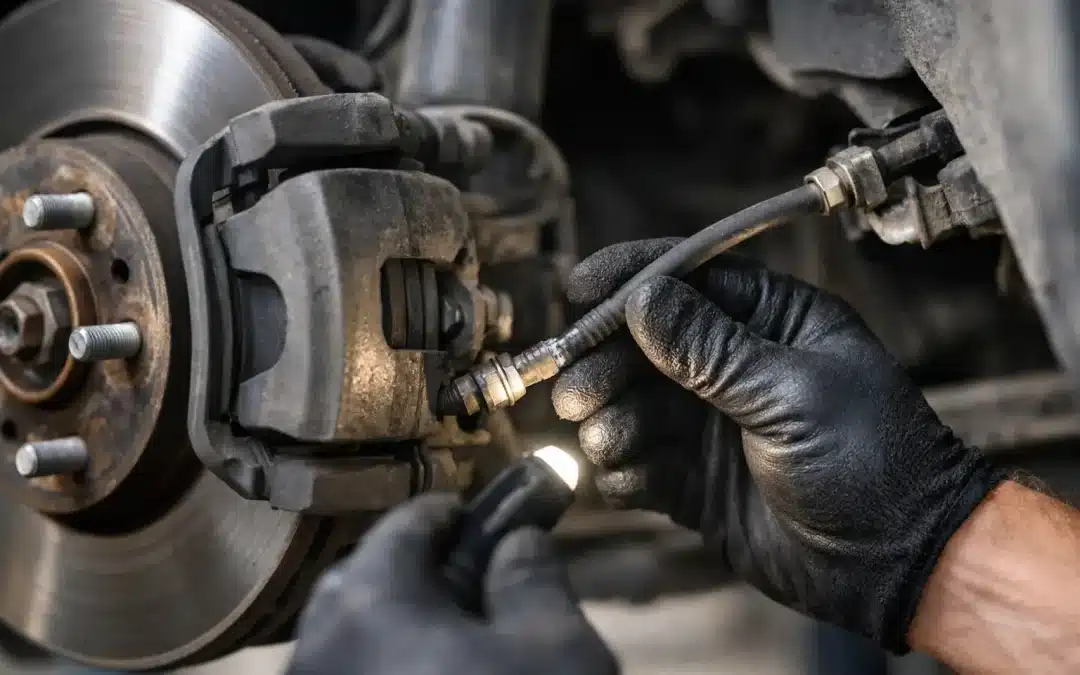
A brake hose can look harmless from the outside, yet cause a serious braking problem when pressure builds. Knowing how to spot brake hose issues gives you a better chance of getting the fault repaired before it affects stopping distance, vehicle control or your plans for the week.
Brake hoses are the flexible sections that carry brake fluid between the vehicle’s fixed brake lines and the moving suspension or brake caliper. They work hard every time you press the pedal. Heat, road grime, age, rough tracks and repeated flexing all take their toll. On a daily commuter, a work ute or a 4×4 that tows, the symptoms can be subtle at first.
What a failing brake hose can feel like
The brake pedal is often the first place drivers notice a change. A soft or spongy pedal can mean air in the system, old brake fluid, a hydraulic leak or another brake fault, so it does not automatically prove the hose is at fault. Still, it is not something to put off.
A damaged hose may leak externally, reducing brake fluid and pedal pressure. It can also break down internally. When that happens, the inner lining can act like a restriction: brake fluid reaches the caliper when you apply the brakes, but does not return freely when you release the pedal. The result can be a brake that drags, overheats or causes the vehicle to pull to one side.
Pay attention if the pedal feel changes suddenly, if the vehicle needs more effort to stop, or if braking feels different after a longer drive. These are safety-critical signs and need a proper inspection rather than guesswork.
How to spot brake hose issues on a visual check
You do not need to dismantle anything to make a few sensible observations. With the vehicle parked safely on level ground, look through the wheel openings where practical. Avoid getting under a vehicle supported only by a jack, and do not touch brakes straight after driving – components can be extremely hot.
Look for these signs around each wheel and along accessible brake lines:
- Damp patches, drips or a wet, oily residue near a hose, caliper or wheel. Brake fluid is usually clear to amber when fresh, although it darkens with age.
- Cracks, splitting, fraying or a rough, weathered surface on the outer rubber hose.
- Bulges or blistered sections, especially where a hose bends. A bulge suggests internal damage and calls for immediate attention.
- A hose rubbing on a tyre, wheel, suspension component or steering part. Incorrect routing, damaged retaining clips or modified suspension can create this problem.
- One wheel that is noticeably hotter than the others after normal driving, or a hot brake smell from one corner of the vehicle.
A visual check has limits. Some hoses fail internally without obvious external damage, and a small fluid leak can be hard to see when the area is covered in dust or road grime. That is why symptoms, fluid level and workshop testing all matter.
Check the brake fluid reservoir, but do not rely on it alone
A low fluid level in the brake reservoir can point to a leak, but it can also occur as brake pads wear. Check the level only when the vehicle is cold and parked level, and use the fluid type specified on the reservoir cap or in the owner’s handbook if topping up is necessary.
If the reservoir is very low, the brake warning light is on, or you can see fluid leaking, do not treat topping up as a fix. Fluid loss means the system needs to be inspected. Adding fluid may temporarily hide the symptom while the underlying fault gets worse.
Signs a hose may be restricting a brake
An internally collapsed hose is one of the faults that can be missed without specialist diagnosis. It may not leak and may look acceptable from the outside. Instead, the clue is often a brake that does not release properly.
You might notice the car pulling left or right during normal driving, a steering wheel that feels odd after braking, reduced fuel economy, or a wheel that gives off a burning smell. The vehicle may feel held back as though the handbrake is partly on. On some vehicles, the pull is more obvious after several brake applications or after travelling downhill.
These symptoms can also be caused by a seized caliper, worn pads, a sticking slide pin, wheel-bearing issues or tyre problems. The right repair depends on the actual cause. Replacing parts based on a hunch can be expensive and may leave the real issue unresolved.
Why brake hoses fail in regional driving
Brake hoses are built to flex, but they are still wear items. Time is a major factor, particularly on older vehicles. Under-bonnet heat, moisture, brake fluid contamination and exposure to oil can weaken hose material over time.
For Albury-Wodonga drivers, gravel roads, corrugations, touring loads and towing can add another layer of stress. A loaded caravan, larger tyres or increased GVM does not necessarily damage brake hoses by itself, but it increases the importance of a braking system that is in good condition and correctly matched to the job. A hose rubbing after suspension work, for example, can deteriorate much faster on rough roads.
After a lift kit, suspension repair, brake upgrade or accident damage, it is worth having hose routing and clearance checked through the steering and suspension travel. What looks clear with the wheels straight ahead may contact another component at full lock or when the suspension compresses.
When not to drive the vehicle
Brake concerns deserve a cautious approach. Arrange urgent assistance rather than driving if the brake pedal suddenly drops close to the floor, braking power is clearly reduced, there is visible brake fluid leaking, a brake warning light stays on, or one wheel is smoking or extremely hot.
If the pedal is only slightly softer than usual but braking remains effective, avoid heavy towing, long trips and unnecessary driving until it can be checked. Leave extra following distance and book an inspection promptly. Brake faults can progress quickly, particularly where a hose is leaking or a brake is dragging.
What a proper brake hose inspection involves
A proper inspection goes beyond a quick look at the rubber. A brake specialist checks hose condition, routing, clips and fittings, then assesses the whole hydraulic system for leaks and pressure-related faults. They will also inspect pad wear, caliper operation, discs, fluid condition and the brake system’s response under test.
Where a restricted hose is suspected, diagnosis needs to separate it from a sticking caliper or another component. This matters because the repair should address the cause, not just free up a brake temporarily. If a hose is replaced, the system must be bled correctly to remove air and restore firm, reliable pedal feel.
Quality replacement parts and correct fitment are not optional on braking work. The hose must suit the vehicle, be routed correctly and have adequate clearance through steering and suspension movement. This is particularly relevant for modified 4x4s and vehicles used for towing.
Don’t wait for a complete hose failure
Brake hoses rarely get better with use. A small crack can become a leak, and a minor internal restriction can turn into an overheated brake, damaged pads and discs, or a vehicle that pulls unexpectedly. Early diagnosis is usually simpler and helps avoid replacing extra components damaged by heat or fluid contamination.
If your pedal feels different, a wheel is running hot or you have noticed a cracked or rubbing hose, get straight answers before the issue grows. At Albury Brake and Clutch Centre, the focus is on finding the fault properly and carrying out only the work your vehicle needs, so you can get back on the road with confidence.