


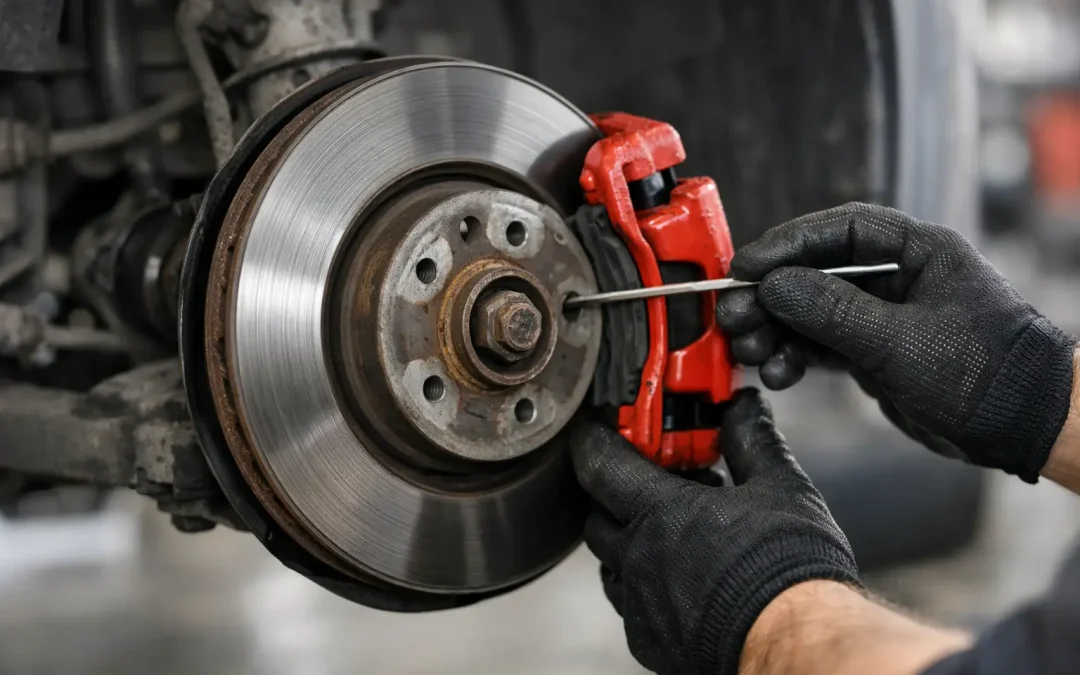
You usually notice a sticking brake caliper before you know what to call it. The car might pull slightly to one side, feel sluggish after a short drive, or give off that hot brake smell when you park. If you are wondering how to tell if brake calipers are sticking, the key is to pay attention to small changes early – because this is one of those faults that can go from annoying to unsafe fairly quickly.
A brake caliper is meant to apply pressure smoothly when you press the pedal, then release properly when you lift off. If it does not release as it should, the brake pad can stay in contact with the rotor. That creates heat, uneven wear, poor fuel economy and, in more serious cases, real braking trouble.
How to tell if brake calipers are sticking on the road
The first signs often show up in normal driving rather than during hard braking. A sticking caliper can cause the vehicle to drag, as though something is holding it back. Some drivers describe it as the car feeling heavier than usual, or not rolling freely when they take their foot off the brake.
Pulling to one side is another common clue. If one front caliper is sticking, the vehicle may drift left or right even when the steering wheel is straight. That does not always mean the caliper is at fault – tyre pressures, suspension wear and wheel alignment can also cause a pull – but if the pull is paired with brake heat or uneven pad wear, the brakes move higher up the suspect list.
You might also notice the steering feels a bit off after braking, or that the vehicle does not coast as cleanly as it should. In stop-start traffic, that extra drag can become more obvious. In a manual, it may feel like the car is resisting you when taking off. In an automatic, it may creep less freely than normal.
Common symptoms of a sticking brake caliper
A sticking caliper rarely hides for long. The symptoms tend to build on each other.
One of the clearest signs is excess heat from one wheel. After a short drive, one wheel may be noticeably hotter than the others. You might even smell hot brakes near that corner of the vehicle. In some cases, the heat gets strong enough to affect nearby components and shorten the life of pads, rotors and wheel bearings.
Uneven brake pad wear is another big one. If the inner and outer pads are wearing differently, or one side of the vehicle is chewing through pads much faster than the other, the caliper may not be sliding or releasing properly. This is where proper inspection matters. Brake wear patterns can tell an experienced technician a lot, but they need to be read in context.
A soft change in pedal feel can happen too. Sometimes the pedal may feel firmer than normal because a pad is already partly applied. Other times, heat buildup can reduce performance and make the brakes feel less consistent. If the rotor has been overheated, you may also feel vibration through the pedal or steering wheel.
Then there is fuel use. A dragging brake creates resistance all the time, not just when stopping. That means the engine has to work harder to keep the vehicle moving. It is not usually the first symptom people notice, but over time it can show up as poorer fuel economy.
What causes brake calipers to stick?
There is no single cause, which is why guessing can get expensive. In many cases, the issue is with the caliper piston, the slide pins, or contaminated and deteriorated brake components.
A seized or corroded piston can stop the caliper from retracting properly. If the dust boot is damaged, moisture and grime can get in and start causing trouble. Slide pins are another common problem area. If they dry out, corrode or bind up, the caliper cannot move as it should. That can leave one pad dragging harder than the other.
Collapsed brake hoses can also mimic caliper faults. A hose may allow pressure through when you press the pedal, but not let it release properly when you come off it. From the driver’s seat, it feels like a sticking caliper. From a repair point of view, that difference matters.
Heat, age and lack of servicing all play a part. Vehicles that tow, carry heavier loads, run larger tyres, or spend time in stop-start driving can be harder on braking components. That does not mean every 4×4 or family car will have caliper trouble, but it does mean regular inspection matters more than people sometimes realise.
A simple check you can do safely
You do not need to pull the whole brake system apart to spot a likely problem, but you do need to be sensible. Brakes are safety-critical, and a hot wheel can burn you.
Start by noticing how the vehicle behaves on a short, normal drive. Is it pulling to one side? Does it feel like it is dragging? Is there a hot smell when you stop? After parking safely, walk around the vehicle and carefully check whether one wheel seems much hotter than the others. Do not touch the rotor or caliper directly.
You can also look through the wheel, where possible, for signs of heavy brake dust on one side, discolouration, or obvious uneven wear. If the vehicle has recently started making squealing or grinding noises from one corner, that adds to the picture.
What you should not do is assume the fix is always a quick clean-up. Sometimes a sticking caliper can be serviced. Sometimes it needs rebuilding or replacement. Sometimes the real fault is elsewhere in the hydraulic system. The right repair depends on the cause, how long the problem has been there, and whether other parts have been damaged by heat.
Why driving on a sticking caliper is risky
Some brake faults give plenty of warning and stay fairly stable for a while. A sticking caliper is less predictable.
At best, it wears pads and rotors faster and makes the vehicle unpleasant to drive. At worst, it can overheat the brake system, reduce stopping performance and create a serious safety issue. If one side is braking harder than the other, the vehicle can become unstable under heavier braking, especially in the wet or on loose regional roads.
Heat is the real problem here. Once a brake is running hot, the damage can spread. Rotors can harden or warp, pads can glaze, fluid can suffer, and nearby rubber components can age faster. What might have started as a sticking slide pin can turn into a much bigger brake job if it is left too long.
Proper diagnosis matters more than parts swapping
This is one of those faults where replacing the obvious part is not always the full answer. A caliper may be sticking because the piston is seized, but it may also be reacting to a hose issue, poor previous workmanship, contaminated fluid or wear elsewhere in the system.
That is why a proper brake inspection should include more than a quick look at the pads. The caliper needs to be checked for free movement, the piston condition needs assessment, the hardware needs inspection, and the rotor and pad wear patterns need to make sense. If overheating has been involved, the surrounding parts deserve attention too.
A no-nonsense workshop will tell you what has failed, what is still serviceable, and what should be replaced now to avoid doing the same job twice. That is better for safety, and usually better for your wallet in the long run.
When to book it in
If you suspect a sticking caliper, do not wait for the next service if the symptoms are clear. A strong hot brake smell, noticeable pulling, smoke from a wheel area, or a wheel that is much hotter than the others all justify getting the vehicle checked promptly.
If the symptoms are mild, such as slight drag or early uneven pad wear, it is still worth having it looked at before a longer trip, towing job or busy week where the car needs to be dependable. For drivers around Albury-Wodonga, where highway runs, hills, trailers and day-to-day commuting all put different demands on brakes, a small fault can become obvious very quickly.
At Albury Brake and Clutch Centre, this is exactly the sort of issue that benefits from specialist diagnosis rather than guesswork. Brakes need to release properly, wear evenly and stay consistent under load. Anything less should be taken seriously.
If your vehicle feels like it is fighting itself, trust that instinct. Brakes are not an area to put off until later, and a straightforward inspection now is often the difference between a tidy repair and a much bigger job down the track.