


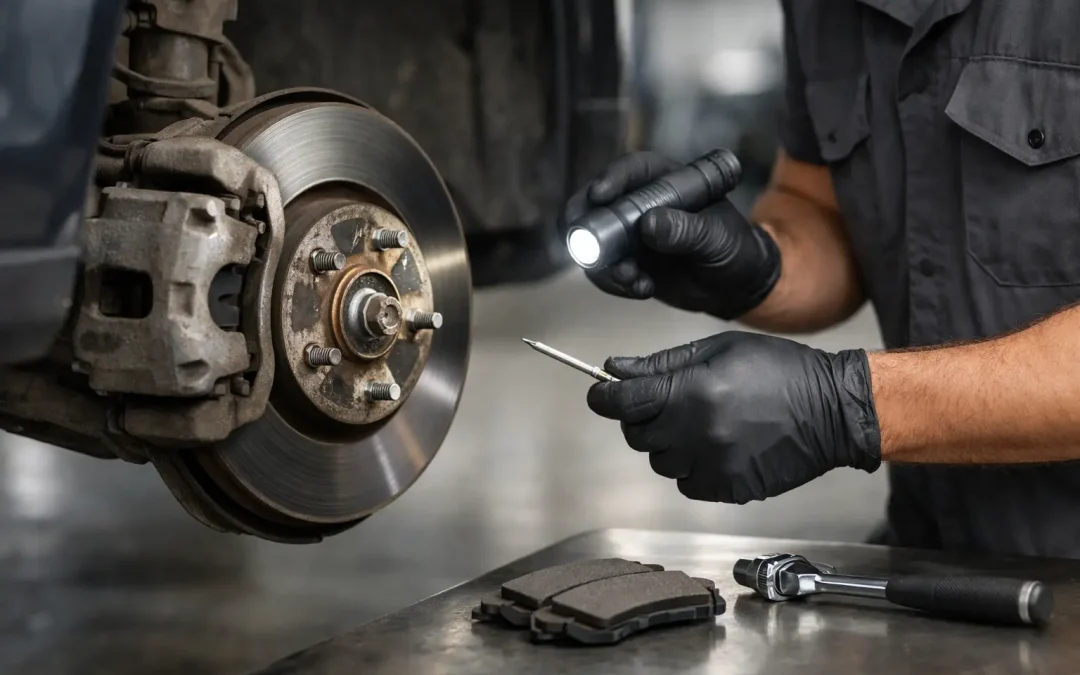
If your brakes only get attention when they start squealing, pulling, or feeling soft underfoot, you are leaving it too late. A good guide to brake inspection intervals is not about servicing parts for the sake of it. It is about catching wear early, keeping stopping distances predictable, and avoiding the sort of damage that turns a straightforward brake service into a much bigger repair bill.
Brakes wear gradually, which is why problems can creep up on drivers. You adapt to the feel of the pedal over time, and small changes often go unnoticed until the vehicle feels clearly unsafe. That is the real reason inspection intervals matter. They give you a sensible timetable for checking a safety-critical system before a warning light, noise, or shudder forces the issue.
A practical guide to brake inspection intervals
For most everyday vehicles, brake inspections should happen at least every 10,000 to 15,000 kilometres, or roughly every 6 to 12 months, depending on how the car is used. That does not always mean parts need replacing at each visit. It means the system should be checked properly so pad wear, rotor condition, brake fluid state, hose condition, and any uneven braking issues are picked up early.
If you drive mostly around town, stop-start traffic will usually wear brake pads faster than steady highway driving. If you tow, carry heavy loads, drive in hilly areas, or run a 4×4 with larger tyres, your brakes are generally working harder again. In those cases, shorter inspection intervals make sense. Waiting for a set kilometre figure from a handbook is not always enough when the vehicle has been modified or used for heavier-duty work.
A lot of drivers assume brake life comes down to kilometres alone. It does not. Two vehicles with the same odometer reading can have very different brake wear depending on driving style, load, terrain, and the quality of the components fitted last time.
Why brake intervals are not one-size-fits-all
Manufacturers give service schedules for a reason, but real-world driving conditions matter just as much. A family SUV doing school runs and short trips can chew through front pads far quicker than a sedan doing mostly open-road kilometres. A ute set up for towing or touring can put extra heat into the braking system, especially on long descents or when carrying more weight.
Heat is the key issue. The harder brakes work, the more heat they generate, and excess heat speeds up wear. It can also affect brake fluid, contribute to rotor cracking or distortion, and expose weak points in the system. That is why a proper inspection looks beyond how much pad material is left. A specialist will also be checking whether the wear is even, whether calipers are operating correctly, and whether the rest of the system is supporting reliable braking.
There is also a cost trade-off. Leaving inspections too long might seem like you are saving money, but worn pads that go metal-to-metal can damage rotors and turn a smaller service into a more expensive job. On the other hand, replacing parts too early is not good practice either. The right interval is the one that matches the way the vehicle is actually driven.
What a brake inspection should include
A proper brake inspection is more than a quick glance through the wheel spokes. Pads need to be measured, rotors checked for wear and condition, and the hydraulic side of the system assessed as well. Brake fluid is often overlooked, but old or moisture-contaminated fluid can affect pedal feel and braking consistency, especially when brakes get hot.
A thorough inspection should also look at caliper movement, flexible hoses, hardware condition, handbrake operation where relevant, and tyre wear patterns that may point to braking or suspension issues. If the vehicle has ABS or electronic brake systems, warning lights and fault codes should never be brushed off as minor electrical annoyances. They can affect how the vehicle behaves in an emergency stop.
This is one reason many drivers prefer a specialist workshop rather than treating brakes as just another line item during a general service. Accurate diagnosis matters. Noise, vibration, or poor stopping can come from several causes, and guessing gets expensive fast.
Signs you should not wait for the next interval
Inspection schedules are useful, but some symptoms mean the car should be checked sooner. If the pedal feels spongy, travels further than usual, or the vehicle pulls to one side under braking, book it in. The same goes for grinding noises, heavy squealing, steering wheel shudder, a burning smell after braking, or a brake warning light on the dash.
Some signs are more subtle. A car that no longer feels as confident stopping in wet weather, a handbrake that needs extra travel, or a 4×4 that feels under-braked after fitting larger tyres all deserve attention. These are not always signs of immediate failure, but they do mean the system is no longer performing as it should.
If you are planning a big trip, towing a caravan, or heading off-road, it is smart to have the brakes inspected before you leave rather than after a problem shows up on the road. Preventive checks are easier, safer, and usually cheaper than emergency repairs.
Brake inspection intervals for 4x4s, towing and heavier use
This is where general advice often falls short. A standard service interval may be fine for a lightly used passenger car, but it may not suit a vehicle that tows regularly, runs oversized tyres, carries tools every day, or has an increased GVM setup. Those vehicles place more demand on the braking system and often benefit from more frequent checks.
For heavier-use vehicles, inspections around every 10,000 kilometres are a sensible baseline, sometimes sooner if the vehicle is working hard. That is especially true if braking performance has changed since modifications were made. Bigger tyres, extra accessories, and towing loads all affect how much effort is needed to stop safely.
In some cases, inspection leads to maintenance. In others, it may lead to a recommendation for upgraded components that better suit the vehicle’s real use. The point is not to oversell parts. It is to make sure the braking system matches the job the vehicle is being asked to do.
How often should brake fluid be checked?
Brake fluid should be inspected regularly and generally replaced according to manufacturer recommendations, often around every two years, though use and conditions can bring that forward. Unlike pads and rotors, brake fluid does not wear out from friction. It absorbs moisture over time, which lowers its boiling point and can reduce braking performance under heat.
Many drivers do not notice brake fluid problems during normal trips. The issue tends to show up when brakes are under more stress, such as towing, descending long hills, or repeated hard braking. A vehicle can feel acceptable day to day and still have fluid that is past its best.
That is another reason a proper brake service schedule matters. It keeps an eye on parts you can hear wearing out, and also on components you usually cannot see or feel until performance drops.
The best approach for most drivers
If you want a simple rule to follow, have your brakes checked at every routine service and make sure they get a more deliberate inspection at least every 10,000 to 15,000 kilometres. If you tow, drive a 4×4, carry heavy loads, or spend a lot of time in stop-start traffic, lean towards the shorter end of that range.
Do not rely on noise alone. Not all pads squeal before they are worn, and not all brake problems announce themselves clearly. Keep an eye on changes in pedal feel, stopping distance, vibrations, and warning lights. Small changes matter with brakes.
For drivers around Albury Wodonga, that usually means treating brake inspections as routine maintenance rather than emergency work. That approach gives you more control over timing, cost, and parts choice, and it greatly reduces the chance of being caught out by avoidable wear.
At Albury Brake and Clutch Centre, the right brake interval is always based on how the vehicle is actually used, not a one-size-fits-all guess. Straight answers, proper diagnosis, and repairs done properly are what keep brake servicing worthwhile.
Your brakes do not need constant attention, but they do need the right attention at the right time. A regular inspection schedule is one of the simplest ways to keep your vehicle safe, dependable, and ready to stop as it should when it matters most.