


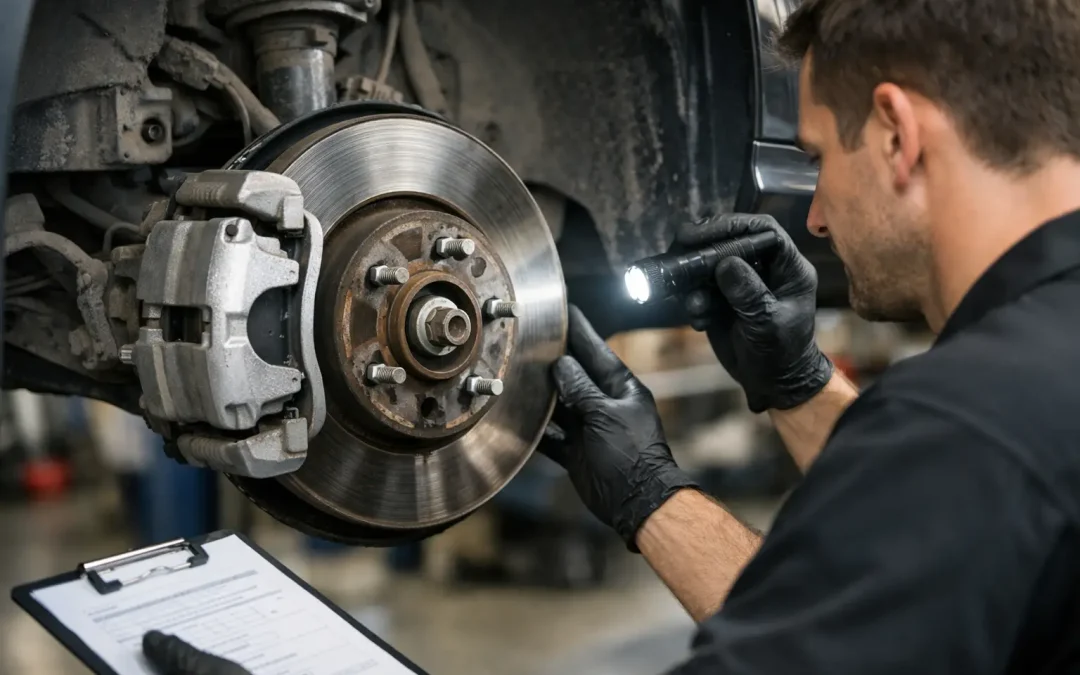
A brake problem rarely starts with a dramatic failure. More often, it is a faint squeal at the school drop-off, a soft pedal in stop-start traffic, a steering wheel shake on the highway, or a vehicle that does not feel as confident under load. An Albury Wodonga brake inspection gives you a clear answer before a small issue becomes a safety risk or a more expensive repair.
Brakes are not a system to guess about. Modern vehicles use several components working together – pads, rotors, calipers, brake fluid, hoses, wheel bearings, ABS sensors and more. Wear in one area can affect how the whole vehicle stops. The right inspection identifies the actual cause, explains what needs attention now and separates it from work that can safely wait.
When should you arrange a brake inspection?
Your logbook service interval is a sensible starting point, but brakes deserve attention whenever the vehicle feels different. This matters particularly for regional drivers who combine town driving with highway kilometres, steep descents, towing, dirt roads or regular trips with a loaded vehicle.
Brake pads do not wear at exactly the same rate on every car. A commuter doing short trips around town may use pads faster than a driver covering long highway distances. A 4×4 carrying camping gear, larger tyres or a caravan has more weight and momentum to control, which places extra demand on the brakes. The condition of the parts, not just the kilometres on the odometer, should guide the decision.
Squealing, grinding or scraping noises
A light squeal can sometimes be caused by dust, moisture or the pad material itself. But repeated squealing is worth checking, especially when braking. Many pads include a wear indicator designed to make noise as the friction material gets low.
Grinding or harsh scraping needs quicker attention. It can mean the pad material has worn through and metal is contacting the rotor. Continuing to drive can damage parts that may otherwise have been serviceable and can reduce braking performance.
A soft, spongy or changing brake pedal
A healthy brake pedal should feel firm and predictable. If it travels further than usual, feels spongy, slowly sinks while held down, or requires pumping before the brakes respond properly, book an inspection promptly.
The cause may be old or contaminated brake fluid, air in the hydraulic system, a fluid leak or a component fault. It is not something to put down to normal vehicle ageing. Brake fluid absorbs moisture over time, which can lower its boiling point and contribute to corrosion inside the system.
Pulling, shuddering or vibration when stopping
If the vehicle pulls to one side under brakes, it may point to uneven braking force, a sticking caliper, worn suspension components or tyre-related issues. A vibration through the steering wheel or pedal can be linked to rotor run-out, uneven pad deposits or other faults that need proper measurement rather than a quick assumption.
There is a trade-off here. Replacing pads and rotors may be the right repair, but it is not automatically the answer to every shudder. A specialist inspection prevents money being spent on parts before the underlying issue is confirmed.
Brake warning lights or a burning smell
A brake, ABS or stability-control warning light should be checked as soon as practical. These systems are designed to support controlled braking, particularly in wet conditions or emergency stops. The vehicle may still feel normal, but a stored fault can affect how those safety systems operate.
A hot, burning smell after ordinary driving can indicate a brake dragging rather than releasing properly. If a wheel feels unusually hot, there is smoke, or braking performance changes suddenly, stop driving when safe to do so and arrange assistance. Do not try to diagnose a serious brake fault on the roadside.
What happens during an Albury Wodonga brake inspection?
A proper inspection is more than a glance through the wheel spokes. The vehicle is assessed as a system, with the aim of finding the cause of any complaint and checking the condition of wear items and safety-critical components.
The technician will generally inspect pad thickness and wear pattern, rotor condition and thickness, caliper movement, brake hoses, fluid condition and visible leaks. They will also check the parking brake where applicable and consider related components that can affect braking, such as wheel bearings, tyres and suspension.
For vehicles with an ABS or electronic stability-control warning light, diagnostic scanning may be needed to identify stored fault codes. A code is a starting point, not a complete diagnosis. The fault could relate to a wheel speed sensor, wiring, a reluctor ring or another issue. Testing and inspection determine what has actually failed.
You should leave with straight answers: what is worn, what is causing the symptom, what repairs are recommended, and how urgent they are. That is the difference between replacing parts on assumption and repairing the vehicle properly.
Pads, rotors and fluid: why quality matters
Brake repairs are not all equal. The cheapest available parts can be tempting, particularly when the car is due for several jobs at once. But brake components need to suit the vehicle, its load, the way it is driven and the demands placed on it.
For an everyday family car, a quality replacement pad and rotor combination may provide quiet operation, reliable cold performance and good service life. For a ute that tows regularly or a 4×4 set up for touring, standard replacement components may not be the best fit. Larger tyres, added accessories and increased GVM can make a real difference to stopping demand.
A brake upgrade should not be treated as a badge or a one-size-fits-all answer. Bigger components can be worthwhile where the vehicle genuinely needs greater heat capacity and braking performance, but the setup needs to be compatible and correctly installed. The goal is controlled, repeatable stopping – not simply fitting the most expensive parts available.
At Albury Brake and Clutch Centre, the focus is on matching quality components to the vehicle and the job it does, whether that means dependable standard replacement parts or a heavy-duty 4×4 brake solution for towing and touring.
Do not wait for metal-on-metal braking
Putting off an inspection can cost more than the original repair. Pads are designed as a wear item. Replacing them at the right time can help protect the rotors. Leave them too long, and damaged rotors, overheated calipers or contaminated brake fluid may add to the bill.
There is also the practical cost of being without your vehicle. For families, tradies and people commuting between Albury and Wodonga, a car off the road can disrupt work, school runs and day-to-day life. Catching brake concerns early gives you more options to plan repairs rather than dealing with an urgent breakdown.
That does not mean every noise requires a major brake overhaul. Some noises are minor, and some wear can be monitored safely. Honest advice means being told the difference, without pressure or unnecessary upselling.
A simple check before your next trip
Before a long drive, towing trip or holiday run, think about the last time the brakes were inspected and how the vehicle has felt since. Pay attention to pedal feel, braking noise, warning lights and whether the vehicle stays straight and stable when stopping.
If something has changed, trust that signal and get it checked. Brakes should give you confidence every time you press the pedal. A careful inspection now is a practical way to protect the people in your vehicle, the vehicles around you and the reliability of the car you rely on every day.