


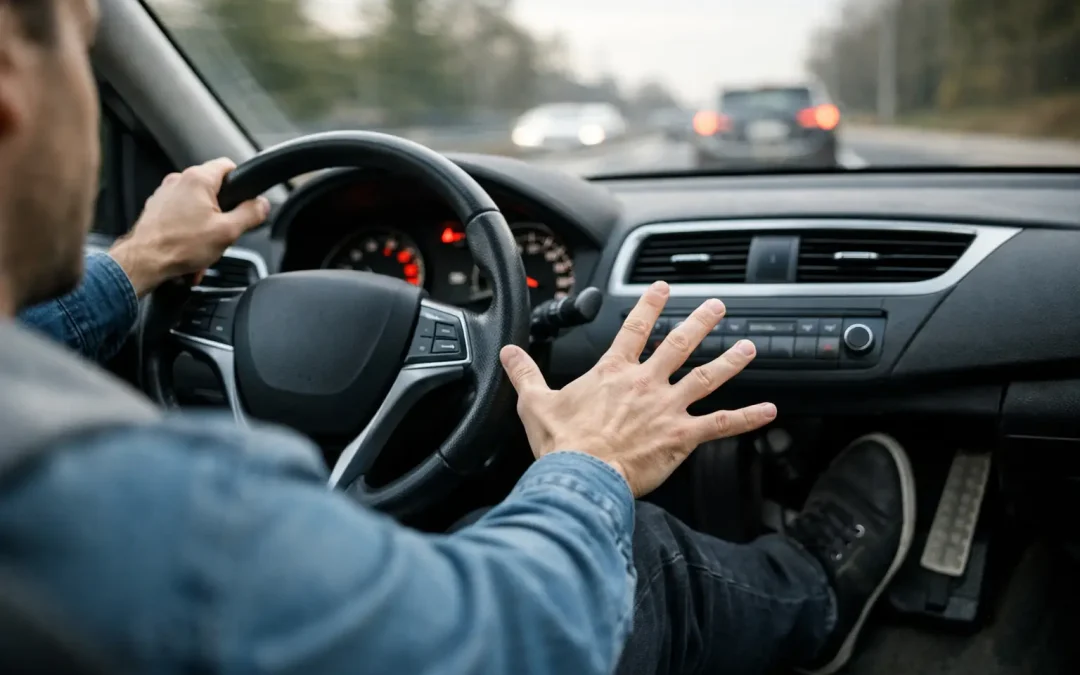
A brake pedal that suddenly drops to the floor is one of the most frightening faults a driver can face. If your brakes fail suddenly, the priority is not diagnosing the problem from the driver’s seat – it is reducing speed, staying in control and getting yourself away from traffic as safely as possible.
Most total brake failures are preceded by warning signs, but not always. A burst brake hose, serious fluid leak or failed hydraulic component can turn a normal trip into an emergency with little notice. Knowing what to do can make a real difference.
If your brakes fail suddenly: stay calm and slow the vehicle
Take a breath and keep both hands firmly on the steering wheel. Panic leads to overcorrection, abrupt steering and decisions that can make an already dangerous situation worse. Look well ahead for a clear, safe place to bring the vehicle to a stop – ideally a wide shoulder, empty side street, open verge or level car park.
Press the brake pedal firmly and steadily. If the pedal feels soft or sinks away, pump it several times. In some hydraulic faults, pumping the pedal may temporarily build enough pressure to provide some braking. If it does not, do not keep your attention fixed on the pedal. Your next job is to use every safe method available to reduce speed.
Take your foot off the accelerator and change down through the gears where it is safe to do so. In a manual vehicle, shift down one gear at a time and release the clutch smoothly. In an automatic, select a lower gear or the manual mode if fitted. Engine braking is not a substitute for service brakes, but it can slow the vehicle progressively and give you more time.
Turn on your hazard lights early. Other drivers need to know that you are dealing with a problem and may be slowing unexpectedly. Use the horn if necessary to alert vehicles or pedestrians around you.
Use the parking brake carefully
Your parking brake can help, but it must be applied gradually. Pulling a conventional handbrake on hard at speed can lock the rear wheels and cause a skid, particularly on wet roads, gravel or loose surfaces. Keep the release button engaged if your handbrake design allows it, then apply light, progressive pressure while keeping the vehicle pointed straight.
Electronic parking brakes differ between makes and models. Some systems provide a controlled emergency braking function when the switch is held, while others behave differently. If you are familiar with your vehicle’s handbook, follow its emergency braking guidance. If not, use it cautiously and focus on steering the vehicle somewhere safe.
Do not switch the engine off while the vehicle is moving. You may lose power steering assistance and, depending on the vehicle, risk steering lock engagement. Keep the engine running until you have stopped.
Where to aim when you cannot stop normally
A controlled stop is always the goal, but you may need to make a practical choice about where to lose the remaining speed. Avoid crossing into oncoming traffic or trying to squeeze between vehicles. Steer towards the safest open area available and keep your movements smooth.
An uphill road, a gentle incline, a clear gravel shoulder or an empty verge can help bring the vehicle to a stop. In a true last-resort situation, allowing the tyres to scrub gently against a kerb or using a clear embankment may be less dangerous than entering an intersection at speed. This is not ideal, and it may damage the vehicle, but people come before panels and wheels.
Once stopped, select Park or neutral as appropriate, apply the parking brake fully and switch the engine off. Get yourself and passengers away from traffic if the location is unsafe. Call for roadside assistance or emergency help. If there has been a crash, anyone is injured, or the vehicle is creating an immediate road hazard, call 000.
Do not drive the car again, even if the pedal seems to return to normal after a few minutes. Brakes do not fix themselves. A fault that appears intermittent can fail completely the next time you need to stop.
Why brakes can fail without much warning
Modern braking systems have separate hydraulic circuits, so a single fault does not always mean all braking is lost. You may still have reduced braking at one end of the vehicle, or a pedal that needs much more force and travel than usual. That partial loss is still an urgent safety issue.
Brake fluid leaks are one common cause. Fluid may escape from a damaged flexible hose, corroded brake line, leaking caliper, wheel cylinder or master cylinder. Without enough hydraulic pressure, the pedal can travel to the floor and the brakes cannot clamp properly.
A failed master cylinder can produce similar symptoms, sometimes without an obvious puddle under the vehicle. Internal seals can wear or fail, allowing pressure to bypass within the cylinder rather than being sent to the wheels. Brake fluid that has been neglected can also absorb moisture over time, lowering its boiling point and contributing to poor braking under heavy use.
Overheated brakes are another concern, especially for 4x4s, vehicles towing caravans or trailers, and work utes carrying regular loads. Long downhill runs, increased vehicle mass, larger tyres and unsuitable brake components all place more demand on the system. Severe heat can lead to brake fade, where the vehicle still has brakes but stopping power drops sharply.
Mechanical faults matter too. Worn pads, damaged rotors, seized calipers and loose or contaminated components can each compromise braking performance. The exact cause cannot be guessed reliably from one symptom. Proper diagnosis means inspecting the whole system, finding the source of the failure and repairing the cause rather than simply replacing the most visible part.
Warning signs that need prompt attention
Many drivers get a warning before a major brake problem develops. The mistake is assuming a noise or odd pedal feel can wait until the next service. With brakes, small changes deserve a proper check.
Book an inspection promptly if the brake pedal feels spongy, travels further than usual, pulses under normal braking, or needs pumping before it feels firm. A vehicle that pulls to one side, shudders through the steering wheel, makes grinding noises or takes longer to stop also needs attention.
Watch for a brake warning light, ABS light, a burning smell after normal driving, or brake fluid below the minimum mark in the reservoir. Low fluid can be caused by pad wear, but it can also point to a leak. Topping it up without finding out why it is low can hide a serious problem.
For towing and touring vehicles, pay close attention after fitting larger tyres, increasing GVM or adding regular trailer weight. The brakes that were adequate for an unloaded standard vehicle may no longer provide the same margin of safety. In some cases, a correctly matched heavy-duty brake upgrade is a sensible investment. In others, quality replacement parts and a thorough service are all that is needed. It depends on the vehicle, load, driving conditions and how it is used.
What a proper brake inspection should involve
A quick glance through the wheel spokes is not a brake inspection. A specialist should assess pedal feel, warning lights, brake fluid condition, pad and rotor wear, caliper operation, hoses, hard lines, wheel cylinders where fitted, and the master cylinder. The system should also be checked for leaks and tested after repair.
The right repair is not always the biggest repair. Sometimes the issue is straightforward, such as a worn set of pads or a leaking hose. Other times, corrosion, heat damage or an underlying hydraulic fault means several components need attention for the vehicle to be safe and reliable. Straight answers should include what has failed, why it matters, what work is necessary now and what can reasonably be monitored.
Quality parts and correct installation are particularly important in a safety-critical system. Cheap components can be a false economy if they wear quickly, perform poorly under heat or create noise and vibration problems. A repair done properly should restore confidence in the pedal and provide dependable stopping performance well beyond the trip home from the workshop.
Do not wait for the next service
A brake concern is not something to test by continuing to drive and seeing whether it gets worse. If the pedal has changed, a warning light is on, fluid is low, or braking feels unpredictable, arrange an inspection before using the vehicle again where possible.
For drivers across Albury Wodonga, Albury Brake and Clutch Centre can assess the full braking system, explain the fault in plain language and carry out repairs with quality components. Whether it is a family car, work ute, 4×4 or tow vehicle, the aim is simple: find the real problem and fix it properly.
Your brakes are there for the moment you do not expect. Give any warning sign the attention it deserves, and you are far more likely to keep an inconvenience from becoming an emergency.