


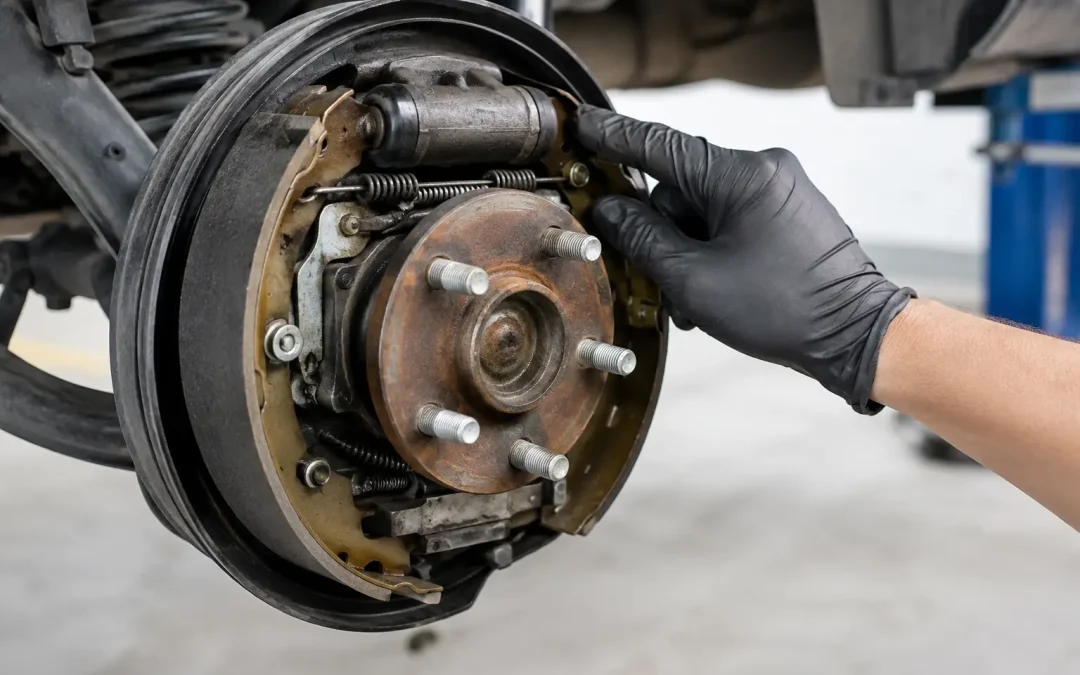
A wheel cylinder can begin leaking long before it creates an obvious braking emergency. That is why recognising the signs of failing wheel cylinders matters, particularly if your vehicle has rear drum brakes. A soft brake pedal, a pull under braking or a drop in brake fluid may seem minor at first, but each can point to a fault that needs proper attention – not a wait-and-see approach.
Wheel cylinder faults are often hidden behind the brake drums, so drivers do not always see the problem until braking performance changes. The good news is that a thorough inspection can identify the cause and prevent further damage to the brake shoes, drums and hydraulic system.
What a wheel cylinder does
Wheel cylinders are hydraulic components fitted inside drum brake assemblies. When you press the brake pedal, brake fluid pressure pushes small pistons out from each side of the cylinder. Those pistons force the brake shoes against the inside of the drum, creating the friction that slows the wheel.
Most modern passenger vehicles use disc brakes at the front, while many still use drum brakes at the rear. You are also likely to find drum brakes on older vehicles, trailers and some utes. If your vehicle has rear discs, it will have brake calipers rather than wheel cylinders in its service brakes.
A wheel cylinder relies on rubber seals to hold brake fluid under pressure. With age, heat, moisture and general wear, those seals can harden or deteriorate. Once fluid gets past the seals, the cylinder cannot apply the brake shoes as reliably as it should.
Common signs of failing wheel cylinders
The warning signs vary depending on how severe the leak is and whether one or both rear wheel cylinders are affected. Do not assume a vehicle is safe simply because it still stops. Brake faults can worsen quickly, especially when a small fluid leak turns into contaminated brake linings.
A soft, spongy or sinking brake pedal
A brake pedal that feels softer than usual is one of the more common hydraulic warning signs. If a wheel cylinder leaks, the brake system can lose fluid and may draw in air. Air compresses under pedal pressure, unlike brake fluid, so the pedal can feel spongy or travel closer to the floor.
A sinking pedal can also be caused by other faults, including a failing master cylinder or a fluid leak elsewhere in the system. It needs diagnosis rather than guesswork. If the pedal suddenly travels much further than normal, avoid driving the vehicle and arrange an inspection.
Brake fluid level keeps dropping
Brake fluid does not get used up like engine oil. A gradual drop in the reservoir can happen as brake pads and shoes wear, but a noticeable or repeated loss of fluid should always be investigated.
Check the brake fluid reservoir only when the vehicle is parked safely on level ground, but do not rely on the fluid level alone. A leaking wheel cylinder may release fluid inside the brake drum, where it cannot be seen from outside the vehicle. Topping up the reservoir without fixing the leak only masks a safety-critical issue.
Fluid around the backing plate or inside the wheel
In more advanced cases, brake fluid may appear on the inside edge of the tyre, wheel or rear brake backing plate. It can look wet or oily and may collect dust and road grime. This is a clear reason to stop driving until the brakes have been checked.
Not every wet patch near a wheel is brake fluid. It could be a shock absorber leak, differential oil or another mechanical issue. Brake fluid is usually thin and can damage paint, so it is best not to touch or try to identify it by smell. A workshop can confirm the source safely.
Pulling, grabbing or uneven braking
When one rear wheel cylinder sticks or leaks more than the other, the brake shoes may not engage evenly. You may notice the vehicle pulling to one side, a grabby feeling at low speed or an unsettled rear end when braking.
These symptoms can also come from uneven tyre pressures, seized calipers, worn suspension components or brake shoe issues. The trade-off in delaying diagnosis is simple: an occasional pull can become unpredictable braking when you need it most, particularly on wet roads or while towing.
Reduced handbrake performance
The handbrake works mechanically on many drum-brake systems, but a leaking wheel cylinder can soak the brake shoes in fluid. Contaminated shoes lose friction, which may leave the handbrake feeling weak or needing more travel to hold the vehicle.
If your handbrake no longer holds confidently on an incline, do not keep adjusting it blindly. The underlying problem may be worn, contaminated or incorrectly adjusted drum brake components.
A burning smell or unusual rear brake noise
A sticking wheel cylinder may prevent a brake shoe from retracting properly. That shoe can drag against the drum, creating excess heat, a burning smell or noises from the rear brakes. You might also notice poorer fuel economy or a wheel that feels unusually hot after a short drive.
Never pour water over a hot brake assembly. Let it cool naturally and have it inspected. Heat can damage drums, shoes, seals and wheel bearings, turning a relatively contained repair into a larger job.
Why a leaking wheel cylinder is more than a small fluid leak
Brake fluid leaking from a wheel cylinder does two jobs at once: it reduces hydraulic pressure and contaminates friction material. Brake shoes absorb fluid readily, and cleaning them rarely restores reliable braking. In most cases, replacing the leaking cylinder alone is not the complete repair.
A proper repair may involve replacing the wheel cylinder, fitting new brake shoes if they are contaminated or worn, inspecting the brake drum, checking the hardware and adjusting the assembly correctly. The system then needs to be bled to remove air and restore a firm pedal.
It is also worth considering the condition of the cylinder on the opposite side. Wheel cylinders generally age at a similar rate. Replacing both sides can make practical sense for balanced braking and avoids paying for the same labour again shortly afterwards. That said, the right decision depends on inspection findings, the vehicle’s condition and the quality of the remaining component – not a one-size-fits-all sales pitch.
What not to do when you suspect a fault
Do not continue driving for days while topping up brake fluid. Do not spray cleaners into the drum in the hope of fixing contaminated brake shoes. And do not assume an annual service will catch the issue if you are already noticing pedal changes, pulling or visible fluid.
If braking feels substantially different, the brake warning light comes on, or fluid is visible at a wheel, treat the vehicle as unsafe to drive. Arrange recovery where necessary. A short trip to save time can become a far more expensive repair if braking performance drops or other components are damaged.
How a proper brake inspection finds the cause
The brake drum must be removed to inspect the wheel cylinder, brake shoes and hardware properly. A technician will check for wetness around the cylinder boots, seized pistons, lining contamination, drum wear, leaks in brake lines and the operation of the handbrake mechanism.
The hydraulic system should then be checked as a whole. A soft pedal is not automatically a wheel cylinder issue, and accurate diagnosis prevents unnecessary parts being fitted. Once repairs are complete, the brake system is bled, adjusted and road-tested to confirm it pulls up straight and the pedal feels right.
For drivers around Albury Wodonga, Albury Brake and Clutch Centre can inspect drum brakes, identify the actual fault and explain what needs replacing before work begins. The aim is straightforward: quality parts, correct repairs and no pressure to spend money where it is not needed.
Do not wait for a complete brake failure
Wheel cylinders are small components, but they have a direct effect on braking control. If you have noticed a softer pedal, falling fluid level, weak handbrake or any sign of brake fluid near a wheel, book an inspection while the issue is still manageable. Getting it checked early protects the rest of the brake system and gives you confidence every time you press the pedal.