


That soft brake pedal, faint squeal at low speed or steering-wheel shudder is easy to put off when the car still stops. But brakes rarely improve on their own. A proper brake inspection guide helps you recognise the early signs, understand what is being checked and make a clear decision before a small issue becomes an unsafe or expensive repair.
Your braking system works hard every time you drive, particularly around town, on hilly roads, when towing, or with a loaded 4×4. Pads, rotors, fluid, hoses and calipers all need to work together. One worn or sticking component can affect stopping distance, tyre wear and the way the vehicle handles in an emergency.
When Your Car Needs a Brake Inspection
Some brake problems announce themselves clearly. Others develop gradually, which is why regular servicing matters even if the vehicle feels mostly normal. If you notice a change in how your brakes feel, sound or respond, it is worth having it checked rather than waiting for the next scheduled service.
A high-pitched squeal can mean the pads are nearing the end of their usable life, although dust or surface rust can also cause temporary noise. A harsh grinding sound is more urgent. It may mean the pad material has worn away and metal is contacting the rotor. Continuing to drive can quickly damage the rotors and reduce braking performance.
Vibration through the brake pedal or steering wheel while braking often points to rotor run-out, uneven rotor wear or a brake component that is not operating correctly. The fix is not always as simple as fitting new pads. The cause needs to be identified so the repair lasts.
Pay attention to pedal feel as well. A spongy pedal, a pedal that travels further than usual, or one that slowly sinks while held under pressure can indicate old brake fluid, air in the system, a leak or a hydraulic fault. A vehicle that pulls to one side under braking may have a sticking caliper, uneven pad wear, tyre issues or suspension concerns. These are not faults to diagnose by guesswork.
If the brake warning light comes on, arrange an inspection promptly. It may relate to low brake fluid, worn pads on some vehicles, or an issue with the braking or ABS system. Do not assume it is safe to keep driving simply because the car still stops.
What a Proper Brake Inspection Includes
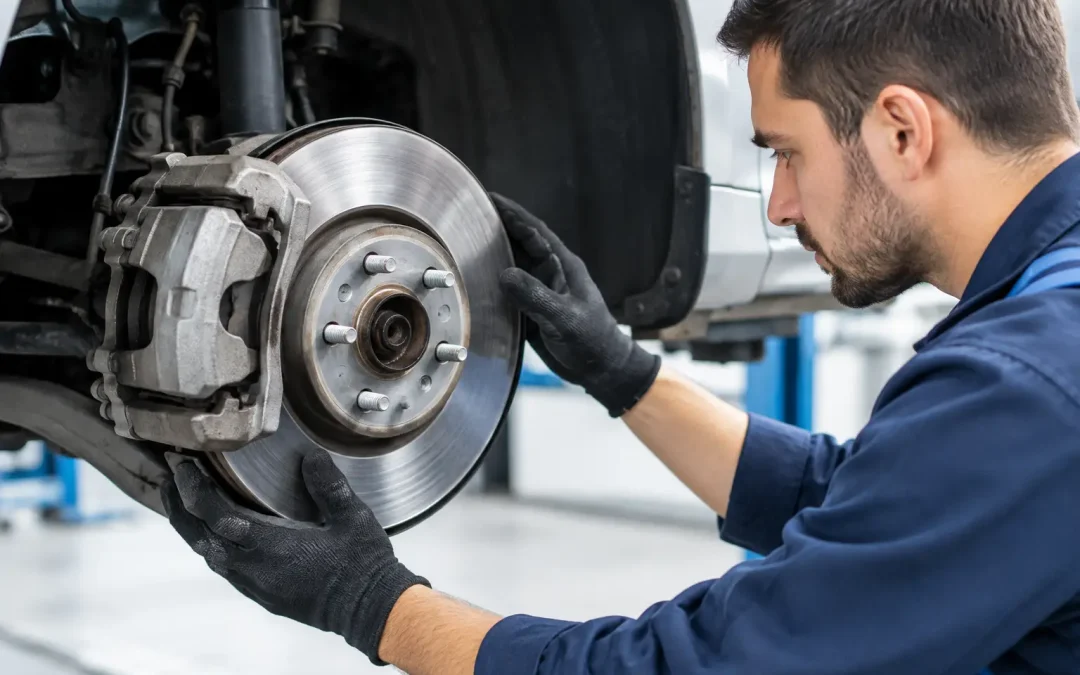
A useful brake inspection is more than a quick look through the wheel spokes. The wheels often need to come off so the technician can accurately measure wear and inspect parts that cannot be seen from outside.
The first check is usually pad thickness and wear pattern. Brake pads should wear evenly across the axle. Inner pads can wear much faster than outer pads when a caliper slide or piston is sticking, so checking only the visible pad can miss the real condition. The technician will also assess whether the pads are glazed, cracked, contaminated or separating from their backing plates.
Rotors are measured for thickness and checked for heat spots, grooves, cracking, corrosion and excessive run-out. Every rotor has a minimum safe thickness. Once it is at or below that limit, it should be replaced rather than machined again. In many modern vehicles, replacing pads and rotors together is the sensible long-term repair because it gives the new pads a clean, correctly matched surface to bed into.
The inspection should also cover calipers, mounting hardware, flexible brake hoses and hard lines. A seized slide pin, damaged boot or weeping hose can create uneven braking long before it becomes obvious from the driver’s seat. Brake fluid condition matters too. Brake fluid absorbs moisture over time, which lowers its boiling point and can contribute to internal corrosion. That is particularly relevant for vehicles used in stop-start traffic, towing or long descents.
Finally, a road test and scan for relevant fault codes may be needed, depending on the symptoms and vehicle. Modern braking systems can involve electronic parking brakes, ABS, stability control and brake wear sensors. Proper diagnosis protects you from paying for parts that do not address the cause.
Front and rear brakes do different jobs
Front brakes generally handle the greater share of braking force because weight transfers forward when you slow down. That usually means front pads wear faster. However, rear brakes still play a critical role in stability, parking-brake operation and balanced stopping performance.
Some vehicles use rear drum brakes, while others have rear discs with an integrated parking brake system. A rear brake inspection may include checking shoes, drums, wheel cylinders, parking-brake adjustment and hardware. It depends on the vehicle, but no part of the system should be ignored because the front pads look worn.
How Often Should Brakes Be Checked?
There is no single kilometre figure that suits every vehicle. A commuter doing mostly highway kilometres may get far longer pad life than a family car used for short school runs and stop-start traffic. Towing a caravan, carrying tools in a ute, fitting larger tyres or driving steep country roads also increases brake load.
As a practical rule, have the brakes inspected at every scheduled service and any time you notice a change in performance. Brake fluid should be tested during servicing and replaced according to the manufacturer’s schedule or earlier if its condition calls for it. Waiting until pads make noise is not a maintenance plan. By then, rotor damage may already be underway.
For 4x4s set up for touring, towing or increased GVM, standard braking components may no longer be the best match for how the vehicle is used. A well-chosen upgrade can improve heat management and pedal consistency, but it needs to suit the vehicle, its load and its legal requirements. Bigger is not automatically better. The right setup is the one that delivers reliable, balanced braking in real conditions.
A Brake Inspection Guide for Common Decisions
One common question is whether pads can be replaced on their own. Sometimes they can. If the rotors are within specification, have an appropriate surface finish and are wearing evenly, pad replacement may be reasonable. If rotors are badly scored, below minimum thickness, heat-affected or causing pedal vibration, fitting pads alone is usually false economy.
Another question is whether cheaper parts are good enough. The answer depends on the part and the job, but brakes are not the place for unknown-quality components. A quality pad and rotor combination is designed to provide predictable friction, heat resistance and service life. It can also reduce noise, dust and repeat repairs. The cheapest quote can become expensive if it leaves the underlying fault untreated or requires the work to be redone early.
Brake fluid leaks, hydraulic faults and severe grinding need urgent attention. If the pedal is very soft, the vehicle pulls sharply, the warning light is on, or braking performance is clearly reduced, avoid driving it except where necessary to get it safely repaired. If you are unsure, ask for straight advice before taking the risk.
What You Can Check Between Services
You do not need to dismantle anything to stay alert to brake condition. Notice whether the pedal feel has changed, whether the car stops straight and whether new noises occur only under braking. Check for puddles or wetness near the wheels, although many leaks are not easily visible. Keep an eye on warning lights and do not ignore a burning smell after normal driving.
You can also look through the wheels on some vehicles to get a rough sense of pad material, but treat this as a guide only. The inner pad, rotor measurement and caliper condition cannot be reliably assessed from the driveway. Avoid spraying lubricants or cleaners around braking parts unless you know exactly what you are doing. Contaminated pads can seriously reduce braking performance.
Clear Advice Before Brake Repairs
A brake inspection should leave you knowing what is worn, why it needs attention, what can wait and what should be repaired now. At Albury Brake and Clutch Centre, that means measuring components, diagnosing the cause of uneven wear and recommending quality parts suited to the vehicle and how it is used – with no pressure and no unnecessary upselling.
Brakes are one of those systems where acting early gives you more choice and usually keeps costs under control. If something feels different, book an inspection while it is still a question rather than an emergency.