


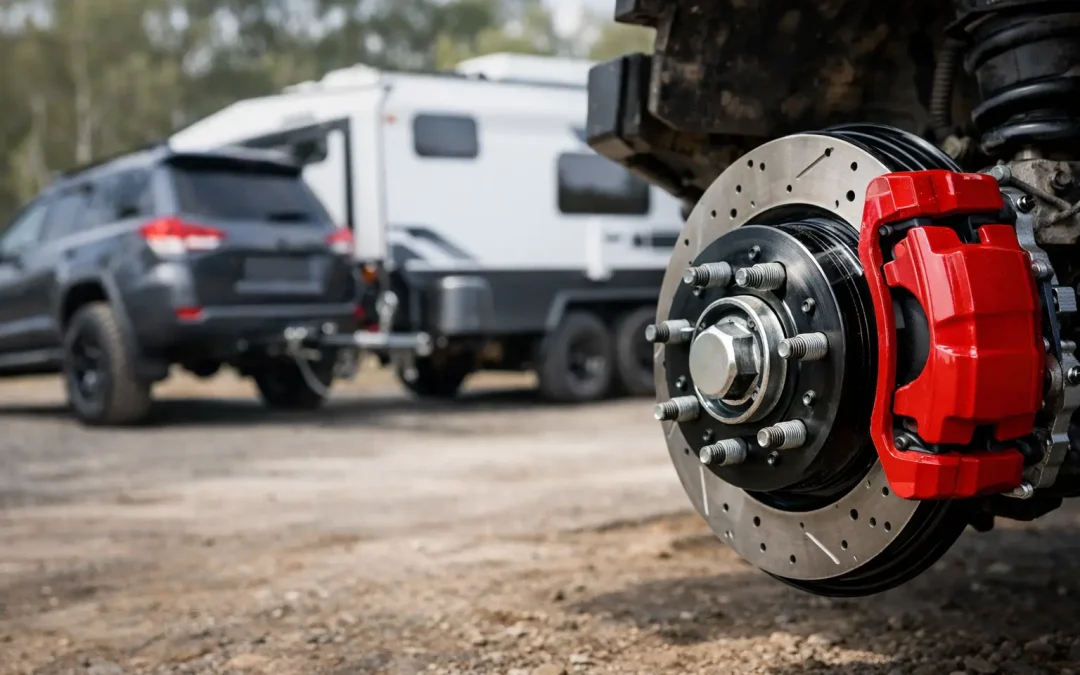
Hooking a van onto the back, loading the ute for a trip, or stepping up to larger tyres can change how your vehicle stops far more than most drivers expect. A proper 4wd brake upgrade guide starts with that reality – braking performance is not just about going harder, it is about stopping safely and consistently when the vehicle is heavier, working harder, and spending more time on the road.
Plenty of 4WD owners only think about brakes once they notice longer stopping distances, pedal fade on hills, or a brake pedal that feels ordinary under load. By then, the system is already telling you it is being pushed beyond what the standard setup was designed to handle. For towing, touring, tradie use, or increased GVM, an upgrade can be a sensible reliability and safety decision rather than a performance add-on.
When a 4WD brake upgrade actually makes sense
Not every vehicle needs bigger brakes. If your 4WD spends most of its life around town with factory-size tyres and no extra load, a quality standard-spec replacement may be the right answer. Good rotors, good pads, correct fitting and proper diagnosis often fix braking complaints without chasing parts the vehicle does not need.
Where upgrades start to make sense is when the vehicle has changed from standard use. Towing is the obvious one. Add a caravan, boat, horse float or work trailer and your braking system is dealing with more mass, more heat and more repeated stopping effort. The same applies to touring builds carrying drawers, long-range tanks, roof loads, recovery gear and passengers. Larger tyres are another common trigger because they increase rotational mass and can reduce effective braking leverage.
If you have already increased GVM, fitted accessories that add serious weight, or you regularly drive in hilly country, that is usually where the conversation becomes less about nice-to-have improvements and more about braking capacity. A vehicle can still feel acceptable in light suburban driving but show its limits quickly when it is loaded and working.
What problems an upgrade is meant to solve
The best 4wd brake upgrade guide is not really about shiny parts. It is about solving a specific braking problem.
The first issue is heat. Brakes convert motion into heat, and once too much heat builds up, performance drops. That is when drivers complain about fade, a longer pedal, or brakes that feel strong for the first stop then average after that. Towing down long descents or making repeated stops with a heavy load is where heat capacity matters.
The second issue is stopping confidence. Some vehicles do not technically fail to stop, but they need too much pedal effort or too much road to do it comfortably. That matters when traffic changes quickly or road conditions are poor.
The third issue is component durability. A heavily loaded 4WD can chew through pads and rotors faster than expected. In that case, an upgrade may improve not just braking feel but service life and consistency.
A proper upgrade starts with diagnosis
Before anyone starts talking bigger rotors or multi-piston calipers, the existing system needs to be checked properly. Poor braking can come from worn pads, glazed rotors, sticking calipers, old brake fluid, rear brake imbalance, soft hoses, trailer brake problems or tyres that are simply not helping. Throwing upgrade parts at the wrong problem is expensive and often disappointing.
This is where specialist brake advice matters. The right setup depends on how the vehicle is actually used, not on what looks good on paper. A touring wagon with occasional towing needs a different outcome from a trade ute carrying tools every day. One may benefit from a heavy-duty pad and rotor package. Another may need a more substantial upgrade in rotor size and caliper capacity.
At Albury Brake and Clutch Centre, that practical approach matters because brake work is safety-critical. The goal is not to oversell parts. It is to match the system to the load and use so the vehicle stops properly and stays reliable.
The main parts in a 4WD brake upgrade guide
Rotors are usually the first part people look at. A larger or heavier-duty rotor can improve heat management and braking consistency, especially under load. Quality matters here. Better metallurgy, correct machining and the right rotor design all make a difference to durability.
Pads are just as important. The friction material needs to suit the job. A pad that works well in light daily driving may not be ideal for towing or mountain descents. Heavy-duty pads can offer better bite and heat tolerance, but there is always a trade-off. Some create more dust, some can be noisier, and some need a bit of temperature in them before they feel their best.
Calipers are part of the conversation when the factory setup is clearly undersized for the vehicle’s current use. More clamping force and better pad contact can improve control, but a caliper upgrade only works properly when it is engineered as part of the full package.
Brake fluid often gets overlooked. Old or contaminated fluid can boil under heavy use and cause a soft or fading pedal. If the system is being upgraded, fluid condition should be addressed at the same time. In some cases, braided lines are also discussed to improve pedal feel, but they are not a cure-all and should never distract from the bigger issue of total braking capacity.
Bigger is not always better
This is where many online discussions go off track. The largest kit available is not automatically the best choice.
An upgrade has to suit the vehicle, the wheel size, the load, and the way it is driven. Go too aggressive and you can end up with a setup that is noisy, over-sensitive in light driving, harder to maintain, or poor value for the real-world use. There can also be compatibility issues with wheel clearance, master cylinder feel and overall brake balance.
That is why the best results usually come from a balanced package rather than chasing a single big component. Good pads with quality rotors and a healthy hydraulic system can outperform a poorly matched big brake kit every day of the week.
Towing, tyres and touring loads change the equation
A lot of regional drivers only notice braking weaknesses when they head away loaded up. Around town, the vehicle feels manageable. Out on the highway with a van on the back, or coming down a long grade with camping gear, fuel and passengers onboard, it becomes obvious the standard setup is working hard.
Larger tyres are a common part of that story. They look the part and help off-road, but they add strain to braking. More rotating mass takes more effort to control, and that can expose the limits of factory brakes quickly.
For towing, the condition and adjustment of trailer brakes matter too. Your vehicle brakes and trailer brakes need to work together. If the trailer setup is poor, even a well-upgraded tow vehicle will feel average. A proper assessment looks at the whole combination, not just the tow vehicle on its own.
What to expect after the upgrade
A good brake upgrade should feel more controlled, more consistent and less stressed under load. It may not feel dramatic in every suburban stop, and that is fine. The real benefit often shows up when the vehicle is fully loaded, the road is steep, or you have to stop repeatedly.
You should also expect a bedding-in period. New pads and rotors need to be matched correctly before you get their best performance. That process matters. Skip it, and even quality components can end up noisy, glazed or disappointing.
Maintenance still counts after an upgrade. Better parts do not remove the need for inspections, fluid servicing and replacing worn components on time. If anything, a vehicle that works hard deserves more attention, not less.
How to choose the right setup
Start with honest answers about how the 4WD is used. Do you tow every week or twice a year? Is the vehicle permanently loaded, or only for trips away? Have you increased tyre size? Do you drive in steep country? Are you chasing better pedal feel, less fade, longer service life, or all three?
Once those answers are clear, the right path is usually easier to identify. Some vehicles only need quality heavy-duty replacement components. Others genuinely need a more substantial upgrade package. The right advice should be straightforward, explain the trade-offs, and leave you clear on what problem is being fixed.
If your 4WD feels ordinary under load, takes too long to pull up, or fades when it is working hard, that is worth checking before your next trip rather than after a close call. Brakes do not need to be flashy to be worth upgrading. They just need to be right for the job, fitted properly, and built to last.
The best upgrade is the one that gives you confidence every time the road, the load, or the conditions turn against you.