


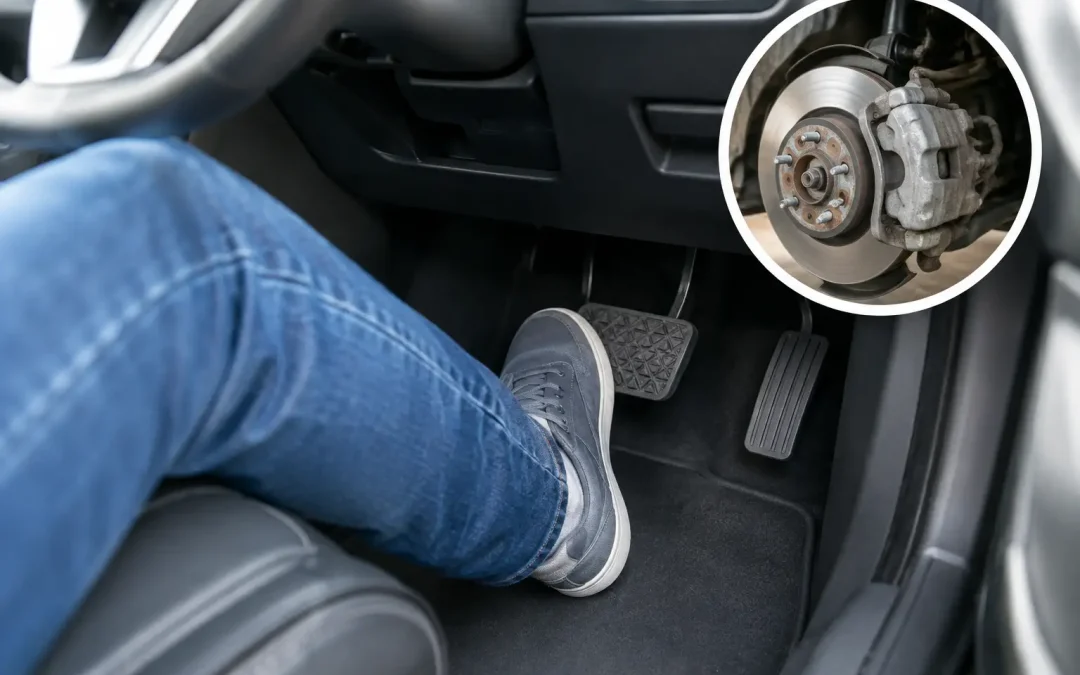
A brake pedal that slowly drops towards the floor is not a fault to watch for another week. This brake pedal sinking diagnosis example shows why the symptom needs proper testing rather than guesswork. A soft or sinking pedal can point to anything from air or a fluid leak in the hydraulic system to an internal master cylinder fault, and each cause needs a different repair.
If the pedal is sinking while you hold steady pressure at a stop, or the vehicle needs more pedal travel before it begins to brake, arrange an inspection promptly. If braking performance has noticeably reduced, the brake warning light is on, or fluid is low, do not drive the vehicle. Have it assessed or transported to a specialist workshop.
What does a sinking brake pedal feel like?
There is a difference between a pedal that feels slightly soft and one that continues travelling down under your foot. With the engine running, a small amount of pedal movement is normal because the brake booster is assisting you. What is not normal is a pedal that keeps creeping lower while you are stopped and maintaining the same pressure.
Drivers often first notice it at lights, in slow traffic, or while holding the vehicle on a hill. The pedal may initially feel firm, then gradually sink closer to the floor. In other cases, the pedal is low after the vehicle has been parked, but improves after being pumped. Both symptoms deserve attention, although they do not always have the same cause.
Brake fluid transfers pressure from your foot to the calipers or wheel cylinders. If that pressure cannot be maintained, the brakes may still work to some degree, but their response can become unpredictable. That is not something to rely on when carrying family, towing a trailer or travelling on regional roads.
Brake pedal sinking diagnosis example: a common workshop scenario
Consider a family SUV booked in after its driver noticed the brake pedal slowly dropping at traffic lights. The vehicle still stopped, there were no obvious puddles on the driveway, and the brake warning light had not come on. It would be easy to assume the pads were simply worn.
A proper inspection starts with the basics. The technician checks brake fluid level and condition, looks over the master cylinder and booster area, then inspects brake hoses, metal lines, calipers and fittings for dampness or signs of fluid loss. The wheels are removed so the pads, rotors and calipers can be checked properly. On drum-brake vehicles, the rear drums may need inspection as a leaking wheel cylinder can remain hidden inside.
In this example, the fluid level was normal and there was no external leak. The pads had usable material remaining and the rotors were within service limits. However, with the engine running and steady pressure applied, the pedal continued to creep down. The workshop then carried out controlled hydraulic tests to separate a fault at the wheels from a fault in the master cylinder.
The result was an internally bypassing master cylinder. Inside the cylinder, worn seals allowed brake fluid to pass between pressure chambers rather than holding pressure where it was needed. No fluid had leaked onto the ground, which is why a visual check alone would not have found the problem. Replacing the master cylinder, correctly bleeding the system and confirming pedal feel and braking operation resolved the issue.
That is the value of diagnosis. Fitting pads and rotors would not have repaired this vehicle, and it would have added unnecessary cost without addressing the safety concern.
The likely causes depend on the symptom
A sinking pedal is a symptom, not a parts list. The most likely cause depends on when it happens, whether the fluid level has dropped, how the vehicle brakes and what the inspection shows.
External fluid leaks are a priority. Brake fluid may escape from a flexible hose, a corroded hard line, a caliper seal, a bleeder screw, a wheel cylinder or a connection near the master cylinder. Some leaks are obvious, but others only show when pressure is applied. Brake fluid can also collect behind a wheel, on suspension components or inside a drum, where it is not visible during a quick look through the wheel spokes.
Air in the brake fluid can create a spongy, long-travel pedal. This can happen after a brake repair if the system has not been bled correctly, but it may also follow a leak or a low fluid level. Air compresses under pressure, unlike brake fluid, so the pedal feels less direct. Bleeding may restore the pedal if air is the only issue, but it will not fix the underlying problem if a seal, hose or fitting is leaking.
An internally faulty master cylinder is a common cause of a pedal that slowly sinks with constant pressure and no visible loss of fluid. The master cylinder is the hydraulic heart of the braking system. When its internal seals wear or become damaged, it may fail to hold pressure even though the outside of the unit looks dry.
Rear drum brake adjustment can also contribute to excessive pedal travel. If the shoes sit too far from the drum, the wheel cylinders need to move further before the shoes contact the drum. Pumping the pedal may temporarily improve the height. This is different from a pedal that steadily sinks at a standstill, but the symptoms can overlap, which is why the full system needs to be checked.
Modern vehicles can add another layer. Some ABS hydraulic units and electronic brake systems require a specific diagnostic process after repairs or fluid work. A specialist workshop follows the correct method for the vehicle rather than treating every braking system as the same.
Why worn pads are not usually the direct cause
Worn brake pads can increase pedal travel slightly as caliper pistons extend further, particularly when pad wear is severe. But normal pad wear alone does not usually cause a pedal to sink continuously under steady pressure. The hydraulic system should still hold pressure.
This distinction matters because it prevents unnecessary repairs. Pads and rotors may need replacement due to wear, noise, vibration or rotor condition, but they should be replaced because inspection supports that work, not because they are blamed for every low pedal complaint.
The same applies to brake fluid. Old fluid can absorb moisture and should be replaced at the manufacturer-recommended interval. A fluid flush is good preventative maintenance, but it is not a cure for an internal master cylinder failure or an active leak. Straight answers start with identifying the fault first.
What a proper brake inspection should include
Accurate diagnosis involves more than pressing the pedal in the workshop bay. The technician needs to inspect the braking system from the master cylinder through to every wheel, assess the condition of friction components, check for leaks and test how the pedal behaves under controlled pressure.
Road testing may be appropriate once the vehicle is considered safe, but it is only one part of the process. A vehicle can brake reasonably on a short test drive while still showing a pressure-holding problem when stationary. The service history also helps. A pedal issue that appeared immediately after brake work may lead the investigation in a different direction to one that developed gradually over months.
For 4x4s, utes and vehicles used for towing, the brake system may be working harder than it was in standard form. Larger tyres, extra touring weight, increased GVM and trailer use all place more demand on braking components. That does not automatically explain a sinking pedal, but it makes correct component selection and thorough testing even more important.
What to do if your brake pedal is sinking
Do not keep pumping the pedal and assume it is safe because it comes back up. Pumping can change the feel temporarily, but it does not remove the cause. Check whether the brake fluid warning light is on and avoid driving if the pedal is low, soft, sinking or braking response has changed.
A brake specialist can inspect the vehicle, explain what has been found and provide a clear repair recommendation before work begins. At Albury Brake and Clutch Centre, the focus is on finding the actual cause and repairing it properly, using quality parts suited to the vehicle and the way it is used.
Your brakes should feel predictable every time you press the pedal. If they do not, acting early is the best way to protect your vehicle, your passengers and everyone sharing the road.