


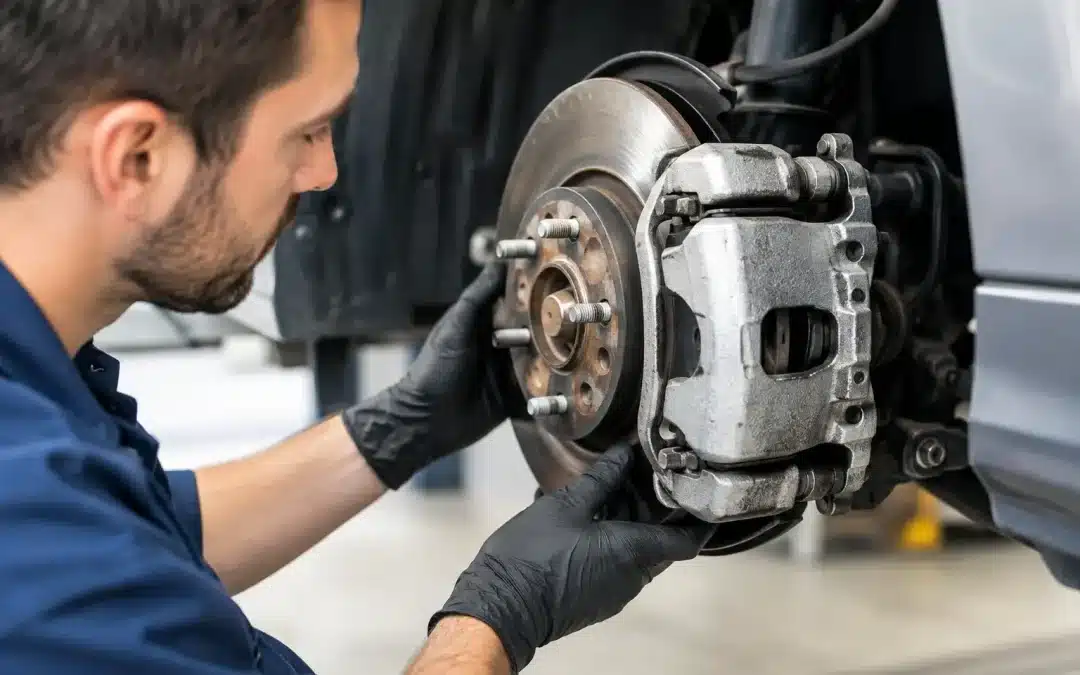
A brake caliper can cause trouble long before it fails completely. A vehicle may pull under braking, one wheel may run noticeably hotter than the others, or the brake pedal may feel different after a short drive. Knowing how to assess brake calipers helps you recognise these warning signs early, but it also helps you understand when the job needs a proper workshop inspection rather than a quick look in the driveway.
The caliper is the part that converts hydraulic pressure into clamping force at the wheel. When you press the brake pedal, brake fluid pushes pistons inside the caliper, forcing the pads against the disc. It is a simple principle, but the components work in heat, moisture, road grime and brake dust. Over time, seals harden, slide pins bind and pistons can corrode.
Start with the signs you can feel from the driver’s seat
Most drivers do not first notice a caliper problem by looking at the brakes. They feel it. A sticking caliper may make the vehicle pull left or right when braking, although road camber, tyre condition and wheel alignment can produce similar symptoms. If the pull is strong, sudden or inconsistent, have it checked promptly.
A brake pedal that feels soft is more commonly linked to air in the hydraulic system, a fluid leak or another brake fault, but a leaking caliper can be part of the cause. A firm pedal does not rule out a caliper issue either. A caliper can stick mechanically while the pedal still feels normal.
Pay attention to smells and heat after driving. A sharp burning smell near one wheel, smoke from a wheel area, or a wheel that feels unusually hot can mean the brake is not releasing properly. Do not touch the disc, caliper or wheel immediately after driving. Brake components can become hot enough to cause a serious burn. If you suspect a dragging brake, stop driving and arrange an inspection.
Other common clues include a grinding or scraping noise, reduced fuel economy, a vehicle that feels held back while coasting, or a steering wheel vibration when braking. None of these symptoms proves the caliper is at fault, which is why accurate diagnosis matters.
How to assess brake calipers with a visual check
With the vehicle parked on level ground, the handbrake applied and the wheels cool, look through the wheel spokes where possible. You may be able to see the outer brake pad, disc and part of the caliper. A torch can help, but avoid reaching behind the wheel or disturbing brake components without proper access.
Look for wetness around the caliper body, brake hose connection and flexible hose. Brake fluid is usually clear to amber when fresh and can look darker as it ages. A damp area that attracts dust may point to a leak. Brake fluid leaks are safety-critical, so do not keep topping up the reservoir and hoping for the best. The fluid has gone somewhere, and the source needs to be found.
Check the disc surface for obvious scoring, blue or purple heat marks, deep grooves, cracking or a heavily rusted inner edge. These marks can occur when a caliper drags or when pads have worn out, but the disc itself may also be the primary problem. Uneven pad wear is another useful clue. If one pad is much thinner than the pad on the other side of the disc, the caliper piston or slide mechanism may not be moving freely.
A visual check has limits. On many vehicles, the inner pad is difficult to see with the wheel fitted. The slide pins, piston seals and bracket condition may also be hidden. Removing wheels safely requires the correct lifting points, jack stands and wheel-tightening procedure. If you are not equipped for that work, leave it to a brake specialist.
Check the brake fluid reservoir, but do not diagnose from the level alone
The brake fluid reservoir under the bonnet provides useful information, not a complete answer. A low level can indicate worn pads, because caliper pistons sit further out as pad material wears down. It can also indicate a leak. If the level has dropped noticeably or the brake warning light is on, book the vehicle in.
Do not spill brake fluid on painted surfaces. It can damage paint quickly. Also avoid mixing fluid types or adding fluid unless you know why the level is low. Filling a reservoir over worn pads can create an overflow problem when new pads are later fitted.
Separate a sticking caliper from other brake faults
Brake faults can overlap. A worn pad can squeal, a warped or uneven disc can cause vibration, and a damaged brake hose can restrict fluid return and mimic a sticking caliper. Wheel bearing problems, tyre issues and suspension wear can also affect how a vehicle feels under brakes.
A proper inspection looks beyond the caliper itself. The technician checks pad thickness and wear pattern, disc condition and run-out, piston movement, slide pin operation, hose condition, fluid condition and the hydraulic system. On vehicles with electronic parking brakes or advanced driver-assistance systems, the correct service procedure is particularly important. Forcing an electronic rear caliper back without placing it in service mode can damage components.
This is also why replacing only the noisy or visibly worn part is not always the right repair. A caliper that has overheated may have damaged the pads and disc on that corner. Depending on wear and vehicle requirements, brake parts are often replaced in axle pairs to maintain balanced braking.
Pay closer attention if you tow, tour or drive a modified 4×4
A loaded ute or 4×4 puts more heat into its brakes than a lightly used commuter car. Towing a caravan, carrying tools, fitting larger tyres or increasing GVM can all increase braking demand. That does not automatically mean the calipers are unsuitable, but it does mean heat management and brake condition matter more.
After a long descent, heavy towing run or off-road trip, watch for brake fade, pulling, vibration and burning smells. Mud and water crossings can also accelerate corrosion around caliper slides and pistons if the vehicle is not cleaned and inspected afterwards. For touring and towing vehicles, an appropriate brake upgrade may be worth discussing where the factory system is regularly operating near its limits.
When a caliper can be serviced and when it should be replaced
In some cases, a caliper can be rebuilt or serviced with new seals, pistons or slide hardware. In others, replacement is the safer and more cost-effective choice. The decision depends on the caliper design, corrosion level, parts availability, condition of the bore and the overall repair required.
A seized slide pin may be repaired if the mounting bracket is sound and the pin bore is not badly corroded. A leaking piston seal or heavily pitted piston often calls for more extensive work. Quality matters here. Cheap brake parts can create fitment, durability or performance issues, especially on vehicles used for towing or commercial work.
After any caliper repair or replacement, the hydraulic system must be bled correctly and checked for leaks. The brakes should then be road-tested in a controlled manner, with bedding-in advice provided if new pads or discs have been fitted.
Do not ignore a suspected caliper fault
If your car pulls sharply, a brake warning light appears, fluid is leaking, a wheel is smoking or braking performance has changed suddenly, do not drive it to see whether it improves. Arrange recovery or speak with a specialist workshop first. Brakes are not an area for guesswork.
For less urgent symptoms, such as a light squeal or gradual uneven wear, booking an inspection early can prevent a smaller repair becoming discs, pads, a caliper and extra downtime. At Albury Brake and Clutch Centre, the focus is on finding the actual cause, explaining the options clearly and carrying out the repair properly.
A caliper inspection is not about selling parts that are not needed. It is about making sure every wheel releases freely, applies braking force evenly and gives you confidence when the road, load or conditions demand it.