


A sticking caliper example often starts with something a driver can feel but cannot quite explain: the car pulls slightly after braking, one wheel seems unusually hot, or there is a burning smell after a short drive. It is easy to put these signs down to an old car, a heavy load or a rough road. But a caliper that is not releasing properly can wear out brake parts quickly and, more importantly, affect how safely the vehicle stops.
Brakes are not the place for guesswork. A proper inspection identifies whether the caliper is actually sticking, what caused it, and which parts need attention. Replacing pads alone may make the noise disappear for a while, but it will not fix a seized slider, damaged piston seal or restricted brake hose.
A real-world sticking caliper example
Picture a family SUV that comes into the workshop after the owner notices it pulling left when braking. They have also heard a light scraping noise from the front end and recently found the left front wheel was much hotter than the right after a run into town.
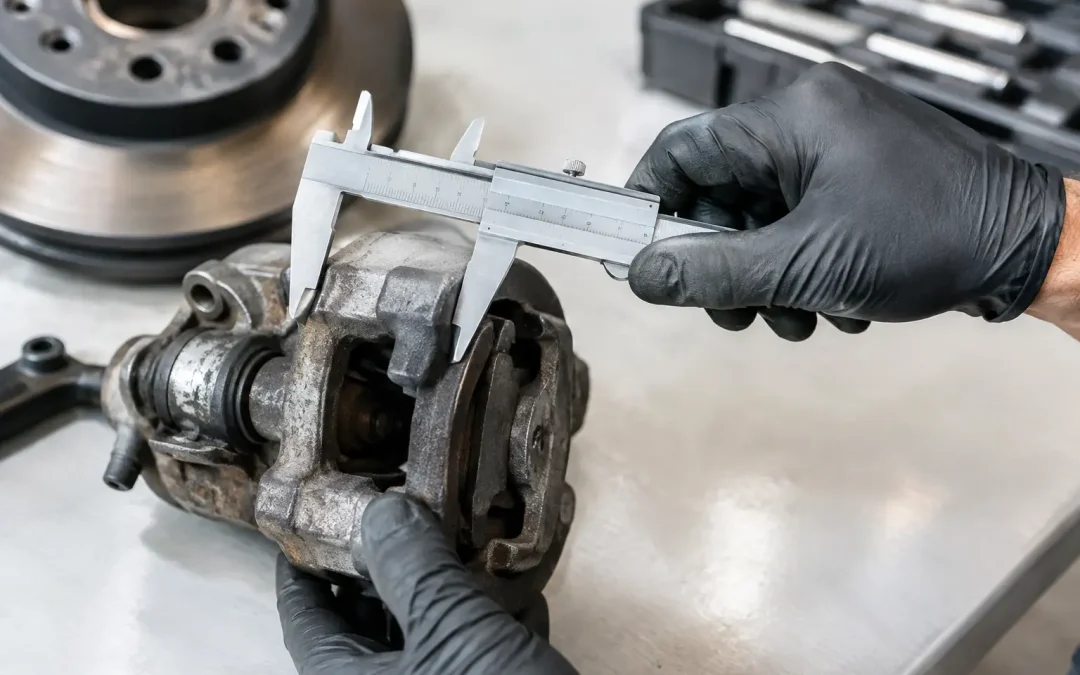
On inspection, the left front brake pads are worn far more than the pads on the other side. The brake disc is discoloured from excess heat, and the inner pad has worn unevenly. The caliper piston is slow to retract because corrosion has built up around the piston and seal. When the driver takes their foot off the brake pedal, the pad continues to drag against the disc instead of backing away cleanly.
That is a straightforward sticking caliper example, but the symptoms can vary. On another vehicle, the piston may be fine while the caliper slide pins are dry, corroded or seized. On a ute used for towing, extra heat from a loaded trailer can expose a marginal brake component much sooner. The result is similar: one brake remains partly applied, creating heat, friction and uneven braking.
What a sticking caliper feels and smells like
A sticking caliper does not always produce a dramatic warning straight away. In the early stages, the vehicle may simply feel as though it is not rolling freely. Fuel use can creep up, and the car may need a little more throttle than usual to maintain speed.
As the problem worsens, drivers may notice a pull to one side under brakes, a steering wheel that does not feel settled, squealing or grinding, or a sharp hot smell near a wheel. After a drive, one alloy wheel may radiate noticeably more heat than the others. Do not touch the wheel or disc to check it. Brake parts can become hot enough to cause a burn.
You might also see excessive brake dust on one wheel, smoke from the wheel area in severe cases, or a brake pedal that feels different after the brakes have overheated. A vehicle can still stop with one dragging brake, which is why some people keep driving. That does not make it safe. Continuous heat can damage pads, discs, wheel bearings, seals and even nearby components.
Why brake calipers stick
A brake caliper uses hydraulic pressure to push the pads against the brake disc. Once pressure is released, the piston seal and caliper hardware allow the pads to move back slightly so the disc can spin freely. Any fault that prevents that release can cause brake drag.
Corrosion around the piston
Moisture and age can lead to corrosion around a caliper piston, especially where a dust boot is torn or degraded. The piston no longer moves smoothly in its bore. This is common on older vehicles and vehicles that spend time in wet, muddy or dusty conditions, but it can happen to any car.
Seized slide pins or worn hardware
Many floating calipers rely on slide pins so the caliper can centre itself over the disc. If the pins lose lubrication, corrode or bind, one pad can do most of the work while the other is left dragging. Incorrectly fitted pad hardware can also stop pads moving freely in their mounting points.
A restricted brake hose
Brake hoses can deteriorate internally. In some cases, the inner lining acts like a one-way valve: hydraulic pressure reaches the caliper when the pedal is pressed, but fluid does not return freely when the pedal is released. The caliper then stays applied. This fault can look like a bad caliper unless it is diagnosed properly.
Overheating and incorrect parts
A brake system that has repeatedly overheated can damage seals and components. This matters for 4x4s, touring vehicles and towing setups, where factory brakes may be working harder due to larger tyres, extra vehicle weight or long descents. Poor-quality parts or incorrectly matched components can create further problems rather than solve the original one.
Why replacing pads alone is not enough
Pads and discs are the visible wear items, so it is tempting to replace them when a brake is noisy or worn. If a sticking caliper caused the wear, however, new pads fitted to the same faulty caliper will soon be damaged too. The new disc can overheat, glaze or distort, and the vehicle can return with the same complaint.
The right repair depends on what the inspection finds. A caliper may be rebuilt if suitable, replaced with a quality unit, or repaired with new hardware where the piston and bore are in good condition. A restricted hose, damaged disc or heat-affected pads may also need replacement. There is no value in selling unnecessary parts, but there is also no benefit in fitting half a repair to a safety-critical system.
For brakes on the same axle, components should be assessed as a pair. If one disc and pad set has been cooked by a dragging caliper, the opposite side may not provide balanced braking if only one side is renewed. The best approach is based on the condition of the whole axle, not a quick fix to the noisiest corner.
What a proper brake inspection involves
A technician should first confirm the complaint through a road test where safe to do so, then inspect the brake system rather than assuming the cause. They will look at pad wear patterns, disc condition, caliper movement, slide pins, pistons, hoses, fluid condition and any leaks.
Brake temperatures may be compared across the axle after operation. The caliper is checked for free movement, and hydraulic pressure can be tested where a hose restriction or master cylinder issue is suspected. This process separates a genuine sticking caliper from other faults that can feel similar, such as a wheel bearing issue, tyre problem or suspension wear.
At Albury Brake and Clutch Centre, the focus is on explaining what has failed and why, before recommending the repair. That gives you a clear answer on what is urgent, what can wait, and what is needed to make the brake system reliable again.
Can you drive with a sticking caliper?
The short answer is that it is not a fault to ignore. How urgent it is depends on the severity. If you smell burning, see smoke, feel severe pulling, hear grinding, or the vehicle is difficult to move, stop somewhere safe and arrange assistance. Continuing to drive can turn a repairable caliper issue into a larger brake job.
If the signs are mild, book an inspection promptly rather than waiting for the next service. Avoid towing, heavy loads and long trips until the fault has been checked. A dragging brake creates heat every time the wheel turns, even when you are not using the brake pedal.
Reducing the chance of caliper trouble
Regular brake servicing gives caliper slides, pad hardware and dust boots a chance to be inspected before they seize. It is especially worthwhile for vehicles used on dirt roads, around water crossings, for frequent towing, or for stop-start work. Brake fluid should also be replaced at the manufacturer-recommended interval, as old fluid absorbs moisture and can contribute to internal corrosion.
Pay attention to changes in how your vehicle drives. A slight pull, unfamiliar smell or one wheel covered in much more brake dust than the others is worth checking early. Getting a straight answer before the heat damages the rest of the system is usually the safest and most cost-effective move.