


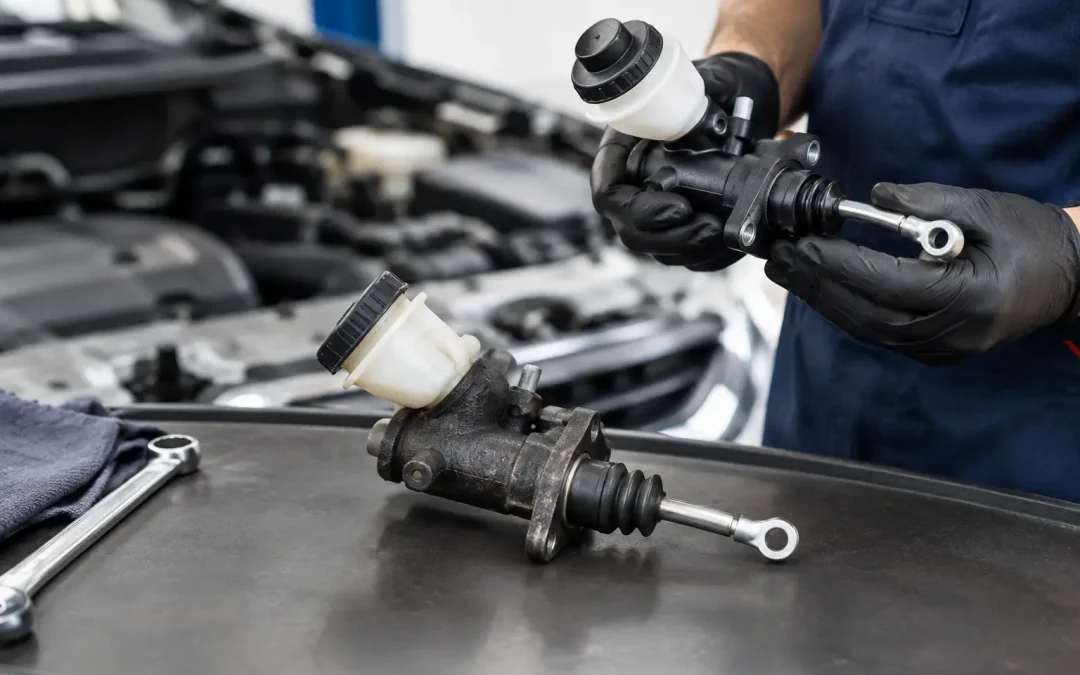
A clutch pedal that suddenly feels soft at the lights, sticks to the floor or refuses to select first gear is more than an annoyance. These are common clutch master cylinder symptoms, and they can leave you unable to change gears with very little warning. The good news is that a proper inspection can identify the actual fault before it becomes a bigger, more costly repair.
The clutch master cylinder is a small hydraulic component, but it does an important job. When you press the clutch pedal, it converts that pedal movement into hydraulic pressure. That pressure travels through the line to the slave cylinder, which operates the clutch. If pressure is leaking internally or externally, the clutch may not disengage properly even though the clutch disc itself is still serviceable.
Common clutch master cylinder symptoms
A failing master cylinder does not always cause the same problem on every vehicle. Some faults develop slowly over weeks, while others become obvious in one drive. These are the signs worth taking seriously.
A soft, spongy or sinking clutch pedal
A healthy clutch pedal should feel consistent each time you press it. If it feels soft, spongy or sinks closer to the floor than usual, there may be air in the hydraulic system or a loss of fluid pressure.
Sometimes pumping the pedal a few times makes it feel temporarily better. That does not mean the problem has fixed itself. It can point to worn internal seals in the master cylinder, allowing fluid to bypass the seal rather than build the pressure needed to release the clutch.
The pedal stays on the floor or returns slowly
If the clutch pedal stays down after being pressed, or takes its time returning to its normal position, stop treating it as a minor inconvenience. A faulty master cylinder can fail to move fluid correctly, but a worn pedal return spring, binding pedal mechanism or slave cylinder issue can create similar symptoms.
This is why diagnosis matters. Replacing parts based on a symptom alone can waste money and still leave the vehicle off the road.
Difficulty selecting gears
Hard gear changes, especially selecting first gear or reverse when stationary, are a classic sign the clutch is not fully disengaging. You may notice a crunch when selecting reverse, or the vehicle may creep forward slightly with the pedal pressed fully to the floor.
This can be caused by a clutch master cylinder that is not producing enough hydraulic pressure. It may also be caused by a leaking slave cylinder, a damaged hydraulic line, air in the system, clutch fork issues or wear inside the clutch assembly. The symptom tells you there is a problem, but not which component is responsible.
Low clutch fluid or visible fluid leaks
Many vehicles use brake fluid for the clutch hydraulic system. On some models, the clutch draws fluid from the brake fluid reservoir, while others have a separate clutch reservoir. A low level can indicate a leak and should never be ignored.
Check around the clutch pedal, carpet and firewall area for dampness or fluid residue. A leaking master cylinder can allow fluid to seep into the cabin near the pedal assembly. Fluid around the gearbox bellhousing may instead point to a slave cylinder fault, particularly on vehicles with a concentric slave cylinder mounted inside the bellhousing.
Brake fluid can damage painted surfaces, so avoid spilling it and have any leak inspected promptly. If your brake fluid level is low as well, do not assume it is only a clutch issue. Brake system faults are safety-critical and need immediate attention.
An inconsistent pedal feel
A pedal that feels normal one day and poor the next is another warning sign. Internal seal wear can be temperature-sensitive, and a small leak may only show up after a longer drive or repeated clutch use in traffic.
For Albury Wodonga drivers, this can become especially noticeable in stop-start commuting, towing work or a day on the tracks where the clutch is used more often. A vehicle might seem fine on an open road, then struggle when you pull up at a set of lights or need to manoeuvre a trailer.
The vehicle will not go into gear
If the engine is running and you cannot select a gear with the clutch pedal fully depressed, do not force the gearstick. Forcing it can damage gearbox components and will not solve the underlying hydraulic fault.
Turn the engine off and see whether gears select normally. If they do, the clutch is likely not disengaging when the engine is running. Arrange an inspection rather than trying to drive home by matching engine revs or starting the vehicle in gear.
What causes a clutch master cylinder to fail?
Inside the master cylinder are seals, a bore and a piston that work under repeated hydraulic pressure. Over time, seals can wear, the bore can corrode, and contaminated or old brake fluid can contribute to internal damage. Age, high kilometres and long periods without fluid servicing can all play a part.
External leaks can occur where the cylinder seals to the firewall, around the hydraulic outlet or at the reservoir connection. Internal failure is less visible. In that case, fluid may stay in the system but bypass the internal seal, causing the clutch pedal to sink or lose pressure.
It is also worth remembering that not every hydraulic clutch issue is the master cylinder. The slave cylinder, flexible hose, rigid line, clutch pedal assembly and even the clutch itself need to be checked. A workshop should inspect the complete system before recommending a repair.
Is it safe to drive with a faulty clutch master cylinder?
It depends on the severity of the fault, but there is no benefit in waiting for a complete failure. A minor change in pedal feel may still allow normal gear changes for now. However, hydraulic faults can deteriorate quickly, and a vehicle that will not disengage the clutch can leave you stranded in traffic, at a roundabout or far from home.
If the pedal remains on the floor, gears are difficult to select, fluid is leaking or the vehicle creeps with the clutch depressed, avoid driving it. If you need to move the vehicle a short distance for safety, do so only if it can be done safely and arrange assistance as soon as possible.
For manual 4x4s, utes and vehicles used for towing, a clutch fault is particularly inconvenient. Extra load and frequent low-speed manoeuvring place more demand on the driveline, so it is better to deal with a developing hydraulic problem before the next trip or work day.
How a proper clutch hydraulic diagnosis works
Good clutch repairs start with identifying the cause, not simply fitting the part most commonly associated with the symptom. A technician will check pedal operation, fluid condition and fluid level, then inspect the master cylinder, hydraulic lines and slave cylinder area for leaks.
They may test whether the system holds pressure and assess how far the clutch is releasing. The gearbox, clutch cable where applicable, pedal linkage and clutch assembly may also need consideration. This is particularly important when the vehicle has both hard shifting and signs of clutch wear, such as slipping under acceleration.
Slipping and poor disengagement are different faults. A worn clutch disc commonly slips under load, where engine revs rise without matching vehicle speed. A hydraulic fault more often causes dragging, difficult gear selection or a pedal that does not feel right. They can occur together on an older vehicle, which is why straight answers require a complete inspection.
Repairing the fault properly
If the master cylinder is confirmed as the problem, the repair may involve replacing the cylinder, flushing contaminated fluid and bleeding the hydraulic system correctly. Depending on the vehicle and condition of the remaining components, it can also make sense to replace a tired slave cylinder or hose at the same time. That decision should be based on access, condition and the likely long-term value of the work, not unnecessary upselling.
On vehicles where the slave cylinder sits inside the gearbox bellhousing, replacement can require gearbox removal. If the clutch is already worn or close to its service limit, discussing both repairs at the same time can prevent paying for the same labour twice. On the other hand, a sound clutch should not be replaced simply because a hydraulic component has failed.
A quality repair includes checking pedal operation, confirming clean gear selection and making sure there are no remaining leaks before the vehicle leaves the workshop. At Albury Brake and Clutch Centre, that means diagnosing the full clutch system and explaining what has failed, what can wait and what should be done now.
If your clutch pedal has changed feel or gear selection is becoming a fight, book it in before it becomes a tow-truck problem. Early diagnosis usually gives you more repair options, less disruption and a better chance of keeping the job straightforward.