


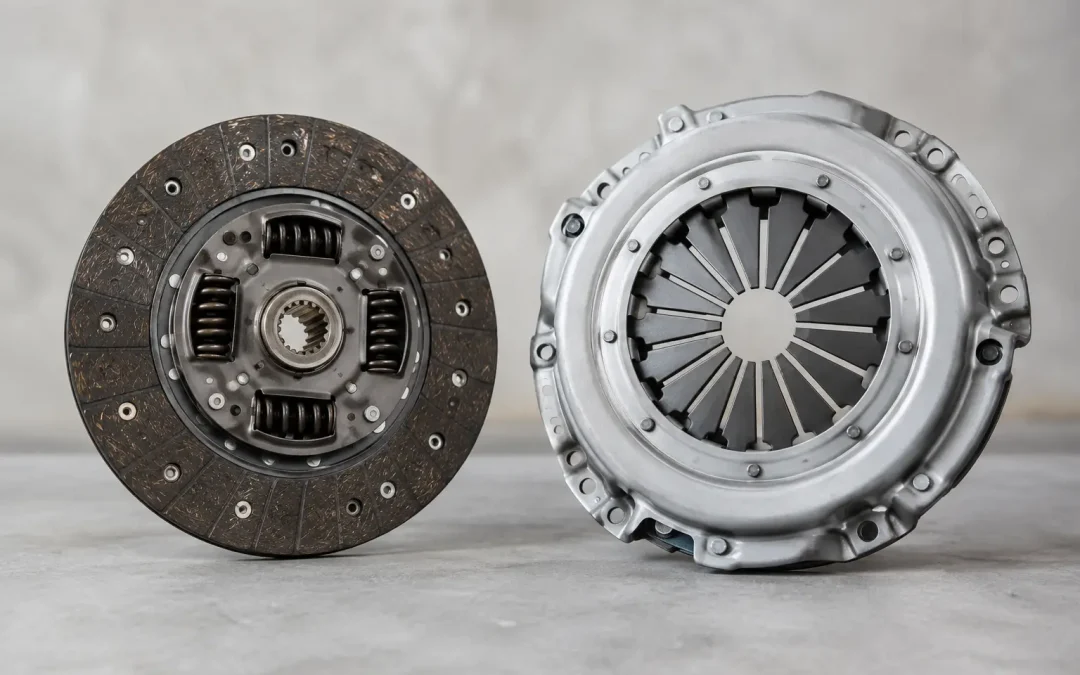
A clutch that feels fine on the daily commute can quickly show its limits with a loaded trailer behind it, a canopy full of tools or regular low-range work. The choice between organic versus performance clutches is not about fitting the toughest option available. It is about matching the clutch to the way your vehicle actually works, so it remains smooth, reliable and fit for purpose.
For most drivers, an organic clutch is the right answer. For vehicles that tow, carry heavy loads, run modified engines or cop hard use, a performance clutch may provide the extra holding capacity required. The important part is getting the diagnosis and specification right before any parts are fitted.
What is an organic clutch?
An organic clutch uses a friction material made from compounds such as resin, fibres and other blended materials. It is the closest type to the clutch originally fitted to most passenger vehicles, utes and 4x4s. Organic does not mean weak or low quality. A quality organic clutch from a proven manufacturer can provide excellent service life and dependable performance when it is correctly matched to the vehicle.
The main benefit is drivability. Organic friction material engages progressively, which makes take-offs smoother and easier to control in traffic, car parks and stop-start driving. Pedal operation is generally lighter than more aggressive clutch setups, and the clutch is less likely to transmit harshness through the driveline.
That matters for family cars, work vehicles that spend all day on the road and 4x4s used mainly for normal driving. A clutch should not make every set of lights feel like a challenge. If the vehicle is close to standard and is not regularly asked to tow or carry beyond its intended load, a quality organic replacement is usually the sensible, cost-effective choice.
What makes a clutch a performance clutch?
A performance clutch is designed to hold more torque and cope with higher temperatures than a standard replacement setup. It may use a higher-clamp-load pressure plate, a different friction compound, a heavier-duty clutch disc or a combination of these components. The goal is to reduce the chance of clutch slip when the engine and vehicle are under greater load.
Performance is not limited to modified street cars. In regional driving, a standard-looking diesel ute can put serious demand on a clutch when it is towing a caravan, hauling equipment, fitted with larger tyres or used for regular off-road touring. Engine tuning can also lift torque enough that the original clutch design is no longer adequate.
The trade-off is that greater clamping force and more aggressive friction materials can change how the vehicle feels. Pedal effort may increase. Engagement can be sharper. Some setups can create more noise or vibration, particularly at idle or during take-off. These are not faults when the clutch is suited to the application, but they are reasons not to over-specify a vehicle that only does the school run and occasional highway kilometres.
Organic versus performance clutches: the practical differences
The right choice comes down to the balance between smooth operation and holding capacity. An organic clutch normally offers the best everyday manners. It is easier to modulate when reversing a trailer, manoeuvring in a tight driveway or crawling through traffic. It also tends to be kinder to other driveline components when driven normally.
A performance clutch gives more reserve capacity. It is built to resist slip where heat and torque would overwhelm a standard setup. This can be valuable when towing uphill, working on rough tracks, carrying trade gear every day or accelerating hard with a modified engine.
Neither option is automatically better. A high-capacity clutch that is unpleasant in traffic is not a win for a commuter vehicle. Equally, fitting a standard clutch to a heavily used towing rig can lead to premature wear, glazing and repeat repair costs. The best result is a clutch that handles the workload without making the vehicle harder to drive than it needs to be.
Friction material affects the way a clutch behaves
Organic material is typically the smoothest option. It deals well with normal heat cycles and provides predictable engagement, but it can overheat if repeatedly slipped under heavy loads. That heat can damage the friction surface, pressure plate and flywheel.
Some performance clutches use ceramic or puck-style friction materials. These can handle high temperatures and torque, but engagement is often more abrupt. They are generally better suited to dedicated performance applications or vehicles with a specific heavy-duty requirement, rather than a daily driver where smooth low-speed control matters.
Many quality heavy-duty clutch kits sit between these two extremes. They retain an organic-style full-face disc for reasonable road manners while increasing pressure plate clamp load. For a towing ute or touring 4×4, this type of setup can be a practical middle ground, provided the pedal feel and intended load are discussed before fitting.
More torque does not always mean more clutch is needed
A vehicle with a tune, bigger tyres or towing modifications may need an upgraded clutch, but assumptions can be expensive. Clutch slip is sometimes blamed on the clutch assembly when the actual issue is an oil leak contaminating the disc, a worn or damaged flywheel, a hydraulic fault or an incorrect adjustment.
Proper diagnosis matters. If a rear main seal or gearbox input seal is leaking, fitting a new clutch without fixing the leak can ruin the replacement. If the flywheel has heat spots, cracks or an unsuitable surface finish, it may prevent the new clutch from bedding in correctly. A clutch repair done properly considers the full system, not just the worn disc.
Signs your current clutch may not suit the job
A slipping clutch is one of the clearer warning signs. You may notice engine revs rising without matching acceleration, particularly when climbing a hill, overtaking or towing. A burning smell after a heavy start or manoeuvring a trailer can also point to excessive clutch heat.
Other symptoms are less obvious. A clutch that shudders when taking off, feels unusually high at the pedal, is difficult to select into gear or makes noise when the pedal is pressed needs inspection. These issues can involve the clutch, release bearing, hydraulics, flywheel or gearbox components.
Do not keep testing a slipping clutch under load to see whether it gets worse. Continued slip creates heat quickly and can turn a straightforward replacement into a more involved repair. Booking the vehicle in early gives the workshop a better chance to identify the cause and discuss the most appropriate replacement option.
Choosing the right clutch for your vehicle
Start with how the vehicle is used for most of its kilometres, not how you might use it once or twice a year. A commuter vehicle with no power modifications will generally benefit from a quality standard or organic replacement. It should feel familiar, operate smoothly and give long service when driven normally.
For a ute that tows a work trailer every week, carries a consistent load or runs a torque increase, a heavy-duty clutch may be worthwhile. The same applies to touring 4x4s that regularly tow caravans, use larger tyres or operate at higher GVM. These vehicles need a clutch that can handle sustained load, not merely a clutch that survives a short test drive.
Be honest about the vehicle’s modifications and workload. Tell the technician about engine tuning, tyre size, towing weights, accessories and the type of driving you do. Those details affect clutch selection far more than a broad label such as “performance”.
At Albury Brake and Clutch Centre, the aim is straightforward: assess the fault, explain the options in plain language and fit a quality clutch suited to the vehicle. There is no value in selling an aggressive clutch package where a reliable organic setup will do the job, and no value in fitting a standard unit that is likely to fail under known heavy use.
Do not overlook the flywheel and hydraulic system
Clutch replacement is a sensible time to inspect related components because access requires removal of the gearbox. Depending on the vehicle and condition of the parts, this may include the flywheel, release bearing, clutch fork, spigot bearing, slave cylinder and master cylinder.
A flywheel may need machining, replacement or careful inspection depending on its design and condition. Dual-mass flywheels require particular attention, as they cannot always be machined like a conventional solid flywheel. The correct approach depends on the manufacturer specification, visible wear and the vehicle’s intended use.
Hydraulic components should also be checked for leaks and smooth operation. Reusing a marginal slave cylinder simply because it has not failed completely can create an avoidable problem shortly after the clutch repair. Replacing only what is needed, using quality components and checking the system properly is the best way to avoid repeat labour.
A clutch is not a part to choose by price alone. The right setup should feel right on the road, cope with the work asked of it and protect your investment over the long term. If your vehicle is slipping, shuddering or working harder than it used to, get it assessed before the problem leaves you stranded or damages more of the driveline.