


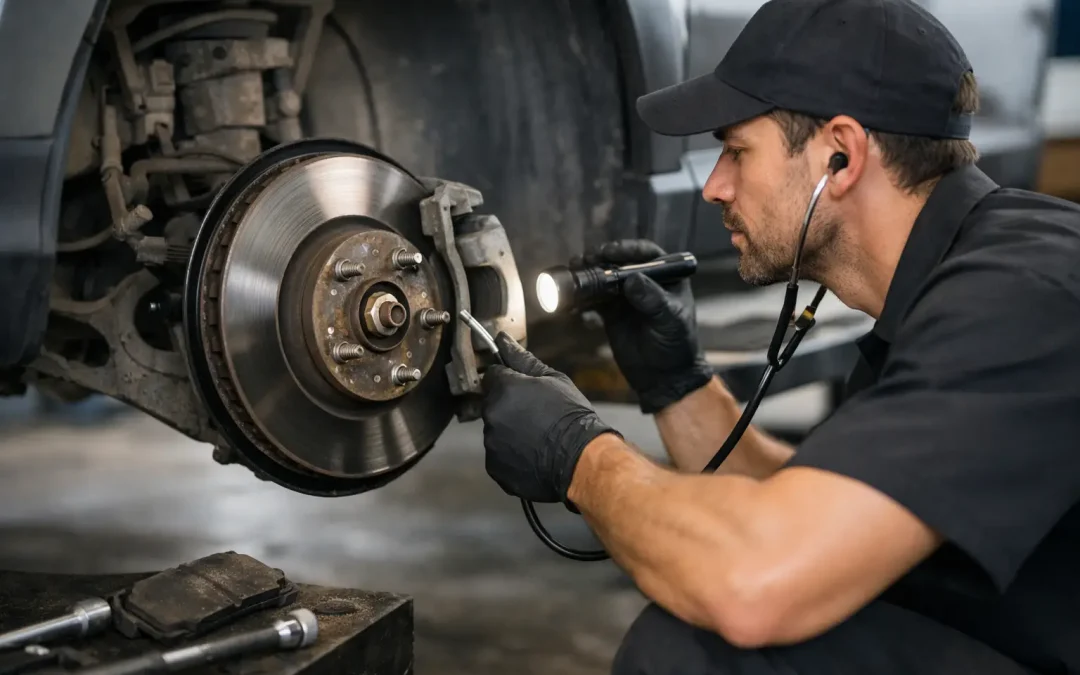
That high-pitched squeal when you slow down is easy to ignore for a few days – until it gets louder, starts happening every trip, or leaves you wondering whether the car is still safe to drive. If you want to know how to diagnose squealing brakes properly, the first thing to understand is that brake noise is a symptom, not a diagnosis. A squeal can mean worn pads, cheap friction material, dust build-up, rotor problems, hardware issues or, in some cases, nothing serious at all.
The trouble is that all brake noises sound similar from the driver’s seat. Guessing usually leads to the wrong repair, which is why proper diagnosis matters. You want to know whether it is a simple clean-up, a parts issue, or a safety problem that needs attention straight away.
Why brakes squeal in the first place
Brake squeal happens when vibration turns into an audible noise. As the pad contacts the rotor, small movements between the pad, caliper and disc can create a sharp sound. Sometimes that vibration is harmless and temporary. Other times it is telling you a component is worn out, fitted incorrectly or no longer working as it should.
This is where a lot of drivers get caught out. They hear a squeal and assume the brake pads are gone. Worn pads are common, but they are not the only cause. Pads can still have life left in them and squeal because the rotor surface is glazed, the anti-rattle hardware is missing, the backing shims are damaged, or the pad compound simply does not suit the vehicle’s use.
Weather and driving conditions also play a part. A light squeal first thing in the morning after rain can be normal. A noise that only shows up after a steep descent, towing, or repeated stop-start driving points to heat and load being part of the problem.
How to diagnose squealing brakes properly without guessing
A proper diagnosis starts with pattern, not parts. Before anyone pulls a wheel off, pay attention to when the noise happens. Does it squeal only when braking lightly, or also under firmer braking? Is it worse when the brakes are cold, after the vehicle has been parked overnight, or once everything warms up? Does it happen at low speed around town, or only on the highway?
Those details matter because they narrow the fault down. A wear indicator often gives a consistent squeal that gets worse over time. Surface rust after rain often clears after a few brake applications. Glazed pads tend to squeal lightly and feel less effective. A sticking caliper may come with heat, pulling to one side, uneven pad wear or a hot wheel after a short drive.
If the noise has changed suddenly, that is worth taking seriously. Brake sounds that become grinding, scraping or harsh metal-on-metal noises can mean the friction material is gone or something has broken. That is no longer a monitor-it-and-see situation.
Start with the simple checks
If you are trying to work out what is going on before booking the car in, there are a few sensible checks you can make without taking risks. Look through the wheel if possible and see whether the rotor surface looks smooth and even, or badly grooved and scored. Heavy brake dust on one wheel compared with the others can suggest one corner is working differently. If the car pulls when braking, shudders through the pedal, or feels weaker than usual, that adds weight to the issue being mechanical rather than just noise.
You can also think back to recent work. If the squeal started just after pads or rotors were replaced, the problem may be linked to pad quality, bedding-in, missing hardware, rotor finish, or caliper servicing not being done properly at the same time. New brakes are not automatically quiet brakes.
What you should not do is keep driving for weeks hoping it sorts itself out if the noise is frequent or getting worse. Brakes rarely fix themselves.
Common causes of squealing brakes
Worn brake pads are still one of the most common causes. Many pads have a small metal wear indicator designed to touch the rotor and squeal once the pad material gets low. It is an early warning, and it is there for a reason.
Glazed pads and rotors are another regular culprit. This happens when brake surfaces harden and become shiny from excessive heat or poor bedding-in. The brakes may still work, but they can become noisy and less effective.
Dust and contamination can also trigger squeal. Dirt, road grime, or residue trapped between pad and rotor can create noise, especially if the vehicle has been through mud, sat unused, or been driven in wet conditions. For 4x4s and towing vehicles, this matters more because heat, extra load and harsh conditions speed up wear and expose weak points in the system.
Then there is hardware. Clips, shims, sliders and anti-rattle components are small parts, but they do an important job. If they are missing, worn, seized or fitted incorrectly, the pads can vibrate and squeal even when the friction material itself is fine.
Rotor condition matters too. Grooves, hard spots, runout and uneven wear can all contribute to brake noise. So can a sticking caliper piston or slider, which keeps the pad dragging when it should release cleanly.
When the pad material is part of the problem
Not all brake pads are made the same. Some lower-grade compounds are simply noisier, especially when cold. Performance-focused pads can also squeal more in normal street driving because they are built for higher temperatures and heavier braking. That does not always mean they are faulty. It means the pad choice may not suit how the vehicle is used.
That is why proper brake work is not just about fitting whatever is cheapest or quickest. Matching the right components to the vehicle, load and driving conditions makes a real difference to noise, feel and service life.
What a proper workshop inspection should include
When a specialist workshop diagnoses squealing brakes properly, they are not just listening for a noise and quoting pads. They are checking pad thickness, rotor wear and condition, heat spotting, glazing, hardware integrity, caliper movement and whether the wear pattern tells a bigger story.
They should also look at whether both sides are wearing evenly, whether the rotors are still within specification, and whether the issue sits at the front or rear. In some cases, what sounds like front brake squeal from the cabin is actually coming from the rear. That is another reason home diagnosis has limits.
A good inspection also considers how the vehicle is used. A family SUV doing school runs has different brake demands from a ute towing a van or carrying extra weight every week. If the current setup keeps squealing, fading or wearing out too quickly, the answer might not just be another standard pad replacement. It could mean the vehicle needs higher-quality components or a more suitable brake package.
For drivers around Albury Wodonga who tow, tour, or run bigger tyres, that matters more than most. Added load changes how hard the brakes have to work.
When squealing brakes are a safety issue
Not every squeal means stop driving immediately, but some signs should not be ignored. If the noise is constant, the braking distance has increased, the pedal feels different, the steering pulls under braking, or you can smell hot brakes after a short trip, get it checked as soon as possible.
The same goes for grinding, severe vibration, or any warning light related to the braking system. At that point, the risk is not just noise. It may be reduced braking performance, rotor damage or a component that is starting to fail.
Brake repairs are one of those jobs where delaying can make a smaller fix more expensive. Replacing pads before they wear into the rotors is cheaper than replacing both after metal-on-metal contact. Sorting out a sticking caliper early can save pads, rotors and unnecessary downtime.
The value of getting it diagnosed properly the first time
The honest answer is that squealing brakes can come from a few different places, and some causes overlap. That is why the right approach is not to chase the noise with random parts. It is to inspect the full system, identify the real source, and fix what is actually wrong.
Done properly, that gives you more than a quieter car. It gives you confidence that the vehicle will stop the way it should, that you are not paying for parts you do not need, and that the repair will last. When brakes start talking to you, the best move is to listen early and get straight answers before a noise turns into a bigger problem.