


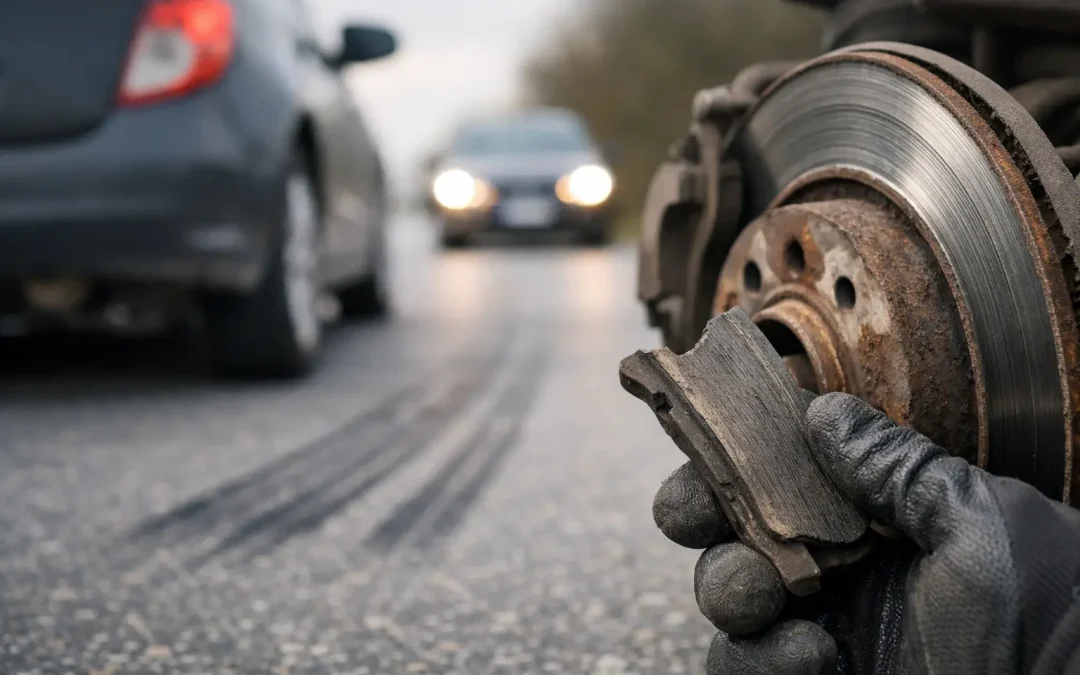
That extra second before the car pulls up is where near misses happen. If you’ve ever pressed the brake pedal and felt the vehicle take longer than it should to stop, the question is a fair one: can worn brakes increase stopping distance? Yes, they can – and sometimes by more than drivers realise.
The tricky part is that brake wear does not always show up as a dramatic failure. More often, it creeps in. The car still stops, so it is easy to put off checking it. But braking performance is not just about whether the vehicle stops eventually. It is about how quickly, how consistently, and how well it handles heat, load and emergency braking when you need it most.
Can worn brakes increase stopping distance in real driving?
In simple terms, worn brakes can reduce the system’s ability to create and manage friction. That can mean the car takes longer to stop, especially in hard braking, downhill driving, towing, or stop-start traffic where the brakes are working harder.
A braking system relies on a few parts doing their job together. The pads need enough usable material. The rotors need a sound surface and correct thickness. The calipers need to apply even pressure. The brake fluid needs to cope with heat without losing effectiveness. If one part is badly worn, the whole system can suffer.
That is why stopping distance is not just about pad thickness. Two vehicles can have “worn brakes” and behave quite differently. One might still feel fairly normal in light driving, while the other starts to fade badly once heat builds up. This is also why proper diagnosis matters. Guesswork can miss the real cause.
Why worn brakes make a car harder to stop
Brake pads work by pressing against the rotor to generate friction. As the pad material wears down, there is less material available to absorb and manage heat. Thin pads can overheat faster, and once heat gets out of control, braking performance drops away.
That drop is often felt as brake fade. The pedal may still respond, but the car does not slow as strongly as expected. You press harder, yet the stopping effort feels weaker. In an emergency, that extra distance can be the difference between pulling up safely and running out of road.
Worn rotors can add to the problem. If the rotor surface is scored, cracked, glazed or below minimum thickness, it cannot provide the same stable contact area for the pad. Heat dissipation also suffers. The result is less predictable braking, more vibration, and reduced confidence under load.
Then there is the issue of uneven wear. If one side is braking harder than the other because of a sticking caliper, seized slide pins, or uneven pad wear, the vehicle may pull under braking. That does not just feel unpleasant – it can affect control while also reducing efficient stopping.
It depends on how worn, and what else is going on
Not every worn brake system will produce the same increase in stopping distance. Mild pad wear may not be obvious in gentle suburban driving. But once the system is pushed harder, weaknesses show up quickly.
A loaded 4×4, a ute with tools in the back, or a family wagon heading down a long hill places more demand on the brakes than a lightly driven commuter car. Add larger tyres, towing, or increased vehicle weight and the braking system has even more work to do. In those situations, wear that seemed minor can become a real safety issue.
Road and weather conditions matter too. In the wet, you already need more distance to stop. If the brakes are worn at the same time, the margin gets smaller again. Tyre condition also plays a part. Good brakes cannot make up for poor tyre grip, and poor tyres can make worn brakes feel even worse.
This is why a proper assessment should look at the full braking system, not just one part in isolation.
Common signs your brakes may be affecting stopping distance
Sometimes the warning signs are obvious. Sometimes they are easy to dismiss. A longer stopping distance can show up alongside a few common symptoms.
If the pedal feels soft, spongy or lower than usual, the system may have a hydraulic issue or overheated fluid. If the brakes squeal, grind or shudder, the pads and rotors may already be well past their best. If the car pulls to one side, or the steering wheel shakes under braking, uneven braking force could be involved.
Another sign is needing to press harder than usual to get the same braking response. Drivers often adapt without noticing. You leave a bit more room, brake a bit earlier, and work around the problem. That does not mean the problem is minor. It means you have adjusted to a vehicle that is no longer braking as it should.
Worn pads are only part of the story
People often assume brake pads are the whole issue because they are the most familiar wear item. Pads are important, but they are not the only reason braking performance drops.
Brake fluid absorbs moisture over time. Once contaminated, its boiling point falls. Under repeated braking, the fluid can overheat more easily, which can lead to fade and a poor pedal feel. A vehicle may have decent pad thickness and still suffer reduced stopping performance because the fluid is overdue.
Calipers can also seize or bind, especially as vehicles age. That can leave one pad dragging, overheating, or wearing unevenly. Flexible brake hoses can deteriorate internally. Rotors can develop hard spots, runout or surface damage. ABS faults can affect emergency braking performance as well.
That is why replacing pads alone does not always fix the problem. The right repair starts with finding the actual cause.
Can you still drive with worn brakes?
Sometimes a vehicle with worn brakes is still drivable in the sense that it moves and stops. That does not mean it is safe to keep using as normal. Once braking performance has changed, the risk is not just everyday driving. It is what happens when traffic stops suddenly, a child runs onto the road, or you hit a wet intersection and need full braking force immediately.
If you are hearing grinding, feeling vibration, noticing a soft pedal, or finding the vehicle takes longer to pull up, it is worth getting it checked sooner rather than later. Leaving it too long can turn a straightforward repair into a more expensive one. Worn pads can damage rotors. Overheated components can affect adjacent parts. Small faults tend to spread in braking systems because everything works under pressure and heat.
Why heavier vehicles and towing make the problem worse
For drivers who tow caravans, carry work gear, or run larger tyres, brake condition matters even more. More weight means more kinetic energy, and more kinetic energy means the braking system has to work harder to bring the vehicle to a stop.
That extra workload creates more heat. If the pads are thin, the rotors are worn, or the system is not matched to the vehicle’s setup, stopping distances can increase quickly once temperatures rise. A brake system that feels acceptable around town may struggle badly on a country road, on a descent, or during repeated heavy braking.
That is one reason specialist brake advice is worth having, especially for 4x4s and towing vehicles. In Albury Wodonga, where plenty of drivers use their vehicles for work, trips and hauling loads, brake wear is not something to judge by pedal feel alone.
What a proper brake inspection should tell you
A proper brake inspection should do more than say whether the pads are low. It should identify what is worn, what is causing the wear, and what needs attention now versus what can be planned for later.
That includes checking pad thickness, rotor condition and measurements, caliper operation, brake fluid condition, hydraulic leaks, hose condition and overall braking balance. On some vehicles, road testing and scan data may also help confirm whether the system is working properly under real conditions.
The aim is not to sell parts for the sake of it. It is to give straight answers. If the brakes are fine, you should be told that. If they are worn in a way that affects stopping distance or safety, you should know exactly why and what the fix involves.
The practical takeaway for drivers
So, can worn brakes increase stopping distance? Absolutely. The amount depends on how worn the components are, what else is happening in the system, and how the vehicle is being used. Light wear may not feel dramatic at first, but braking problems rarely improve on their own.
If your vehicle is not pulling up like it used to, trust that change. Brakes should feel consistent, predictable and strong. If they do not, getting them checked early usually saves money, stress and risk.
When it comes to brakes, peace of mind comes from knowing the job has been diagnosed properly and done properly – not from hoping the noise goes away next week.