


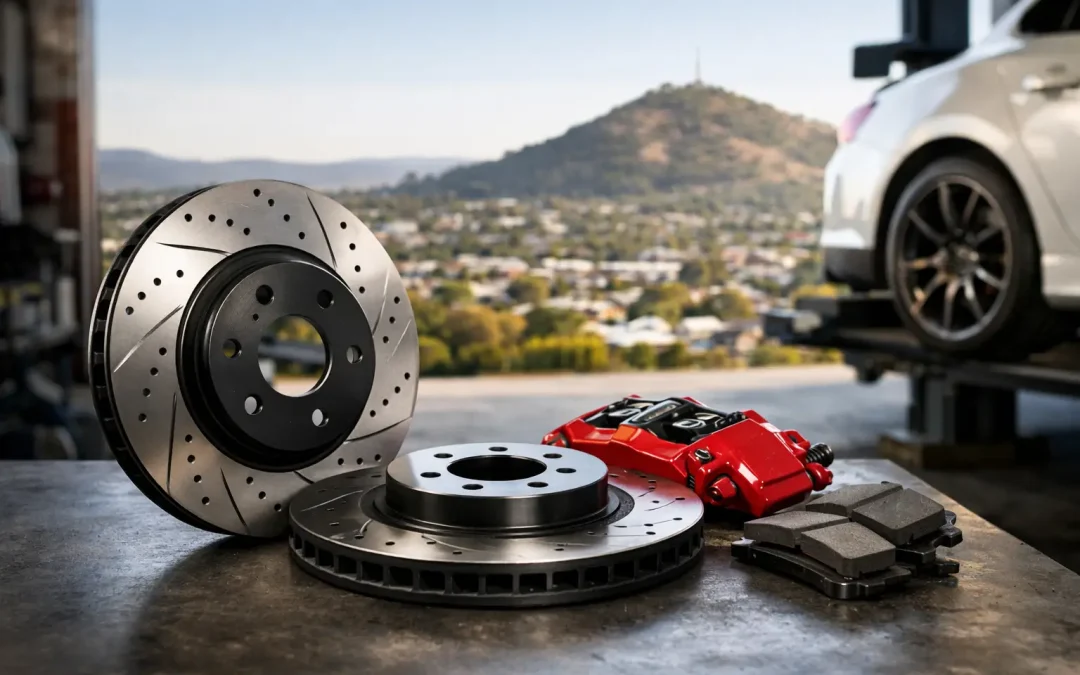
When someone asks about DBA brakes Albury drivers can rely on, they are usually not chasing a logo on a box. They want brakes that stop properly, last well, and suit how the vehicle is actually used. That might mean a family SUV doing school runs, a tradie ute carrying tools every day, or a 4×4 set up for towing and touring. The right brake setup depends on the job.
DBA has built a strong reputation because the range covers more than one type of driver. There are solid replacement options for everyday vehicles, upgraded rotors for heavier work, and brake components that make more sense once tyre size, load and driving conditions start changing. But a good brand on its own is not the whole answer. The real result comes from choosing the right parts, diagnosing the full system properly, and fitting everything as a matched setup.
Why DBA brakes are a common choice
DBA is well known in Australia for one simple reason – the range is broad enough to suit standard replacements and serious upgrades. For many drivers, that matters because braking problems are rarely one-size-fits-all. A commuter car with worn rotors needs a different solution from a touring 4×4 with added weight and a trailer on the back.
One of the practical advantages with DBA is consistency. The machining quality is generally strong, the range is easy to match to vehicle use, and there are options that go beyond basic replacement when the factory setup no longer feels up to the task. That is especially relevant for vehicles that work harder than they did when they left the factory.
There is also a safety angle here. Cheap brake components can look fine on day one, then develop noise, uneven wear or poor heat control not long after fitting. Brakes are not an area where false savings usually work out well. If a rotor or pad cannot manage heat properly, stopping performance can suffer when you need it most.
DBA brakes Albury drivers often ask about
Most questions around DBA brakes are not really about the brand. They are about symptoms, use and value. Drivers want to know whether an upgrade is worth it, whether new rotors will fix a vibration, or whether their towing setup needs something stronger than a standard replacement.
The answer depends on what the vehicle is doing now, not what it was designed to do years ago. Plenty of utes and 4x4s are carrying more weight, running bigger tyres, or towing more often than the original brake package was expected to handle. In those cases, replacing worn parts with the same grade of component may not solve the bigger issue.
That is where proper diagnosis matters. If a vehicle has poor pedal feel, steering wheel shudder under braking, squeal, longer stopping distances or uneven wear, the fault may not be the rotor alone. Pads, calipers, hoses, fluid condition and wheel bearing play can all affect the result. Fitting new parts without checking the rest of the system can leave the original problem half fixed.
When a standard replacement is enough
Not every vehicle needs an upgraded brake package. If your car is used mainly for local driving, commuting and the occasional highway trip, a quality standard replacement can be the right call. In many cases, a DBA rotor paired with suitable pads gives dependable braking without adding cost where it is not needed.
This is where honest advice matters. A lot of drivers assume bigger or more expensive always means better. It does not. If the vehicle is lightly loaded and the braking issue comes down to normal wear, a straightforward replacement done properly can be the best value option. The goal is not to oversell parts. The goal is to restore safe, consistent braking.
That also means paying attention to the condition of the full system. Brake fluid, caliper operation and pad selection all affect how the vehicle feels after the job is done. A quality rotor cannot make up for seized hardware or contaminated fluid.
When an upgrade makes sense
There are clear situations where an upgraded brake setup is worth considering. Towing is one of them. Added trailer weight increases stopping demands, particularly on highways, downhill sections and regional roads where heat builds quickly. The same applies to loaded 4x4s with camping gear, bar work, long-range tanks or GVM upgrades.
Larger tyres are another common trigger. Once tyre diameter increases, braking can feel less responsive because the system is working harder to slow the vehicle. Drivers often notice this after fitting accessories and tyres over time rather than all at once. The vehicle may still stop, but not with the confidence it used to.
In those cases, upgraded DBA rotors and matched friction components can improve heat management and consistency. That does not mean every setup needs to be extreme. It means the parts should suit the real load, not the sales brochure version of the vehicle.
The difference between parts fitting and brakes being done properly
Brake work should never be treated like a simple box-swap. A rotor can physically fit and still be the wrong choice for how the vehicle is used. A pad can be installed and still deliver poor noise control or dusty performance if it does not suit the driver’s priorities.
Doing the job properly starts with asking the right questions. Is the vehicle towing? Has it been lifted? Are there oversized tyres? Does it see mainly stop-start traffic or long highway runs? Has the pedal changed recently? Is the issue a vibration, noise or weak stopping performance? These details shape the repair.
It also comes down to workshop process. Correct installation matters, bedding-in matters, and checking the hydraulic side of the system matters. If a caliper is sticking or the fluid is overdue, replacing rotors and pads alone may leave the driver disappointed. Good parts still need good workmanship behind them.
How to tell your brakes need attention
Most brake systems give some warning before they become a bigger problem. The signs can be obvious, like grinding, squealing or a brake warning light. Others are more subtle, such as the pedal feeling softer than usual, the car pulling when braking, or the steering wheel shaking on a downhill stop.
Longer stopping distance is another one drivers sometimes adapt to without realising. The vehicle still stops, just not as confidently. That often happens gradually as pads wear, fluid ages or rotors lose condition.
If the vehicle tows, carries tools, or regularly does country kilometres, small changes in braking feel are worth checking early. Catching wear before metal-to-metal damage or overheating sets in usually keeps repair costs more reasonable.
Choosing the right setup without wasting money
The best outcome is not the most expensive brake package. It is the one that matches the vehicle, the load and the driver. For some people, that means reliable standard replacement parts with proper fitting. For others, especially in heavier-duty use, it means stepping up to a stronger setup that copes better with heat and repeated braking.
That is why straight answers matter more than sales talk. Good brake advice should explain what has worn out, what needs replacing now, and what is still serviceable. It should also be clear about trade-offs. More aggressive pads can improve bite but may create more dust or noise. Heavier-duty components can offer better control under load, but only if the rest of the system is in good condition as well.
For drivers who want specialist help rather than guesswork, Albury Brake and Clutch Centre deals with this kind of diagnosis every day. That matters when the vehicle is not just a way to get around, but something you rely on for work, family or getting away on weekends.
Why local conditions change the brake conversation
Regional driving can be harder on brakes than many people expect. Highway speeds, towing, uneven road surfaces and long distances between stops all change how heat builds in the system. A vehicle that feels acceptable around town may show its limits once it is loaded up and working harder outside urban traffic.
That is one reason the question around DBA brakes in Albury is really a question about suitability. Local drivers often need components that can cope with mixed use – everyday driving during the week and heavier work on weekends or trips away. Getting that balance right is more useful than fitting something flashy that does not match the vehicle’s actual workload.
If your brakes are noisy, shaky, fading under load or simply not feeling as confident as they should, it is worth getting them checked before the problem grows. Good brake repairs are not about pressure or upselling. They are about making sure the vehicle stops the way it should, every time you ask it to.