


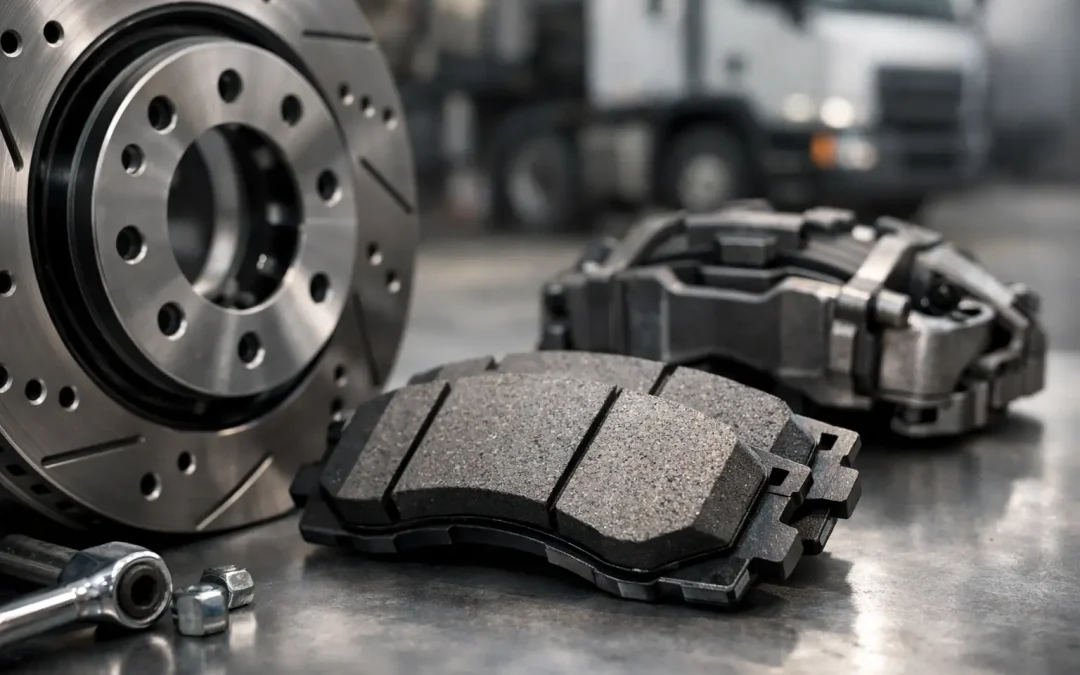
A loaded 4×4 heading down a long descent, a ute towing a caravan through the hills, or a family wagon carrying tools every day puts far more heat into its brakes than the school run ever will. This heavy duty brake pad review looks past the marketing claims and focuses on what actually makes a difference: dependable stopping power, predictable pedal feel and pads that can handle repeated hard work without fading away.
The right heavy duty pad can be a worthwhile upgrade. The wrong one can leave you with more noise, excess dust, harsh rotor wear or very little real-world improvement. Brake pads are not a one-size-fits-all part, particularly when larger tyres, extra payload, a GVM upgrade or regular towing are involved.
What makes a brake pad genuinely heavy duty?
A heavy duty brake pad is designed to work under greater heat and load than a standard replacement pad. That does not simply mean it is harder. It means the friction material, backing plate, shims and heat management have been chosen to remain stable when the brakes are asked to do repeated, demanding work.
During braking, the vehicle’s momentum turns into heat at the pads and rotors. Add a loaded trailer, a roof rack, recovery gear and 33-inch tyres, and there is much more energy for the system to control. A pad that feels fine around town may begin to fade on a steep downhill run because its friction level changes once temperatures climb.
Quality heavy duty pads aim to hold a consistent friction level through a wider temperature range. They should also recover properly after a hard stop, rather than feeling wooden or needing a longer pedal on the next application. That predictability matters more than a dramatic initial bite when you are towing or travelling with the family onboard.
Heavy duty brake pad review: the key trade-offs
There is no single best pad for every vehicle. A pad built for frequent towing may be more capable under heat than an original-equipment style pad, but it can also produce more dust or take a little longer to feel its best from cold. The sensible choice depends on how the vehicle is actually used.
Towing and touring
For towing, look for a pad that manages heat consistently and maintains confident pedal feel over repeated stops. This is especially relevant for caravans, horse floats, work trailers and boats, where the total moving weight rises quickly.
A towing-focused pad should be paired with rotors that can cope with the same job. Fitting aggressive pads to thin, glazed or poor-quality rotors is not an upgrade. It is a recipe for noise, uneven wear and disappointing performance. On a vehicle that regularly tackles mountain roads or long regional drives, the entire brake package needs to be considered.
Larger tyres and increased vehicle weight
Bigger tyres effectively increase the leverage working against the brakes. They are heavier to turn and can make the vehicle feel less responsive under braking. Add a canopy, drawers, long-range tank, fridge and touring gear, and standard brakes may be operating closer to their limit more often.
Heavy duty pads can help, but they cannot create braking capacity that the rest of the system does not have. In some cases, quality rotors, upgraded caliper components or a purpose-designed 4×4 brake upgrade will make more sense than pads alone. A proper inspection prevents money being spent on a partial fix.
Everyday driving and work utes
Not every ute needs the most aggressive pad available. A trades vehicle that carries tools and occasionally tows may benefit from a heavy duty street pad that offers better temperature tolerance without becoming noisy or overly harsh in normal traffic.
For a daily driver, smooth cold performance, low noise and long rotor life are still important. The best result is usually a balanced compound from a reputable manufacturer, not the hardest pad on the shelf. Extremely hard pads can be tough on rotors and may squeal when used gently around town.
The parts of a brake upgrade that cannot be ignored
Pads do the visible work, but they rely on the rest of the braking system. If the pedal is soft, the vehicle pulls to one side, or there is a vibration through the steering wheel, changing pads alone may not solve the problem.
Rotors need to be measured for thickness, checked for heat spots and inspected for run-out. A worn or uneven rotor can cause shudder and prevent new pads from bedding in correctly. Brake fluid also absorbs moisture over time, which lowers its boiling point. Under heavy braking, old fluid can contribute to a spongy pedal even when the pads are in good condition.
Calipers, slide pins, hoses and hardware matter too. A sticking caliper can overheat one pad, wear it out early and make the vehicle pull under brakes. New pads should be fitted with the correct shims, clips and lubrication in the right places. These small details are what keep a brake job quiet, even and built to last.
At Albury Brake and Clutch Centre, the approach is to diagnose the full system first, then recommend parts that suit the vehicle’s load and use. It gives drivers a straight answer on whether they need pads, rotors, fluid, a caliper repair or a more substantial upgrade.
What to look for when comparing heavy duty pads
Start with the vehicle’s real workload, not its appearance. A spotless 4×4 that only sees city roads needs something different from a touring rig that spends weeks loaded up on corrugated tracks. Ask how often it tows, how much it carries, whether it has larger tyres and where it is driven.
Then consider the manufacturer. Established brake brands invest in compound development, fitment testing and quality control. Cheaper pads can look similar in the box, but inconsistent material quality and poor fit can lead to squeal, dust, rapid wear or unpredictable braking. Brakes are not the place to gamble on an unknown part.
A good heavy duty pad should provide:
- stable braking when hot, without a major loss of pedal confidence
- sensible cold performance for normal road use
- compatibility with the chosen rotor and the vehicle’s brake system
- reliable fitment hardware and a backing plate that resists movement and noise
Dust is worth putting into perspective. A pad that creates some dust but brakes consistently under a load may be a better choice than a low-dust pad that struggles with heat. Regular wheel cleaning is inconvenient. Brake fade on a steep descent is a safety issue.
Bedding in new pads properly
Even the best pads need a correct bedding-in process. Bedding transfers a controlled layer of pad material onto the rotor surface, creating the friction relationship the system needs. Skipping it can cause uneven deposits, vibration, glazing and reduced performance.
The exact procedure varies by pad manufacturer, so follow the instructions supplied with the parts or advice from the technician fitting them. Generally, it involves a series of moderate stops to bring the brakes up to temperature, followed by time to cool without holding the vehicle stationary with very hot brakes clamped on the rotors.
For the first few hundred kilometres, avoid treating fresh brakes as though they are fully run in. If possible, do not head straight out with a heavy caravan after installation. Give the pads and rotors a chance to establish an even contact pattern first.
Signs your current pads are not up to the job
Brake fade is the obvious warning sign. If the pedal remains firm but the vehicle takes more effort or distance to slow down after repeated braking, the pad compound may be overheating. A burning smell after a long descent, visible smoke, or a pedal that changes significantly are reasons to stop safely and have the system checked.
Noise is more complicated. A brief squeal can occur with many pad types and does not always mean something is unsafe. Constant grinding, scraping, a pull to one side, steering-wheel shudder or a brake warning light should not be ignored. These can point to worn pads, damaged rotors, seized calipers or hydraulic faults.
The practical question is not whether heavy duty pads are better in every situation. It is whether your current brakes are matched to the weight, tyres and work your vehicle carries. If they are not, a properly selected pad and rotor package can make every trip feel more controlled – from the driveway to the next long downhill stretch.