


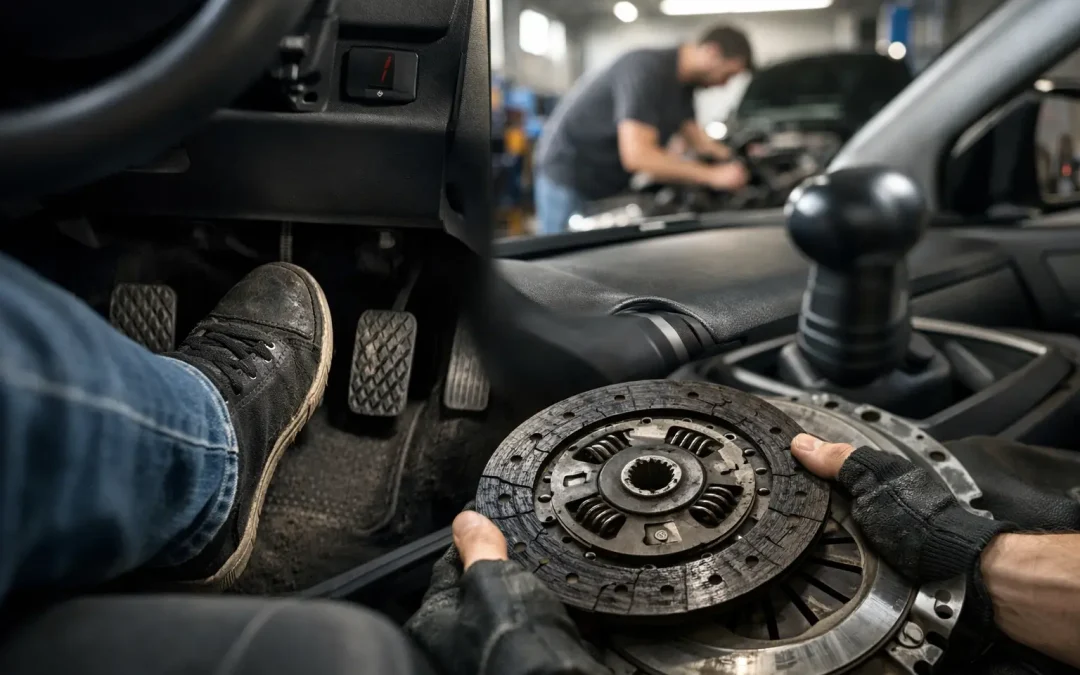
A clutch rarely fails without giving you some warning. The trouble is that many clutch failure signs start small – a slight shudder on take-off, a gear that feels harder to select, or an engine that revs without the vehicle picking up speed as it should. Leave them too long and a repair that may have been straightforward can turn into an inconvenient breakdown or further driveline damage.
For drivers who rely on their car, ute or 4×4 every day, knowing what to watch for makes a real difference. A clutch is a wear item, but how quickly it wears depends on the vehicle, how it is driven, the loads it carries and whether it spends its life in city traffic, on the highway, towing or off-road.
The clutch failure signs that need attention
The engine revs rise but the vehicle does not accelerate properly
Clutch slipping is one of the most recognisable warning signs. You might notice the engine revs flare when accelerating in a higher gear, heading up a hill or towing a trailer, but the vehicle does not gain speed in line with the revs. In more advanced cases, there may be a hot, burnt smell after the clutch has been working hard.
This happens when the clutch friction plate can no longer grip the flywheel and pressure plate with enough force. Wear is a common cause, although oil contamination from an engine or gearbox leak, a hydraulic fault or an incorrectly adjusted system can also contribute.
A slipping clutch will not improve with use. Continued driving generates heat and can damage parts that may otherwise have been reusable. If your vehicle slips under load, book an inspection before it leaves you without drive.
Shuddering or vibration when taking off
A smooth clutch should engage progressively as you move away from a standstill. If the vehicle shudders, grabs or vibrates through the pedal and body when you release the clutch, something is not operating evenly.
Sometimes this is caused by a worn or contaminated clutch disc. It can also be linked to a damaged flywheel, worn engine or gearbox mounts, or problems in the clutch release system. The symptom may be more noticeable in first gear, in reverse, or after the vehicle has warmed up.
It is tempting to compensate by using more throttle or slipping the clutch longer, but that adds heat and wear. Proper diagnosis matters here because replacing a clutch alone will not fix a shudder caused by a mount or flywheel issue.
Gears are difficult to select
If selecting first or reverse has become a fight, or the gearbox crunches when changing gears, the clutch may not be fully disengaging. A clutch that drags keeps some drive flowing from the engine to the gearbox even when the pedal is on the floor.
Low or contaminated clutch fluid, air in a hydraulic system, a failing clutch master or slave cylinder, a worn release bearing, linkage faults or internal clutch wear can all be behind it. Gearbox wear can produce similar symptoms too, which is why it pays not to assume the gearbox is at fault before the clutch system has been checked.
Do not force the gear lever. Forcing it can cause avoidable damage to gearbox components and may leave you unable to select a gear when you most need one.
The clutch pedal feels wrong
Your foot usually notices a clutch issue before you can describe it. The pedal may feel unusually soft, spongy, stiff, sticky or inconsistent. It may stay close to the floor, return slowly, or need to be pumped before a gear can be selected.
Hydraulic clutch systems rely on fluid pressure to operate correctly. A leak, failing cylinder or air in the lines can change pedal feel and prevent full clutch release. On other vehicles, a worn cable, pedal mechanism or release fork may be the cause.
Any sudden change in pedal operation is worth checking promptly. If the pedal drops to the floor or the vehicle cannot be put into gear safely, stop driving and arrange assistance rather than trying to nurse it home.
Noises when pressing or releasing the pedal
A chirp, whir, rumble or grinding noise that appears only when the clutch pedal is pressed can point to a worn release bearing. Noise with the pedal released may be related to other gearbox input-shaft components. Rattles can also come from a worn dual-mass flywheel or driveline components.
The exact sound is less useful than when it occurs. Take note of whether it happens at idle, while moving, with the pedal pressed, or only under load. That information helps a specialist narrow down the likely cause and avoids replacing parts on guesswork.
A burning smell after hills, traffic or towing
A burnt smell can mean the clutch has overheated. It often appears after hill starts, stop-start traffic, manoeuvring a trailer or driving in soft terrain. A one-off smell after an unusually difficult recovery does not automatically mean the clutch has failed, but it should not become normal.
Towing, larger tyres, increased vehicle weight and hard 4×4 use place extra demand on a standard clutch. If you regularly carry tools, tow a caravan or work your ute hard, the right replacement specification matters as much as the repair itself. An unsuitable clutch may feel fine initially but have a shorter life under the loads your vehicle actually carries.
When it is not necessarily the clutch
Several faults can feel like a clutch problem. A hesitant engine, transmission issue, worn universal joint, damaged CV joint, failing engine mount or brake binding can all affect how a vehicle moves and feels. Likewise, a noisy pedal area does not always mean the complete clutch assembly needs replacement.
That is why a proper inspection should include the hydraulic system, pedal operation, gearbox behaviour, mounts and any visible leaks, not just a quick road test. If the gearbox needs to come out, it also makes sense to inspect related parts such as the flywheel, release mechanism and rear engine seal. Addressing a leaking seal or worn bearing while access is available can prevent paying for the same labour twice later.
Can you keep driving with a failing clutch?
It depends on the symptom and how severe it is. Mild shuddering may allow short-term driving, but it should still be assessed before it worsens. Slipping under acceleration, a pedal that will not return, a loss of hydraulic fluid, serious noises or difficulty selecting gears are stronger warnings. Those faults can quickly become a no-drive situation.
Avoid heavy towing, steep hill work, off-road driving and stop-start traffic if you suspect a clutch issue. Do not ride the clutch pedal at lights or use it to hold the vehicle on a hill. Select neutral when stopped where safe, use the handbrake for hill starts and let the clutch engage cleanly rather than feeding it excessive throttle.
What a proper clutch inspection should give you
You deserve more than being told you ‘need a clutch’. A useful diagnosis explains what has failed, what condition the related components are in, what parts are recommended and why, and whether there is any work that can reasonably wait.
At Albury Brake and Clutch Centre, the focus is on identifying the cause before recommending repairs. That means straight answers about whether the issue is the clutch itself, the hydraulic system, the flywheel or another part of the driveline. Quality components and correct installation matter because a clutch replacement is labour-intensive work that should be done properly once.
If your vehicle has started slipping, shuddering, crunching into gear or changing pedal feel, do not wait for the next long trip or towing job to test it. Getting it checked early gives you clearer options, helps protect related components and keeps your vehicle dependable when you need it.