


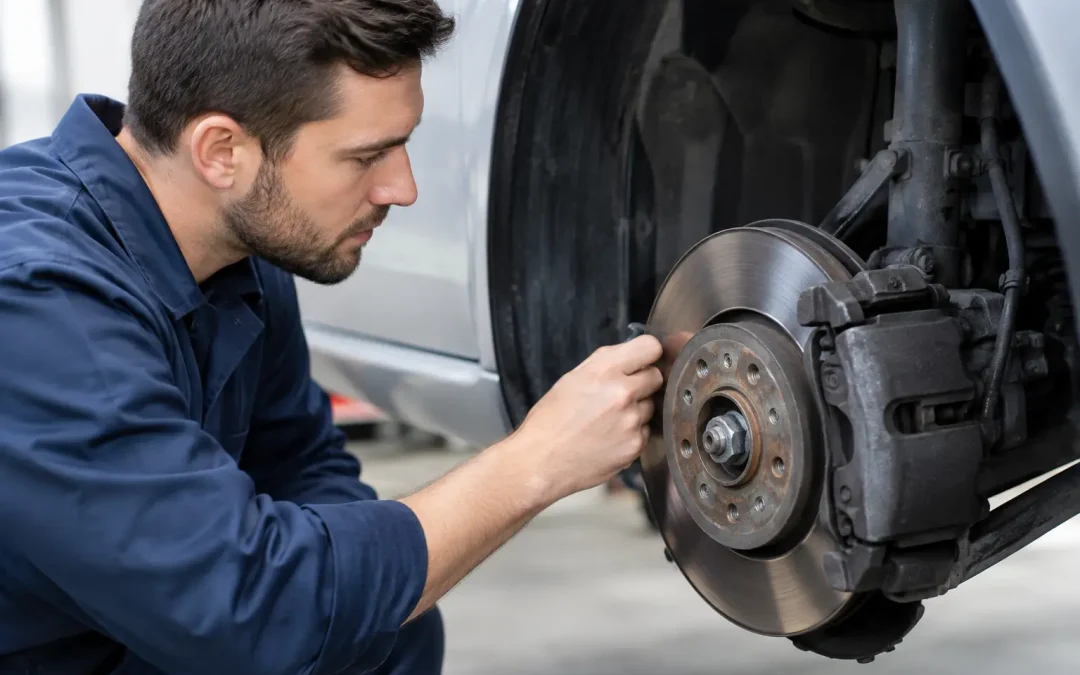
A sharp squeal as you ease up to the lights can make even a well-maintained car feel unreliable. Sometimes brake squeal is simply the pads and discs reacting to cold, damp or dusty conditions. Other times, it is your vehicle telling you that brake components are worn, glazed, loose or not working as they should.
The sound alone cannot confirm the fault. That is why the right approach is not to replace parts on guesswork, but to inspect the complete braking system and work out what is actually causing the noise.
What causes brake squeal?
Brakes work by turning your vehicle’s motion into heat through friction. Under certain conditions, the pad can vibrate against the disc at a very high frequency. That vibration is what you hear as a squeal.
A brief noise on the first few stops of a cold morning is often not cause for alarm. Overnight moisture can leave a light film of surface rust on the brake discs, particularly if the vehicle has been parked outside. It normally clears after a few controlled brake applications.
Persistent squealing, however, deserves attention. Common causes include worn brake pads, hardened or glazed pad material, uneven disc surfaces, brake dust buildup, worn anti-rattle hardware, or caliper components that are sticking. Some pads also have a built-in wear indicator designed to make a high-pitched noise when the pad material is getting low.
The type of vehicle and how it is used matters. A family SUV that spends its time on short school runs faces different brake conditions from a ute that tows a caravan, carries tools every day or runs larger tyres. Extra weight and heat can accelerate wear and expose weaknesses in a braking setup that was adequate for lighter duties.
When a squeal is normal and when it is not
There is no single rule that covers every brake noise, but the pattern gives useful clues. A faint squeal that disappears once the brakes are warm may be related to pad compound, temperature or a light coating on the discs. Performance-oriented pads and some heavy-duty compounds can be noisier than standard road pads, especially when cold. The trade-off can be better heat tolerance under towing or hard use.
Noise that occurs at every stop, gets louder, or is accompanied by poor braking performance is different. If the pedal feels soft, the vehicle pulls to one side, the steering wheel shakes under braking, or you hear grinding rather than squealing, arrange an inspection promptly. These symptoms can point to worn pads, damaged discs, a seized caliper, brake fluid issues or other faults that should not be put off.
Stop driving and seek advice straight away if a brake warning light comes on, the pedal drops unusually low, you smell burning near a wheel, or braking performance changes suddenly. A vehicle may still stop, but it is not worth guessing with a safety-critical system.
The common faults behind a noisy brake system
Worn pads and wear indicators
Brake pads do not always squeal when they are worn, but many are fitted with a small metal indicator that contacts the disc as the pad material gets low. It creates a deliberate warning noise before the pad wears down to its backing plate.
Ignoring that sound can turn a straightforward pad replacement into pads and discs, and potentially additional caliper work. The earlier the issue is checked, the more options you usually have.
Glazed pads or discs
Glazing happens when brake components get excessively hot and the friction surface hardens or becomes shiny. Repeated heavy braking, towing on long descents, riding the brake pedal, or a sticking caliper can all contribute. A glazed surface may squeal and can reduce the smooth, consistent feel you expect from your brakes.
In some cases, the components may be serviceable after correcting the underlying issue. In others, replacement is the sensible long-term repair. Simply fitting new pads without addressing heat damage, disc condition or a sticking caliper can leave you with the same problem again.
Disc wear and uneven surfaces
Brake discs wear with use. They can develop grooves, heat spots, corrosion on the braking face or variation in thickness. You may notice squealing, a pulsing pedal or vibration through the steering wheel when slowing down.
A proper inspection measures disc thickness and checks the disc surface, rather than relying on appearance alone. Machining may be an option on some vehicles if the disc remains above its minimum thickness and is otherwise sound. Often, particularly with modern discs, replacing the discs with quality matched components is the better repair.
Sticking calipers and worn hardware
Pads need to move freely in their mounts, and calipers need to slide or operate correctly. Corrosion, damaged boots, dry slide pins and tired retaining clips can prevent that movement. The result can be constant pad contact, uneven wear, excess heat and noise.
This is one reason a quick pad change is not always enough. The hardware, caliper operation, hoses and mounting points should be checked as part of the job. Quality pads fitted to a faulty caliper will not deliver a reliable outcome.
Why the noise may come and go
Brake squeal can be frustrating because it is not always present when the vehicle reaches the workshop. Temperature, humidity, vehicle load, brake pressure and speed all affect it. A noise that appears only after a freeway run, while towing, or on the first stop in the morning can still provide useful diagnostic information.
Before booking in, make a note of when it happens. Does it occur while braking lightly or firmly? Is it worse after rain? Does it start after the brakes have warmed up? Is there a vibration, pull or burning smell? Clear details help a technician narrow down the likely cause and avoid replacing parts unnecessarily.
It is also worth checking whether the noise started soon after brake work. New pads often need a bedding-in period, but they should not create grinding, pulling or a major change in pedal feel. If a squeal persists after new brake work, the pad material, disc condition, fitment and hardware should all be assessed.
How a proper brake inspection finds the real issue
A brake inspection should look beyond the pad thickness. The technician checks the friction material, disc condition and measurements, caliper movement, slides, clips, shims, brake hoses and fluid condition. They will also look for uneven wear between the inner and outer pads, which can reveal a caliper issue that is not obvious from outside the wheel.
The goal is to identify the root cause, then recommend only the work needed to restore safe, dependable braking. For example, a light rust-related squeal may need no repair at all. Worn pads with healthy discs may only need pads and hardware. A ute used for heavy towing may benefit from a brake upgrade designed to manage higher loads and heat rather than repeatedly fitting standard components that are being pushed beyond their intended use.
At Albury Brake and Clutch Centre, that means straight answers about what is urgent, what can be monitored, and what will give the best value over the life of the repair. There is no benefit in fitting parts that do not address the reason the noise started.
Can you prevent brake squeal?
You cannot prevent every brake noise, especially in wet weather or during cold starts, but regular servicing makes persistent problems less likely. Have the brakes checked at scheduled services, and do not wait for metal-on-metal grinding before acting. If you tow, travel with a loaded vehicle, drive steep country roads or run an upgraded 4×4, have the braking system assessed for the way you genuinely use it.
Good driving habits help too. Leave enough distance to brake smoothly, avoid resting your foot on the brake pedal, and use lower gears on long descents where appropriate. This reduces unnecessary heat and gives the brakes a better chance of lasting as intended.
A squeal may be minor, but brakes are not an area for assumptions. If the noise is persistent or comes with any change in braking feel, get it checked early. A clear diagnosis now is usually safer, simpler and less expensive than waiting for a small warning to become a larger repair.