


That light shudder through the pedal at the traffic lights, or the grinding noise on the school run, usually leads to the same question in the workshop – machining versus replacing brake discs, which option actually makes sense? The short answer is that it depends on the condition of the discs, the cause of the problem, and whether the repair will be safe and worthwhile once the job is finished.
Brake discs are not a part to guess on. They handle heat, friction and stopping force every time you drive, so the right repair is the one that restores proper braking performance without cutting corners. Sometimes machining is a sensible option. Sometimes replacement is the only proper fix.
Machining versus replacing brake discs – what’s the difference?
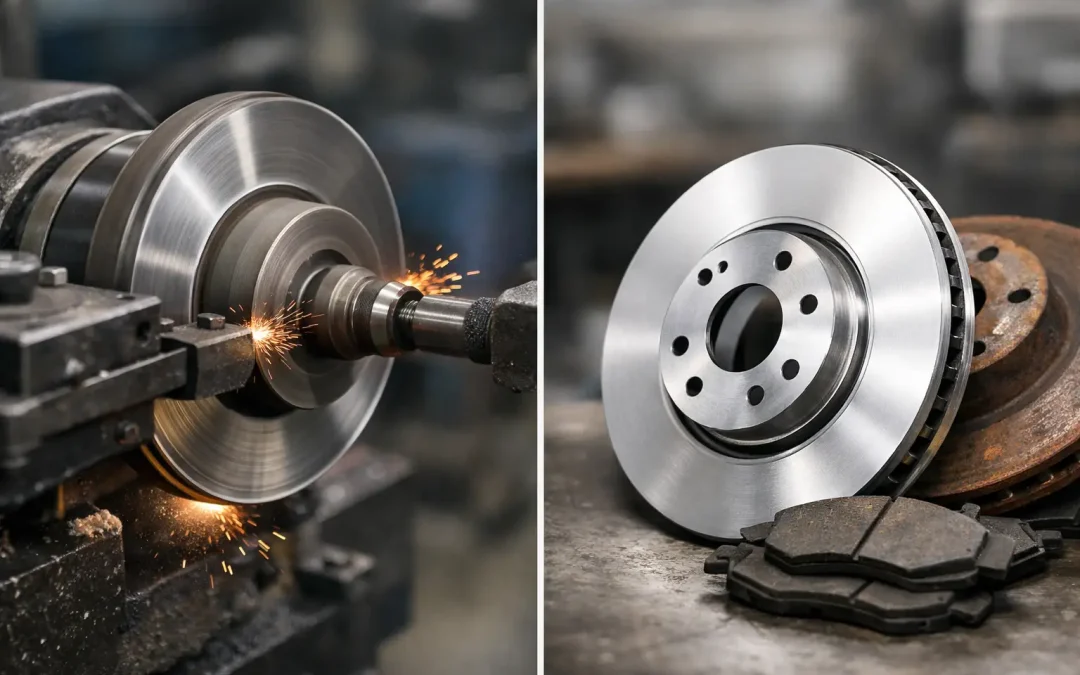
Machining brake discs means removing a thin layer from the disc surface to clean it up and make both sides run true again. You might also hear it called skimming. The aim is to remove minor scoring, surface imperfections or slight variation that can cause pedal pulsation or uneven pad contact.
Replacing brake discs means fitting new rotors altogether. That gives you a fresh braking surface, full usable thickness within manufacturer specifications, and no question marks about hidden heat damage, cracking or excessive wear.
On paper, machining can look like the cheaper option. In practice, the best value comes from choosing the repair that lasts. If a disc is already close to minimum thickness, badly heat-affected or unevenly worn, machining it just to save a few dollars often means doing the job again sooner.
When machining brake discs can be the right call
Machining can be worthwhile when the discs are still in otherwise sound condition. If there is light scoring, minor runout or a small amount of surface variation, a machine cut may restore the braking surface properly. This can help when the issue has been caught early and the disc still has enough thickness left after machining.
It also matters why the brakes are being worked on in the first place. If the vehicle has had a mild brake shudder, but the discs are not cracked, not heavily grooved and not below spec, machining may be appropriate. The key point is that the disc must still remain above minimum thickness after the material is removed.
That thickness figure is not just a technical detail. It affects the disc’s ability to absorb and shed heat. A disc that is too thin runs hotter, wears faster and is more likely to cause ongoing braking issues.
Machining is generally more suitable where the wear is modest and the rest of the brake system is healthy. It is not a cure-all for every vibration or noise complaint.
The conditions have to be right
A proper inspection should come first. The disc needs to be measured, checked for heat spotting, cracking, hard spots and excessive lip wear, and matched against the manufacturer’s minimum thickness specification. If those checks are skipped, machining becomes a gamble.
It is also worth remembering that not every brake vibration is caused by the disc face alone. Worn suspension components, seized calipers, poor pad material transfer, wheel bearing issues and incorrect wheel nut tension can all play a part. That is why diagnosis matters as much as the repair itself.
When replacing brake discs is the better repair
Replacement is usually the smarter option when the discs are badly worn, below spec, deeply scored, heat cracked or have already been machined before. In those cases, there often is not enough material left to safely machine them again.
If the brakes have been overheating, replacement is often the better long-term answer. Towing, carrying loads, driving a 4×4 with larger tyres, or repeated stop-start use can all put extra heat into the braking system. Once a disc has been heavily heat-cycled, the metal can develop hard spots or uneven characteristics that machining may not fully solve.
Replacement also makes sense when you want a durable result rather than the cheapest line on the invoice today. New discs paired with quality pads can provide better consistency, quieter operation and longer service life, especially if the old components have worn unevenly.
For many modern vehicles, the labour involved in machining versus replacing is closer than people expect. Once the discs are removed, measured, machined and rechecked, the saving may not be dramatic – especially if the result is marginal because the disc had limited life left anyway.
New discs can prevent repeat visits
Nobody wants to pay for brake work twice. If a disc is borderline, replacement often avoids comeback issues like recurring shudder, noise or uneven pad wear. That matters for everyday drivers, but even more so for anyone towing a caravan, carrying tools in the back, or relying on the vehicle every day for work.
A brake repair should leave you with confidence, not a warning that the parts are only just acceptable.
The hidden factor – why the discs wore the way they did
One of the biggest mistakes with brake repairs is focusing only on the disc surface and ignoring the cause. If a caliper is sticking, if the pads are poor quality, or if the driver has had repeated overheating under load, the new or machined disc can end up with the same problem again.
That is why good brake work is not just about parts replacement. The pads, calipers, hardware and fluid condition all need to be considered together. If the disc face is cleaned up but the pad material is contaminated or the caliper slides are binding, the repair is incomplete.
This is especially relevant for utes, SUVs and touring 4x4s. Added weight, accessories, towing and larger rolling diameter tyres all increase braking demand. In those cases, replacing worn discs with quality components may be only part of the answer. Sometimes a brake upgrade is the more appropriate long-term fix.
Is machining cheaper? Sometimes. Is it better value? Not always.
This is where honest advice matters. Machining can reduce the parts cost if the discs are genuinely suitable for it. But lower upfront cost does not automatically mean lower overall cost.
If machining leaves the disc close to minimum thickness, the service life can be limited. You may also end up replacing the discs at the next pad change anyway. On the other hand, if the discs are in good condition and only need a light clean-up, machining can be a perfectly reasonable repair.
The real comparison is not machining versus replacing brake discs as a theory. It is which option gives safe braking, proper pad bedding, and reliable performance for how the vehicle is actually used.
For a lightly driven commuter car, machining may be enough. For a heavily loaded 4×4, a tow vehicle or something that already has heat-related brake issues, replacement often makes more sense.
What a proper workshop should check before advising either option
Before recommending machining or replacement, a brake specialist should inspect disc thickness, surface condition, runout, heat damage and pad wear patterns. They should also check the calipers and surrounding brake hardware, because worn or sticking components can create the same symptoms again.
This is where specialist experience counts. A brake problem can sound simple from the driver’s seat, but the right answer comes from measuring, inspecting and understanding why the issue started. At Albury Brake and Clutch Centre, that approach is part of doing the job properly the first time.
A good rule of thumb for drivers
If your brakes are squealing, shuddering, grinding, pulling to one side or taking longer to stop, get them checked before deciding what repair you need. By the time a disc is making a harsh grinding noise, machining is often off the table because too much material has already been lost.
If the vehicle has had recent pad replacement and still does not feel right, it is also worth having the full brake system assessed. New pads fitted to worn or damaged discs rarely produce a good result.
There is no prize for squeezing the last possible kilometre out of brake components. With safety-critical parts, the best repair is the one that restores proper braking performance and lasts.
If you are weighing up machining versus replacing brake discs, the right answer is the one based on measurements, not guesswork. A straight answer from a brake specialist can save money, time and a second trip back to the workshop.