


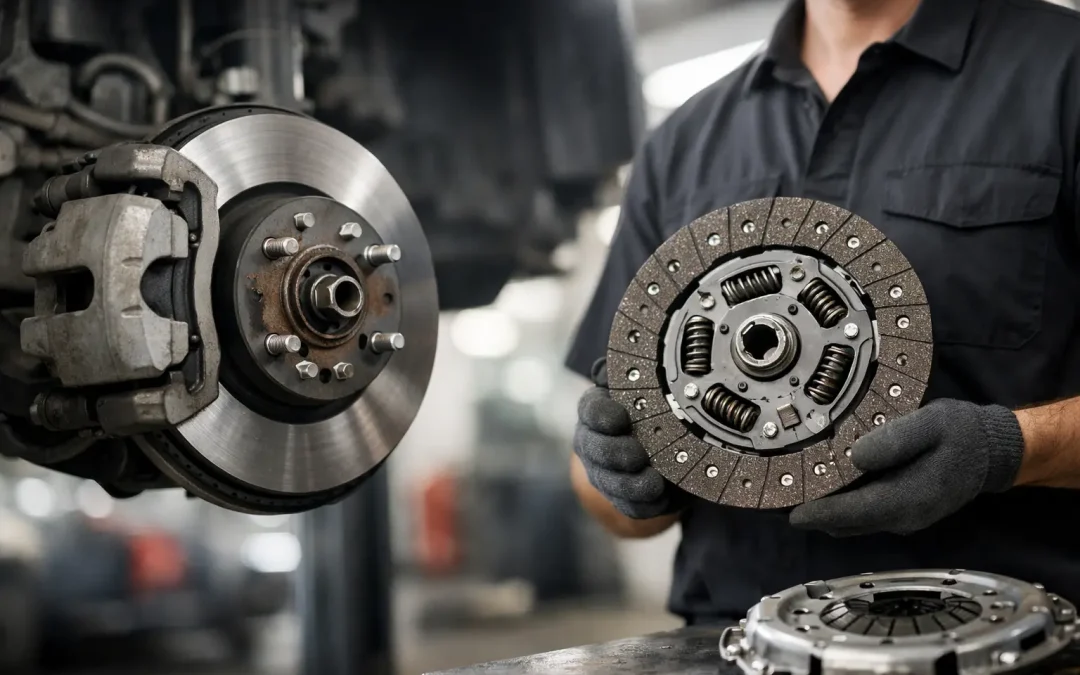
When your brake pedal feels soft, your clutch starts slipping, or the car just doesn’t feel right, guessing is the expensive option. That’s where brake and clutch specialists make a real difference. These are safety-critical systems, and getting them checked by a workshop that deals with them every day usually means a faster diagnosis, the right repair, and fewer surprises later.
A lot of vehicle problems sound simple at first. A squeal might be pads, but it could also point to rotor wear, caliper issues or poor-quality parts fitted previously. A clutch that feels heavy might be worn out, but it can also come down to hydraulics, linkages or heat-related damage. The value of a specialist is not just replacing parts – it’s knowing what actually caused the problem in the first place.
What brake and clutch specialists actually do
A general mechanical workshop can cover a wide range of servicing, and for many jobs that’s completely fine. But brakes and clutches are different because the faults often overlap, symptoms can be misleading, and the consequences of getting it wrong are serious.
Brake and clutch specialists focus on diagnosis before repair. That means checking wear patterns, measuring components properly, assessing hydraulic condition, looking for heat damage, and working out whether a problem is isolated or part of a bigger issue. It’s a more accurate approach than simply swapping out the most obvious part and hoping for the best.
That specialist focus also matters when quality parts are involved. Not all pads, rotors, clutch kits or hydraulic components perform the same way. The right part depends on how the vehicle is used. A family SUV doing school runs has different needs to a 4×4 set up for towing, touring or larger tyres. A proper recommendation should reflect that, not just what happens to be cheapest on the shelf.
Why specialist diagnosis saves money
Most drivers are not trying to avoid repairs. They are trying to avoid paying twice.
That usually happens when the first diagnosis is incomplete. A workshop may replace worn pads without addressing damaged rotors. Or a clutch may be replaced without checking the flywheel, hydraulics or related wear. The car goes back on the road, but the underlying problem is still there. Before long, the same symptoms return, along with another invoice and more time off the road.
Specialists tend to work differently. They look for the full cause, explain what is urgent and what can wait, and recommend repairs based on what will hold up over time. That doesn’t mean every job has to become a major rebuild. It means the repair is matched to the actual condition of the vehicle.
For cost-aware drivers, that matters. Honest advice is not about pushing the biggest quote. It’s about being clear on what is necessary for safety and reliability, and what isn’t.
Signs your brakes need proper attention
Some brake issues are obvious. Others creep up slowly enough that drivers get used to them.
If the vehicle pulls when braking, takes longer to stop, shudders through the pedal, makes grinding or squealing noises, or the pedal feels soft or inconsistent, it’s time to get it checked. A brake warning light is another clear sign, but not the only one. Even a change in feel can point to worn components, hydraulic problems or uneven braking performance.
There’s also a difference between a quick patch-up and a proper brake repair. New pads fitted to badly worn rotors can create poor contact, noise and reduced stopping performance. Cheap components can wear faster, create dust, squeal more, or struggle under heat. That’s particularly relevant for heavier vehicles, utes and 4x4s that tow or carry loads regularly.
For these vehicles, standard braking performance may no longer suit the way the vehicle is being used. Larger tyres, extra accessories and increased weight all place more demand on the braking system. In those cases, a brake upgrade can be a sensible long-term fix rather than repeated standard replacements.
Clutch problems are rarely just about wear
Clutch faults are often described in simple terms – slipping, shuddering, difficulty changing gears, a high engagement point, or a pedal that feels unusually heavy or light. But the cause is not always as simple as “the clutch is gone”.
A worn clutch plate is common, but so are pressure plate issues, hydraulic cylinder failures, contaminated friction surfaces and flywheel damage. Driving style, towing, stop-start traffic and heavy loads can all shorten clutch life. So can fitting lower-grade parts that are not suited to the vehicle.
That’s why a proper inspection matters before any clutch replacement. If related components are left unchecked, the new clutch may not perform as it should. In some cases, the vehicle owner ends up blaming the replacement part when the real issue sits elsewhere in the system.
A specialist workshop should be able to explain the problem in plain language. Not with vague comments, and not with pressure. Just straight answers about what has failed, what needs replacing, and what will give the best result for how the vehicle is used.
When a general repair is enough – and when it isn’t
Not every vehicle issue requires a niche expert. Routine servicing, basic maintenance and many standard mechanical repairs can be handled well by a capable general workshop. There’s no point pretending otherwise.
Where specialists come into their own is when the job involves repeated faults, unclear symptoms, heavy-duty use, or systems where precision matters. Brakes and clutches sit firmly in that category because they affect safety, drivability and reliability all at once.
If you’ve already had a repair that didn’t solve the problem, if the vehicle is used for towing or touring, or if the diagnosis feels uncertain, specialist input is usually worth it. The same applies to trade customers who need dependable turnaround and don’t have time for vehicles coming back with the same issue.
Quality parts matter more than most people realise
Drivers often compare repair quotes line by line, which is understandable. But the cheaper quote is not always cheaper once you factor in part quality, labour time and how long the repair lasts.
Brake and clutch specialists usually place more emphasis on component quality because they see firsthand what happens when poor parts fail early. Pads can glaze, rotors can warp, clutches can chatter, hydraulics can leak, and performance can drop away quickly under load or heat.
That doesn’t mean every car needs premium motorsport-grade parts. It means the parts should suit the vehicle, the driving conditions and the owner’s expectations. For some, that’s dependable everyday braking. For others, it’s a clutch or brake setup that can handle towing a caravan, carrying tools every day, or covering long regional kilometres without complaint.
Good advice here should be practical, not flashy. You want to know what will last, what’s worth spending on, and where there’s no need to overdo it.
What a good specialist experience should feel like
The best workshops are not hard to spot. They ask the right questions, test properly, and explain findings without making the customer feel out of their depth.
You should be told what the fault is, what repair is recommended, and why. If there are options, those should be explained clearly. If something can wait, that should be said too. There should be no vague language, no scare tactics, and no unnecessary upselling.
That approach is one reason many local drivers and trade customers stick with a specialist once they find one they trust. In a place like Albury-Wodonga, reputation travels fast. Workshops known for doing the job properly the first time tend to earn repeat business for a reason.
Choosing brake and clutch specialists with confidence
If your vehicle is showing warning signs, the goal is not just to get it back on the road quickly. It’s to know the repair has been done properly and will hold up in real driving conditions.
Look for a workshop that specialises in these systems, uses quality components, and talks to you plainly about the problem. Ask how they diagnose faults, not just what they replace. If you drive a 4×4, tow regularly, or rely on your vehicle every day, make sure the recommendation reflects that real-world use.
A specialist repair should leave you with more confidence, not more questions. And when it comes to brakes and clutches, that peace of mind is worth a lot more than the cheapest quick fix.