


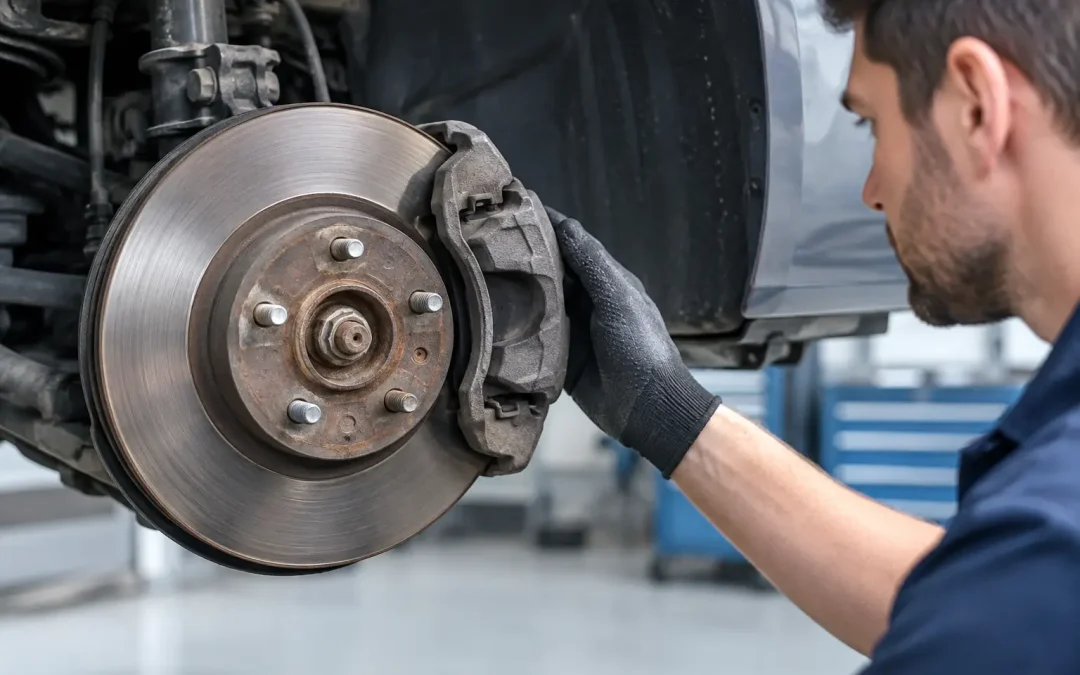
A faint squeal at the school drop-off can be easy to ignore. A pedal that sinks lower than usual, a steering wheel that shakes under brakes, or a vehicle that pulls across the lane is different. Common brake problems rarely improve on their own, and brakes are not a system to guess at or put off until the next service.
The good news is that most brake faults give warning signs well before a complete loss of braking performance. Knowing what those signs can mean helps you make a sensible call: book an inspection soon, or stop driving and arrange help. The actual cause still needs to be checked properly, because the same symptom can come from more than one fault.
Common brake problems drivers should not ignore
Squealing, squeaking or grinding noises
A high-pitched squeal can be caused by brake pads wearing down, especially when the built-in wear indicator touches the brake disc. Some pads can also make noise when cold, damp or dusty, even when they still have usable material left. That is why a squeal does not automatically mean new pads are needed, but it does warrant a look.
Grinding is more serious. It can mean the pad material has worn away and metal is contacting the disc. Continuing to drive can quickly damage the discs, reduce braking performance and turn a straightforward pad replacement into a larger repair. If grinding starts suddenly or is loud whenever you brake, avoid unnecessary driving.
Noise can also come from loose hardware, seized caliper components or a stone caught near the disc. Proper diagnosis means checking the full brake assembly, not simply fitting parts based on the sound.
A soft, spongy or low brake pedal
Your brake pedal should feel firm and predictable. If it feels soft, travels further than normal or slowly sinks while you are holding pressure at the lights, have it inspected promptly. Air in the hydraulic system, old contaminated brake fluid, a fluid leak or a fault in the master cylinder can all affect pedal feel.
Brake fluid absorbs moisture over time. That lowers its boiling point and can contribute to a poor pedal, particularly when brakes are working hard on a long descent, while towing or in stop-start traffic. A brake fluid flush may be the right repair in some cases, but only after checking for leaks and other hydraulic faults.
If the brake warning light comes on with a low or soft pedal, do not assume it is safe to drive to work or home. Check the fluid level only if it is safe to do so, then arrange an inspection. Low fluid may be a sign of worn pads, but it can also indicate a leak that needs immediate attention.
Shuddering through the pedal or steering wheel
A brake shudder is often felt through the steering wheel when braking from highway speeds, while a pulsing pedal can be felt through the sole of your foot. Drivers often describe this as warped discs. The cause is not always that simple.
Uneven disc thickness, heat spots, disc run-out, worn suspension components and wheel-bearing issues can all contribute to vibration under braking. On a vehicle that tows, carries heavy loads or runs larger tyres, brake temperatures and loads are higher again. The brake system needs to suit how the vehicle is actually used.
Replacing discs and pads may solve the issue, but fitting new parts without checking the hub surfaces, caliper operation and related components can allow the problem to return. A repair built to last starts with finding why the braking surfaces became uneven in the first place.
Pulling to one side under brakes
If the vehicle pulls left or right when you apply the brakes, it needs attention. A sticking caliper, seized slide pins, uneven pad wear, a damaged flexible brake hose or a hydraulic fault may mean one wheel is doing more braking than the other. Tyre condition, wheel alignment and suspension wear can also affect how a vehicle tracks, so the symptom needs to be assessed in context.
Do not try to compensate by holding the steering wheel tighter. Pulling can become more pronounced in an emergency stop, particularly on wet roads or loose surfaces. This is one of the common brake problems where a quick visual check is not enough – the brake force and condition of the components need to be properly assessed.
Burning smell, smoke or a hot wheel
A sharp burning smell after normal driving, smoke near a wheel or one wheel that is noticeably hotter than the others can point to a binding brake. A seized caliper piston, sticking slide pins, a handbrake mechanism that is not releasing or an internal hose failure can keep a pad pressed against the disc.
Binding brakes create excessive heat. That can damage pads, discs, wheel bearings and brake fluid, while also increasing fuel use. Pull over somewhere safe, let the vehicle cool and do not touch the wheel or brake components. They can be hot enough to cause a serious burn. Arrange a check rather than continuing the trip.
Brake warning, ABS or traction-control lights
A red brake warning light is a signal to take seriously. It may relate to low brake fluid, the parking brake being applied or a fault in the hydraulic system. An ABS or traction-control light usually means the conventional brakes still work, but the anti-lock or stability system may not be available when you need it most.
Wheel-speed sensors, damaged wiring, faulty reluctor rings and control-module faults are possible causes. Scanning fault codes is useful, but it is only the starting point. A code identifies where the system detected an issue, not always the failed part. Testing and inspection prevent unnecessary replacement of good components.
Reduced braking when towing or carrying a load
A ute or 4×4 can feel perfectly adequate around town, then show its limits with a caravan, work trailer, roof load or larger tyres fitted. Longer stopping distances, brake fade on hills and a pedal that changes after repeated braking are signs that the system may be working beyond its intended use.
This does not always mean an upgrade is required. Quality standard-specification pads and discs may be right for an everyday vehicle with occasional light towing. For regular heavy towing, touring, increased GVM or larger tyre setups, a matched brake upgrade can provide greater thermal capacity and more consistent braking. The best option depends on the vehicle, load, tyre size and the kind of driving it does – not on fitting the most expensive parts available.
What a proper brake inspection involves
Brake repairs should be based on measurements and condition, not assumptions. A thorough inspection checks pad thickness and wear pattern, disc condition and measurements, caliper movement, hoses, fluid condition, wheel bearings and the operation of the parking brake. Where required, electronic systems are scanned and tested as well.
The wear pattern matters. Inner and outer pads that wear very differently can point to a caliper or slide-pin issue. Deep scoring on a disc may show metal-to-metal contact. Blue discolouration can indicate overheating. These details help identify whether pads alone are suitable or whether discs, caliper repairs, fluid work or other components should be included.
This approach also keeps the conversation straightforward. You should be told what has worn, what caused it where that can be identified, what needs doing now and what can reasonably wait. There is no value in replacing parts that are still serviceable, and no value in fitting budget components that will not stand up to the job.
When should you stop driving?
Stop driving and seek assistance if the pedal goes close to the floor, braking power drops suddenly, the vehicle pulls hard under brakes, you hear metal grinding, a red brake warning light stays on, or you see smoke from a wheel. These are safety-critical signs.
For mild squealing, a small vibration or an intermittent ABS light, book an inspection as soon as practical and drive cautiously until it is checked. Leave extra following distance, avoid towing or long steep descents where possible, and do not test the brakes with hard stops on public roads.
For drivers across Albury Wodonga, getting a brake concern checked early is usually the quickest and least costly option. A proper inspection can turn uncertainty into a clear repair plan before a worn component damages other parts or leaves you without a safe vehicle when you need it.