


A clutch rarely fails without giving you a few warnings first. It might start with a higher-than-normal bite point, a shudder when taking off, difficulty selecting gears or an engine that revs harder without the vehicle picking up speed. This manual clutch replacement guide explains what those signs can mean, what is involved in a proper replacement and why diagnosis matters before any parts are fitted.
For drivers who rely on their car, ute or 4WD every day, a clutch problem is more than an inconvenience. Left too long, it can leave you stranded, damage related components and turn a straightforward repair into a more costly job.
When a clutch replacement may be needed
The clutch connects the engine to the gearbox, allowing you to change gears and pull away smoothly. Its friction material wears over time, much like brake pads, but clutch life varies widely. A vehicle used for open-road commuting may cover well over 150,000 km on one clutch, while a ute that tows regularly, carries heavy loads or spends time in stop-start traffic may need attention much sooner.
A slipping clutch is one of the clearest warning signs. You may notice the revs rise sharply under acceleration, particularly in a higher gear or when climbing a hill, without the expected increase in road speed. That is a sign the clutch disc may no longer be gripping the flywheel properly.
Shuddering or judder when moving off is another common concern. It can be caused by a worn clutch, but it can also point to contamination on the friction surfaces, a damaged flywheel, worn engine or gearbox mounts, or an issue with the clutch actuation system. Replacing parts based on symptoms alone is not good enough.
Other signs worth booking in include a clutch pedal that feels unusually heavy, soft or slow to return; crunching when selecting gears; a burning smell after taking off or reversing; and a changing bite point. Not every symptom means the whole clutch needs replacing, which is why a proper inspection comes first.
Proper diagnosis before clutch replacement
A clutch is buried between the engine and gearbox. Accessing it is labour-intensive, so it makes sense to identify the fault accurately and inspect related components while the vehicle is apart.
A specialist workshop will usually begin with a road test where safe to do so, then assess pedal feel, clutch engagement, gear selection and any noises at idle or when the pedal is pressed. Hydraulic systems are checked for leaks, fluid condition and master or slave cylinder faults. Cable-operated clutches require their own checks for adjustment and wear.
The gearbox must be removed to confirm the condition of the clutch assembly. At that stage, the clutch disc, pressure plate, release bearing, flywheel and pilot bearing, where fitted, can be inspected. Oil leaks from the rear main seal or gearbox input shaft seal also need attention. Fitting a new clutch without dealing with an active leak risks contaminating the new friction material and shortening its life.
This is the difference between replacing a part and completing a repair properly. Clear diagnosis means you can make decisions based on the actual condition of your vehicle, not guesswork or unnecessary upselling.
What is included in a manual clutch replacement?
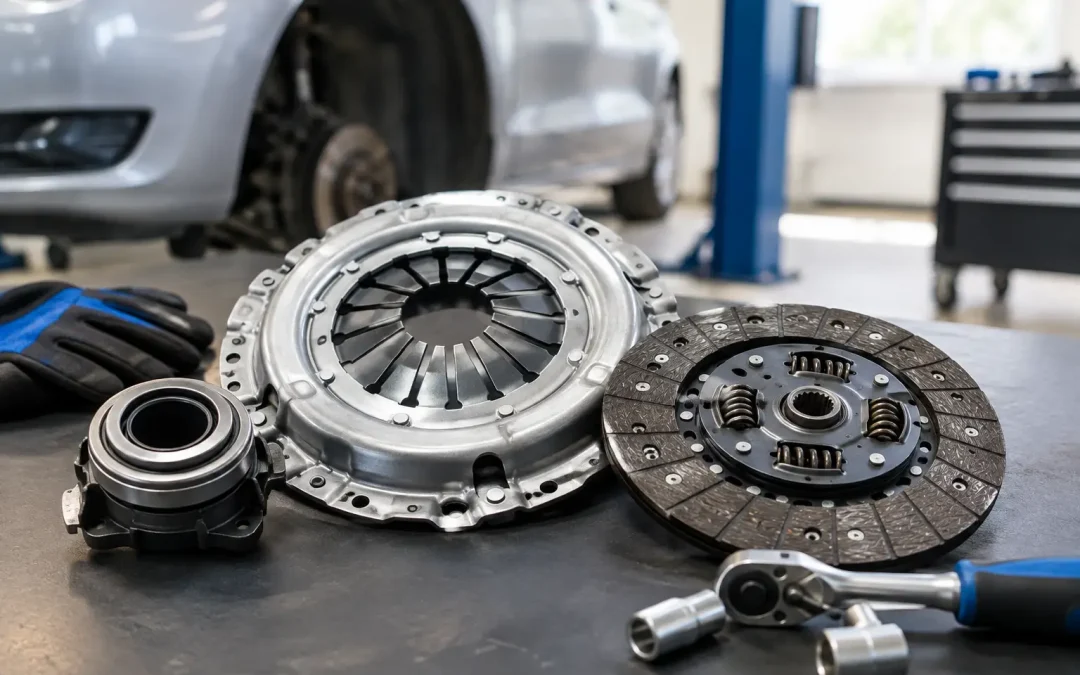
A standard clutch replacement commonly involves fitting a new clutch kit, which generally includes the clutch disc, pressure plate and release bearing. Depending on the vehicle, the job may also require a concentric slave cylinder, pilot bearing, clutch fork components or new bolts.
The flywheel deserves close attention. If it has heat spots, scoring, cracks or an uneven surface, it may need machining or replacement. Some vehicles use a dual-mass flywheel, designed to reduce drivetrain vibration. These cannot always be machined and may need replacement if outside specification. It can add to the cost, but ignoring a faulty flywheel can compromise a new clutch from day one.
Once the new components are fitted, the clutch is aligned correctly, the gearbox is refitted, hydraulic systems are bled where required and the vehicle is road tested. A proper final check confirms smooth engagement, clean gear changes and normal pedal operation.
Choosing the right clutch kit for the job
Not all clutch kits suit all vehicles or driving conditions. The correct choice depends on the vehicle, the engine’s torque output and how it is used.
For a family car or daily commuter, an original-equipment quality clutch is usually the sensible option. It should provide smooth take-up, manageable pedal effort and reliable service without making the car unpleasant to drive.
For a work ute, towing vehicle or touring 4WD, the standard clutch may not be the best fit if the vehicle is regularly loaded beyond its original day-to-day use. Towing a caravan, carrying tools, fitting larger tyres or increasing engine torque places more demand on the driveline. A heavy-duty clutch can provide greater clamping force and better heat resistance, though there can be trade-offs such as a firmer pedal or less forgiving take-up.
The right answer is not automatically the most expensive kit. It is the kit that suits the vehicle and the work it actually does. Quality brands and correct fitment matter because a clutch replacement is not a job anyone wants to repeat early.
Manual clutch replacement guide: what affects cost?
Clutch replacement costs vary because no two vehicles are assembled the same way. On some models, gearbox removal is relatively direct. On others, access is tighter and extra components, subframes or drivetrain parts may need to be removed. Four-wheel drives and commercial vehicles can also involve more labour due to transfer cases, tail shafts and vehicle size.
The final price can be affected by the clutch kit selected, flywheel condition, hydraulic components, oil leaks and worn mounts or bearings discovered during inspection. This is why a low advertised starting price does not always tell the full story.
A trustworthy quote should explain what is included, what has been found and which additional work is genuinely recommended. If the flywheel, slave cylinder or seal needs attention, you should know why before approving the work. Straight answers make it easier to weigh up the repair against your budget and how long you plan to keep the vehicle.
Can you keep driving with a slipping clutch?
Sometimes a vehicle with early clutch slip will still drive, but that does not make it a good idea to put the repair off. Slip generates heat, and heat quickly damages the clutch disc and pressure plate. It can become noticeably worse under load, when overtaking, climbing or towing.
If the clutch will not disengage properly, gear selection can become difficult and driving in traffic can be stressful or unsafe. A complete failure may leave the vehicle unable to move under its own power. If you notice rapid worsening, a burning smell, severe shudder or inability to select gears, arrange an inspection rather than trying to nurse it along.
Getting more life from your new clutch
Good driving habits make a real difference. Avoid resting your foot on the clutch pedal, as even light pressure can keep the release bearing loaded. Do not hold the vehicle on a hill using the clutch – use the brake or handbrake instead. When towing or carrying weight, allow extra room for smooth take-offs and avoid excessive slipping to get moving.
For 4WD owners, low range is there for a reason. Using it on steep, slow or difficult tracks reduces the need to ride the clutch and helps protect the entire driveline. It is a simple habit that can save substantial wear.
A clutch issue does not always mean a full replacement, but it does deserve a proper check. At Albury Brake and Clutch Centre, the focus is on identifying the cause, explaining your options clearly and fitting quality parts that suit the way you use your vehicle. Booking an inspection early gives you the best chance of keeping the repair straightforward and getting back on the road with confidence.