


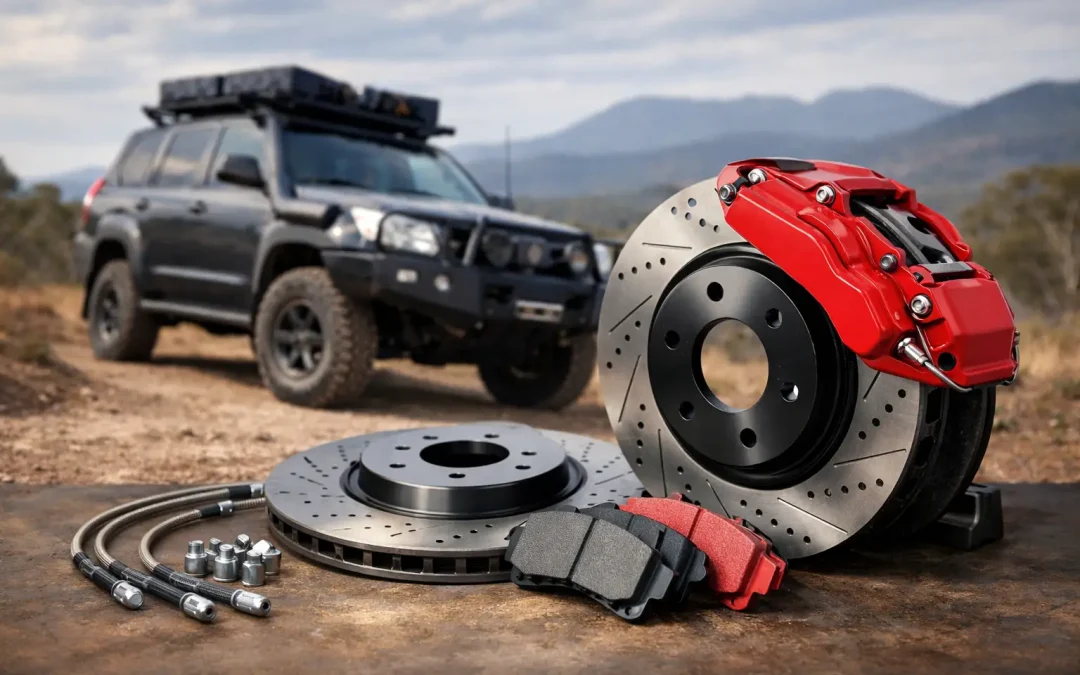
You feel it first on a long downhill run. The van is on the back, the cargo area is packed, the tyres are taller than standard, and the pedal starts needing more pressure than it used to. That is usually the point people start asking about the best brake upgrades for touring 4wd setups – not because they want something flashy, but because they want the vehicle to stop properly when it is working hard.
For touring, braking performance is not just about emergency stops. It is about heat control, consistency, pedal feel and confidence when the vehicle is loaded for hours at a time. A 4WD built for weekends around town can feel very different once you add bullbars, drawers, roof loads, long-range tanks, larger tyres or towing weight. The standard braking system might still be functional, but functional and suitable are not always the same thing.
What actually changes when a touring 4WD gets heavier?
A heavier vehicle asks more from the brakes every time you slow down. The system has to convert more speed and more mass into heat, and if that heat is not managed well, braking performance starts to fall away. That is why some drivers notice longer stopping distances, brake fade on descents or a pedal that feels less reassuring after repeated use.
Larger tyres make the job harder again. They can reduce braking leverage and increase rotating mass, which means the brakes have to work harder to achieve the same result. Add a caravan, camper or boat trailer and the load on the system climbs further. In those cases, an upgrade is not about chasing performance for its own sake. It is about restoring control and keeping braking reliable in real touring conditions.
Best brake upgrades for touring 4WD use
The right upgrade depends on how the vehicle is used, how much weight it carries and whether it tows regularly. There is no single answer that suits every 4WD. The best results usually come from matching the brake package to the vehicle, rather than fitting parts based on marketing claims.
Heavy-duty brake pads
If there is one upgrade that makes sense for many touring vehicles, it is a quality heavy-duty pad suited to load carrying and higher operating temperatures. A better pad compound can improve bite, reduce fade and hold performance more consistently when the system gets hot.
That said, not every heavy-duty pad feels the same. Some offer strong cold bite and are well suited to daily driving. Others come into their own under heavier use but may create more dust or noise. The trick is fitting a pad that suits how the vehicle is actually driven, not just how it looks in the car park.
Quality rotors with better heat handling
Rotors matter more than many drivers realise. A quality rotor helps manage heat, maintain surface stability and support consistent pad contact. On a loaded touring 4WD, cheap rotors can become a false economy if they wear quickly, develop run-out or struggle with repeated heat cycles.
In many cases, a better-quality direct replacement rotor is enough. For harder-working vehicles, upgraded rotor designs can help with cooling and gas evacuation, provided they are chosen properly. Slotted rotors are common on 4WDs because they can help keep the pad face clean and maintain performance under load. They are not magic, but in the right application they do their job well.
Bigger brake upgrade kits
Once you move into larger tyres, increased GVM or regular towing, a bigger brake kit can be worth considering. This usually means larger rotors, revised caliper arrangements, or both. The point is not just more stopping power on the first pedal press. It is better thermal capacity, better leverage and a braking system that copes more comfortably with repeated heavy use.
This type of upgrade makes the most sense when the vehicle has genuinely outgrown the factory setup. If the 4WD spends most of its life unladen around town, a full big brake kit may be unnecessary. If it is built for touring, towing and rough regional travel, it can be money well spent.
Braided brake lines and brake fluid
These are often treated like minor extras, but they can make a real difference in the right circumstances. Braided lines can improve pedal feel by reducing expansion under pressure, especially on older vehicles where original rubber lines are starting to soften. Fresh, quality brake fluid is just as important, because fluid that has absorbed moisture is more likely to boil under heat, which leads to a soft pedal and reduced braking confidence.
On their own, braided lines and fluid will not fix an undersized braking system. But as part of a properly planned upgrade, they help the whole system work as it should.
The most common mistake with 4WD brake upgrades
The biggest mistake is upgrading one part and expecting it to solve everything. Brakes work as a system. Pads, rotors, calipers, lines, fluid, tyre size, suspension height, vehicle mass and trailer setup all play a part. If a vehicle is slow to stop, the answer may not be the most expensive pad on the shelf. It may be worn rotors, poor-quality fluid, incorrect trailer brake adjustment or simply a setup that is carrying more weight than it was ever designed for.
That is why proper diagnosis matters. A good workshop will ask how the vehicle is used, what accessories are fitted, whether it tows, and whether the concern is fade, pedal feel, noise or stopping distance. Straight answers come from understanding the whole picture.
When standard brakes are no longer enough
There are a few signs that suggest a touring 4WD may need more than standard replacement parts. One is recurring brake fade on descents, especially when towing. Another is a vehicle that feels acceptable when empty but struggles once loaded for a trip. Uneven pad wear, overheated rotors or repeated complaints about heavy braking effort can also point to a setup that is under strain.
It is also worth paying attention if the vehicle has had several common touring modifications. A suspension upgrade, bar work, winch, canopy, drawers, water, recovery gear and bigger tyres can add up quickly. None of those changes are unusual on a proper touring rig, but together they can shift braking demands well beyond factory expectations.
Choosing the best brake upgrades for touring 4WD reliability
Reliability matters just as much as outright braking force. Touring vehicles do long kilometres, often in hot conditions and well away from major centres. That means the best brake upgrades for touring 4wd reliability are usually the ones that balance performance with durability, serviceability and parts quality.
A sensible setup is often better than an extreme one. Good pads, proven rotors, quality fluid and components from brands with a strong track record will usually serve a touring vehicle better than chasing the most aggressive package available. The goal is a brake system that works consistently, wears evenly and does not create new problems such as excessive noise, harshness or short service life.
For many owners, that also means avoiding guesswork. There is no benefit in fitting heavy-duty parts if the pedal concern is caused by another fault, or if the rear brakes and trailer brakes are not doing their share of the work. Getting the system checked properly before upgrading can save both money and frustration.
What to expect after a proper upgrade
A good brake upgrade should make the vehicle feel calmer and more predictable, particularly under load. You should notice stronger, more consistent braking, less fade on long descents and a pedal that feels more confident rather than vague. That does not mean the vehicle will suddenly stop like a sports car. It is still a touring 4WD carrying weight. But it should feel more in control, and that matters.
You should also expect some bedding-in time with new pads and rotors. Proper installation and correct bedding procedures are part of getting the result you paid for. Even the best parts can disappoint if they are fitted poorly or matched incorrectly.
For drivers around Albury Wodonga who tow, tour or run heavier 4WD setups, this is one area where specialist advice is worth having. A workshop that deals with brakes every day, like Albury Brake and Clutch Centre, is better placed to recommend what is necessary, what is optional and what is not worth spending money on.
If your 4WD is taking more effort to pull up than it used to, do not wait for the next trip to prove the point. The right brake upgrade is less about chasing bigger numbers and more about making sure the vehicle stops properly when the load, the road and the conditions are all working against you.