


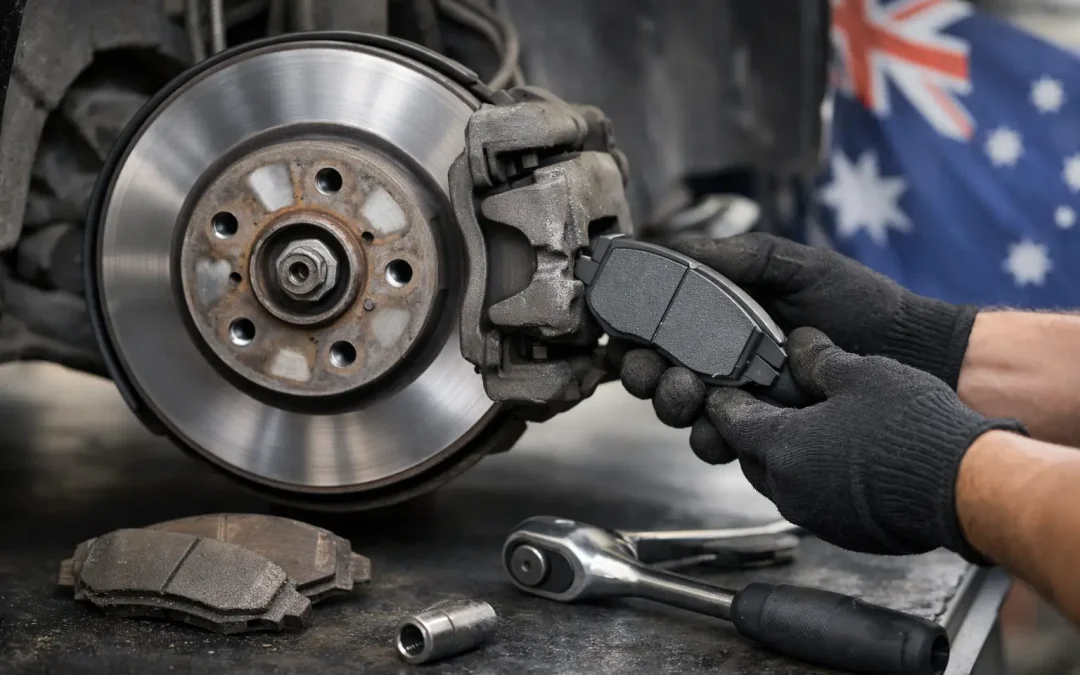
That light scrape when you pull up at the school, the longer stopping distance on a wet roundabout, or the shudder through the pedal when towing – these are the moments when a brake pad replacement guide Australian drivers can actually use starts to matter. Brake pads are not a part to guess about. They wear gradually, symptoms can overlap with other faults, and getting the job done properly matters for safety, cost and how your vehicle feels on the road.
For most drivers, the first question is simple: do the pads actually need replacing, or is something else going on? That is where a lot of confusion starts. Worn brake pads can cause squealing, grinding, poor braking feel and rotor damage, but so can glazed pads, uneven rotor wear, seized calipers or poor-quality components. If you only look at the pad thickness and ignore the rest of the system, you can miss the real problem.
Brake pad replacement guide Australian drivers can rely on
Brake pads sit inside the brake caliper and press against the rotor when you hit the pedal. Every stop takes a small amount of material off the pad. Over time, that friction material becomes too thin to work safely and efficiently.
In Australian conditions, pad life varies more than people expect. City driving with constant stop-start traffic wears pads faster than regular highway driving. Hills, towing, larger tyres and a loaded 4×4 also change the picture. A family SUV used for school runs and weekend towing can go through front pads much faster than a lightly driven hatchback.
That is why there is no one-size-fits-all replacement interval. Some vehicles may need pads around 30,000 to 40,000 km, while others can go much longer. The right approach is regular inspection, not waiting for a fixed number on the odometer.
The signs your brake pads may be worn
The most common warning sign is noise. A high-pitched squeal during braking often points to wear indicators contacting the rotor, although brake dust, glazed pads or cheap pad material can also cause noise. Grinding is more serious. That can mean the friction material is gone and metal is contacting metal, which often damages the rotor.
You might also notice the vehicle takes longer to stop, the brake pedal feels different, or the steering wheel shudders under braking. In some cases, the car may pull to one side. That does not always mean the pads alone are at fault. Uneven wear, sticking calipers, rotor thickness variation and suspension issues can all contribute.
A brake warning light can be part of the story too, but it should never be your only trigger to act. By the time a problem is obvious in day-to-day driving, wear may already be advanced.
When brake pads should be replaced
Pads should be replaced before they wear down to the point where braking performance suffers or the rotor gets damaged. As a rough guide, many workshops start recommending close monitoring when pad material gets low, then replacement once it reaches the manufacturer’s minimum thickness or is clearly near the end of its service life.
The key point is that left and right sides should wear evenly, and front and rear wear rates should make sense for the vehicle. If one pad is significantly more worn than the others, that usually points to another issue. Replacing the pads without fixing the cause only delays the next problem.
This is especially relevant for utes and 4x4s used for towing, touring or carrying extra weight. Added load and heat put more demand on the brake system. In those cases, standard pads may technically fit, but they may not be the best long-term choice.
What gets checked during a proper brake pad replacement
A proper brake pad job is not just old pads out, new pads in. The full system needs to be assessed so the new parts bed in properly and perform as they should.
The first thing to inspect is rotor condition. If the rotor is below minimum thickness, badly scored, heat-spotted or warped, fitting new pads alone is false economy. The new pads will not contact properly, braking can feel rough, and wear may be uneven from the start.
The calipers also matter. Slides need to move freely, pistons need to retract correctly, and hardware should be in sound condition. If a caliper is binding, one pad can wear faster than the other and braking performance can suffer even with brand-new parts.
Brake fluid condition, hoses and overall brake balance should be considered as well. Sometimes the symptom that feels like worn pads is actually a broader braking issue. Proper diagnosis saves money because it deals with the fault once, not twice.
Brake pad replacement guide for Australian drivers: DIY or workshop?
Plenty of drivers look up how to replace brake pads themselves, and on some vehicles the process is fairly straightforward. But straightforward does not always mean low risk.
Modern vehicles can have electronic park brakes, pad wear sensors, specific bedding-in requirements and torque settings that need to be followed. Even on older vehicles, mistakes such as contaminated pads, incorrect fitment, failure to clean and lubricate hardware correctly, or skipping rotor checks can lead to noise, poor braking or uneven wear.
There is also the bigger issue: if the pads are worn because of a seized caliper, damaged rotor or another hidden fault, a DIY change may only cover the symptom. For a safety-critical system, that is not where most people want uncertainty.
For drivers who rely on their car every day, a specialist inspection usually makes more sense than trial and error. Straight answers are worth a lot when the vehicle carries your family, your tools or your caravan.
Choosing the right brake pads for your vehicle
Not all brake pads are equal, even when they are listed for the same make and model. The right choice depends on how the vehicle is used.
For regular commuting and family driving, quality everyday pads usually offer the best balance of braking performance, noise control and rotor life. For towing, heavy 4×4 use or vehicles running larger tyres, a heavier-duty pad may be the smarter option because heat management becomes more important.
There is always a trade-off. Some performance-oriented pads handle heat better but can create more dust or noise. Softer compounds may feel good at lower speeds but wear faster under load. Cheap pads can save money upfront but often cost more later through poor feel, excess noise or rotor wear.
That is why pad selection should match the vehicle’s real job, not just the catalogue description. A work ute that tows most weekends needs different advice from a hatchback used for local errands.
How much brake pad replacement costs in Australia
Cost depends on the vehicle, the quality of parts used and whether additional work is needed. Pads alone are one part of the invoice. Rotor machining or replacement, caliper servicing, sensor replacement and brake fluid work can all affect the final price.
This is where ultra-cheap pricing can be misleading. A low advertised pad replacement figure may not include the checks or related repairs needed to do the job properly. If the rotors are worn out or the caliper hardware is faulty, ignoring that does not make the repair cheaper – it just postpones the real cost.
Good workshops explain what is worn, what can wait and what should be done now for safety. That matters more than a vague estimate with no diagnosis behind it.
Why brake inspections matter before long trips and towing
If you are heading away with a van, trailer or loaded 4×4, the brakes deserve attention before the trip, not after the first downhill section. Heat is the real enemy here. Worn pads, tired rotors and marginal components may seem fine in everyday driving but show their weakness quickly under load.
A pre-trip brake inspection is one of the simplest ways to avoid problems on the road. It gives you a clearer picture of pad life left, rotor condition and whether the system is up to the job. For regional drivers around Albury-Wodonga, where highway runs, hills and towing are part of normal vehicle use, that is practical maintenance, not over-servicing.
The better question is not can you replace the pads – it is what else needs attention
Brake pads are a wear item. Replacing them is normal. What matters is whether the whole braking system is checked with the same level of care. That is the difference between a quick parts swap and a repair that feels right, lasts well and keeps the vehicle safe when you need it most.
If your brakes are squealing, grinding, shuddering or simply not feeling as confident as they should, do not wait for the noise to get worse. A proper inspection now is usually cheaper, safer and a lot less stressful than dealing with damaged rotors or poor braking later.