


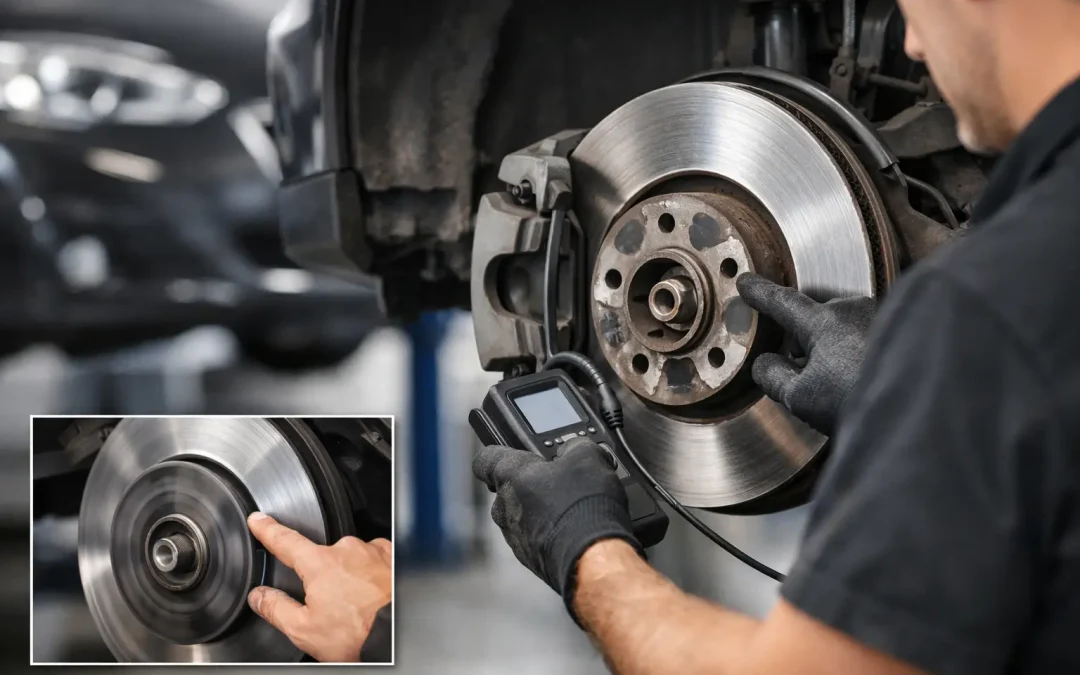
Brake vibration usually shows up at the worst time – coming down a hill, slowing for traffic, or towing with a full load on. A proper guide to diagnosing brake vibration starts with one simple point: not every shake through the pedal or steering wheel means the same fault. Getting the cause right matters, because guessing can waste money and leave the real safety issue untouched.
Some drivers describe it as a shudder. Others say the steering wheel wobbles when braking, or the pedal pulses underfoot. Those details matter. Brake vibration is a symptom, not a diagnosis, and the pattern of that symptom often tells you where to look first.
What brake vibration actually feels like
The first step in diagnosing it properly is paying attention to when the vibration happens. If it only appears when you apply the brakes, the issue is often in the brake system itself. If the vehicle shakes at speed even before braking, tyres, wheels or suspension may be involved, with braking simply making it more noticeable.
There is also a difference between a pulse through the brake pedal and a shake through the steering wheel. A pedal pulse often points to rotor thickness variation or rear brake issues, while steering wheel vibration under braking more commonly suggests a front-end brake or suspension problem. That is not a hard rule, but it is a useful place to start.
A guide to diagnosing brake vibration by symptom
Good diagnosis is about narrowing things down, not replacing parts until the problem disappears. The most common causes are brake rotor issues, pad problems, seized caliper components, worn suspension parts, wheel and tyre faults, or incorrect wheel fitment.
Rotor thickness variation and heat spotting
Many people say their rotors are warped, but true warping is not always the whole story. In plenty of cases, the real issue is uneven rotor thickness or patchy friction material transfer on the rotor face. That creates high and low spots, which you feel as pulsing or shudder under braking.
This often starts after overheating. Heavy braking down long descents, towing, repeated stop-start driving, or poor-quality parts can all contribute. Once heat builds up, the rotor surface can develop hard spots or uneven deposits. Machining might help in some cases, but if the rotor is heat-damaged or below specification, replacement is usually the proper fix.
Brake pads that are worn, glazed or poor quality
Pads matter more than many drivers realise. If the pad material is inconsistent, badly glazed, or simply not suited to the vehicle’s use, braking can become noisy, uneven and prone to vibration. This is especially common on vehicles that carry loads, tow caravans, or run larger tyres without upgrading the braking system.
Cheap pads can seem like a saving at first, but they often create more trouble later – more dust, more heat, less consistent stopping, and more chance of vibration returning. Matching quality pads to the right rotor and the way the vehicle is used is part of a repair done properly.
Seized calipers or sticking slide pins
A brake caliper needs to apply pressure evenly. If a caliper piston sticks or the slide pins seize, one pad can drag harder than the other. That creates uneven wear, excess heat and eventually vibration.
Sometimes the signs show up before the shudder does. You might notice the vehicle pulling to one side, a hot smell after driving, or one wheel carrying far more brake dust than the other. Left alone, a sticking caliper can quickly damage pads and rotors that might otherwise have been salvageable.
Rear brake faults that feel like front brake problems
Drivers often assume any brake vibration is coming from the front because they feel it through the steering wheel or cabin. But rear brakes can absolutely cause a noticeable shudder, especially in utes, 4x4s and family vehicles carrying weight in the back.
Rear disc issues, drum brake imbalance, or handbrake-related faults can all contribute. This is why a full inspection matters. Replacing front rotors without checking rear brake condition is a good way to miss the real cause.
Suspension and steering wear
Sometimes the brakes are only exposing movement that should not be there in the first place. Worn control arm bushes, ball joints, tie rod ends or wheel bearings can all allow the front end to move excessively during braking. The result feels like a brake issue, but the root cause sits in the suspension or steering.
This is where proper diagnosis separates a specialist workshop from a guess. If the brake hardware is replaced but the suspension play remains, the vibration may improve slightly then come straight back.
Wheel, tyre and hub problems
A buckled wheel, uneven tyre wear, poor wheel balance, mud packed inside a rim, or excessive hub runout can all either mimic or worsen brake vibration. The same goes for incorrect wheel torque. If wheel nuts are overtightened unevenly, especially with air tools and no final torque check, rotor distortion can develop over time.
That is one of those faults that catches people out. The brakes themselves may be good quality, but poor fitting practices can still create a shudder.
How a proper inspection usually works
A workshop should not be diagnosing brake vibration from the front counter. The vehicle needs to be road tested, then inspected on the hoist. The road test helps confirm speed, load and brake-pressure conditions that bring the fault on. The workshop can then check rotor condition, pad wear patterns, caliper operation, wheel bearing play, suspension movement, tyre condition and wheel fitment.
Measurements matter too. Rotor runout and thickness variation should be measured, not guessed. Calipers should be checked for free movement. Suspension joints and bushes should be inspected under load where needed. This is the difference between replacing what looks worn and finding what is actually causing the vibration.
Why brake vibration often comes back
One reason this problem frustrates drivers is that it can return soon after a repair if the job was incomplete. New pads on damaged rotors will not solve much. New rotors with seized caliper slides can quickly develop the same issue. Replacing front brakes while ignoring a worn suspension bush or rear brake imbalance can leave the shudder still there.
Driving conditions matter as well. If you tow regularly, carry tools, run oversized tyres, or use a 4×4 for touring, standard brake components may be working beyond what they were designed for. In those cases, repeated vibration is sometimes a sign the vehicle needs a brake setup that better suits its real workload.
When to stop driving and get it checked
Light vibration does not always mean immediate failure, but it should never be brushed off. If the shudder is getting worse, the steering wheel is shaking hard, the vehicle is pulling under braking, or there is grinding noise, burning smell or reduced braking performance, it needs attention straight away.
Brakes are not an area for wait-and-see maintenance. A vibration that starts as an annoyance can become a longer stopping distance, uneven braking in the wet, or damage to other components. The earlier the fault is diagnosed, the better the chance of keeping the repair straightforward.
The repair depends on the cause
There is no one-size-fits-all answer here. Some vehicles need new rotors and pads. Others need caliper repairs, a hub clean-up, correct wheel torque, suspension replacement, or a more suitable heavy-duty brake package. That is why honest diagnosis matters more than the fastest quote.
At a specialist workshop such as Albury Brake and Clutch Centre, the goal should be simple: identify the fault properly, explain it clearly, and repair only what is needed using parts that will last. For the driver, that means less guesswork, fewer repeat visits and more confidence every time the brakes are used.
If your vehicle shudders when slowing down, pay attention to the pattern and get it looked at before it turns into a bigger repair. Brake vibration rarely fixes itself, but with the right diagnosis it can usually be sorted properly the first time.