


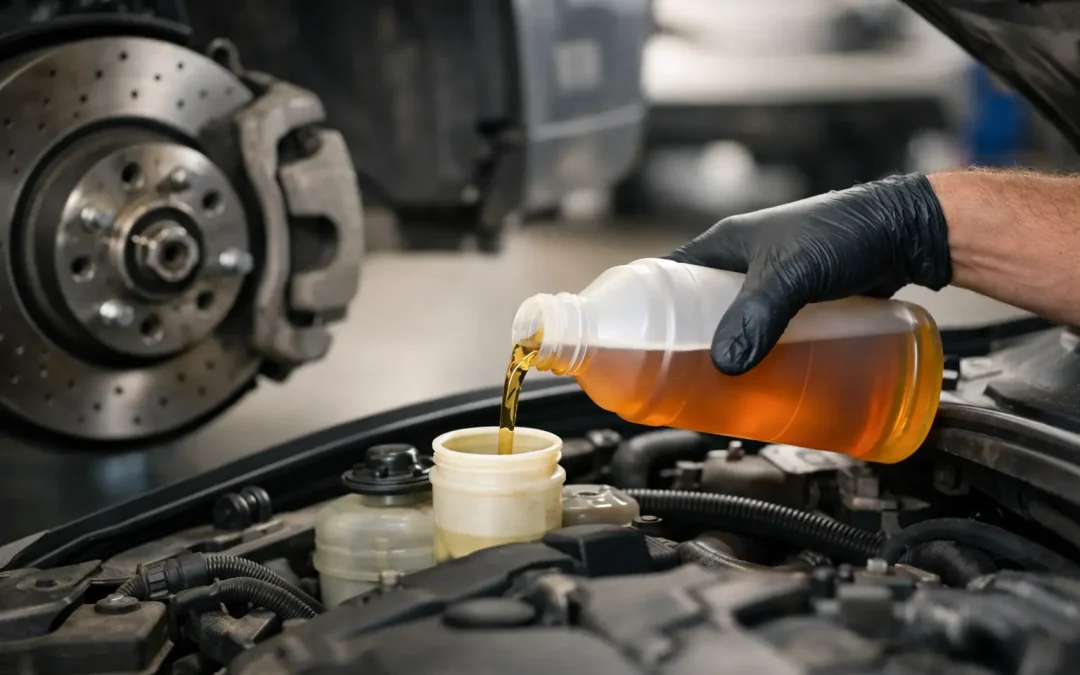
A brake fluid change can feel like one of those extra items that appears on a service quote just when you were hoping for a simple oil change. So, is brake fluid change really necessary? In most vehicles, yes. It is not a repair you need every few months, but leaving it too long can affect braking performance, damage expensive components and, in severe cases, compromise safety.
Brake fluid is easy to overlook because you cannot see it wearing out in the same way as tyres, brake pads or rotors. It sits in a sealed hydraulic system and usually does its job quietly. That does not mean it lasts forever.
What brake fluid actually does
When you press the brake pedal, brake fluid transfers that force through hydraulic lines to the calipers or wheel cylinders. Those components apply the pads or shoes to slow the wheels. The fluid must remain stable under heat, flow correctly in cold conditions and protect the internal parts of the braking system from corrosion.
Unlike engine oil, brake fluid is not there to lubricate a hot engine. Its critical job is to transmit pressure reliably. If it boils, contains too much moisture or is contaminated, the brake pedal may feel soft or travel further than usual. Under heavy braking, that can mean reduced stopping performance when you need it most.
Most modern passenger vehicles use DOT 3, DOT 4 or DOT 5.1 brake fluid. These fluids are hygroscopic, meaning they absorb moisture from the air over time. Moisture can enter through the reservoir vent, hoses, seals and normal temperature changes within the system. A tightly fitted cap slows the process, but it does not stop it completely.
Is a brake fluid change really necessary on schedule?
The best starting point is your vehicle manufacturer’s service schedule. Many manufacturers recommend replacing brake fluid every two years, while others specify a time interval, kilometre interval or fluid condition check. The correct interval varies between makes and models, so there is no honest one-size-fits-all answer.
For a car that is driven lightly around town, the fluid may still look clean after a couple of years. Colour alone, however, is not a reliable test. Brake fluid can absorb enough water to lower its boiling point well before it looks especially dark in the reservoir.
A proper workshop can test the fluid’s condition rather than simply guessing. Moisture testing and boiling-point testing give more useful information, particularly if the vehicle’s service history is unclear. If the fluid is within specification and the manufacturer does not call for replacement yet, there is no reason to pressure you into a change. If it is overdue or tests poorly, replacing it is sensible preventative maintenance.
Why old brake fluid causes trouble
The first concern is heat. Brakes generate serious heat when stopping a loaded vehicle, descending a long hill, towing a caravan or repeatedly braking in traffic. Fresh brake fluid has a high boiling point. As it absorbs moisture, that boiling point drops.
If moisture-contaminated fluid gets hot enough to boil, it can form vapour bubbles. Vapour compresses, whereas brake fluid does not. The result can be a spongy pedal, extra pedal travel or brake fade. That is not a situation any driver wants while towing down a steep range road or stopping suddenly with the family in the car.
Moisture also promotes internal corrosion. Rust and contamination can affect brake lines, calipers, wheel cylinders, the master cylinder and ABS components. These parts are far more costly to repair than a routine fluid replacement. Fresh fluid helps protect the system from the inside, where problems are often not visible until they have become serious.
For 4x4s, work utes and towing vehicles, the case for keeping fluid in good condition is even stronger. Larger tyres, increased vehicle weight, off-road use and regular towing all place more demand on the brakes. A brake upgrade can improve braking capacity, but it still relies on quality fluid and a properly maintained hydraulic system.
Warning signs that should not wait
A scheduled brake fluid change is one thing. A change in brake feel is another. If you notice any of the following, arrange a brake inspection promptly rather than assuming fresh fluid alone will fix it:
- A soft, spongy or sinking brake pedal
- Increased stopping distance or a pedal that needs pumping
- A brake warning light or ABS warning light
- Fluid leaking near a wheel, under the bonnet or beneath the vehicle
- A burning smell, brake fade or poor braking after a long descent
These symptoms can point to old fluid, but they may also indicate worn pads, a hydraulic leak, seized components, air in the system or an ABS fault. Brake problems need proper diagnosis. Replacing fluid without finding the cause of a leak or pedal issue is not a proper repair.
A fluid top-up is not the same as a change
Topping up the brake fluid reservoir does not renew the fluid throughout the system. It only raises the level in the reservoir, and a low level should be checked before anything is added. In many vehicles, the fluid level drops as the brake pads wear. It can also drop because of a leak, which needs attention immediately.
A complete brake fluid change involves removing old fluid from the system and bleeding fresh, manufacturer-approved fluid through each brake line. The technician must use the correct fluid specification and follow the correct bleeding sequence for the vehicle. Some vehicles, particularly those with modern ABS and electronic brake systems, require specific procedures or diagnostic equipment.
Mixing incompatible fluids or allowing air into the system can create bigger problems. This is why a brake fluid service is not just a matter of opening the reservoir and pouring in a new bottle.
When should you book it?
If your logbook says the fluid is due, book it in. If you have bought a used vehicle with no clear maintenance records, having the brake fluid tested is a practical first step. It is also worth checking before a big towing trip, extended touring holiday or after a vehicle has sat unused for a long period.
Drivers who regularly tow, carry heavy loads, tackle mountain roads or use their vehicle for commercial work may benefit from more frequent checks. The same applies to vehicles that operate in wet conditions or have older rubber components in the hydraulic system. Usage matters, not just kilometres.
There is a cost to replacing brake fluid, but it is generally modest compared with replacing a corroded master cylinder, damaged ABS hydraulic unit or multiple seized calipers. More importantly, brakes are not the place to gamble on a maintenance item that directly affects your ability to stop.
Straight answers before brake work
A trustworthy brake inspection should separate what is due now from what can wait. You should be told whether the recommendation is based on the manufacturer’s interval, a test result, visible contamination or a fault found during inspection. That gives you a clear reason for the work, not just a vague warning that the fluid is “old”.
At Albury Brake and Clutch Centre, the focus is on diagnosing the whole braking system properly – fluid, pads, rotors, hoses, calipers and hydraulic components – so the repair matches the actual condition of the vehicle. There is no value in changing fluid while ignoring a leak, and no value in replacing parts that are still serviceable.
If you are unsure when your brake fluid was last changed, check your service records or ask for it to be tested at your next brake inspection. A small, properly completed service can help keep the pedal firm, protect the parts you cannot see and give you confidence every time you pull up.