


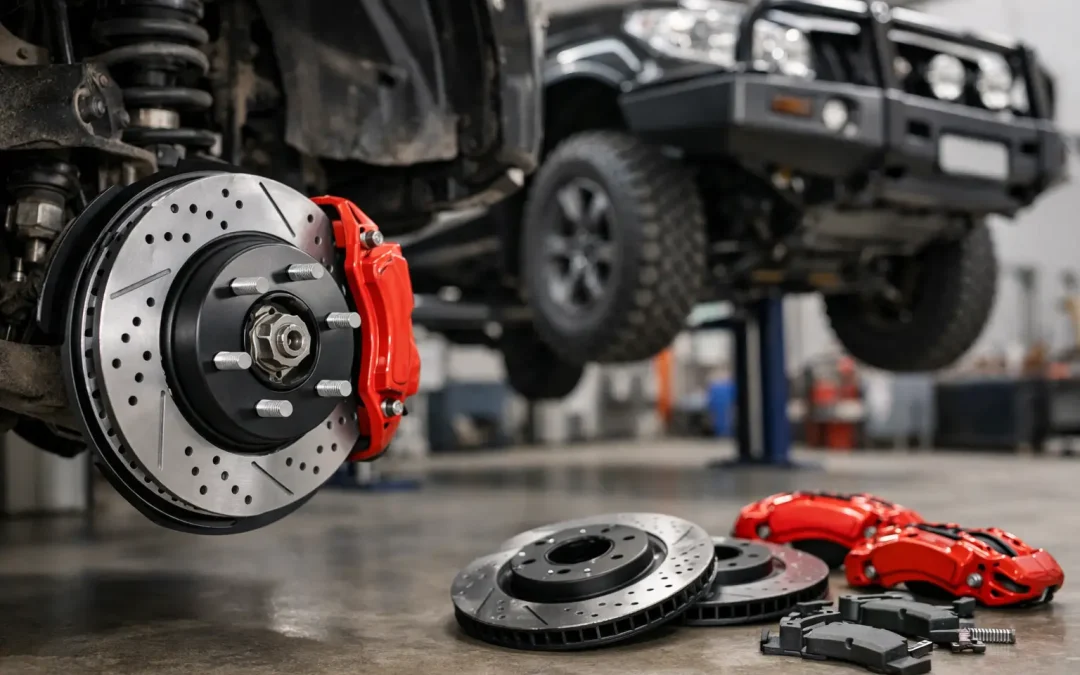
That uneasy feeling when your 4×4 takes a bit too long to pull up – especially with a van on the back or gear loaded to the roof – is usually the first sign your standard braking setup is being asked to do more than it was built for. If you are looking into a 4×4 brake upgrade Albury Wodonga drivers can rely on, the key is understanding whether your vehicle needs a simple refresh or a proper heavy-duty upgrade.
Not every 4×4 needs bigger brakes. Plenty of vehicles are better served by replacing worn parts with quality components and making sure the whole system is working as it should. But once you add towing, larger tyres, extra accessories, a GVM upgrade or regular touring work, braking performance can change in ways that are hard to ignore.
When a 4×4 brake upgrade makes sense
A lot of owners put up with brake fade, longer stopping distances or a soft pedal because the vehicle still technically stops. That is not the same as stopping well. If your 4×4 feels fine around town but struggles on descents, under load or after repeated braking, that points to heat capacity and control becoming the real issue.
Towing is one of the biggest reasons people look at an upgrade. Add a caravan, trailer or boat and the braking system has to deal with more mass, more heat and more effort over a longer period. The same applies to touring setups with bar work, winches, drawer systems, roof racks, long-range tanks and recovery gear. Each addition might seem manageable on its own, but together they change what the vehicle demands from the brakes.
Larger tyres matter too. They can affect braking leverage and often make a vehicle feel less responsive under brakes. Drivers sometimes notice this after fitting tyres and assume it is normal. It may be common, but that does not mean it is the best outcome.
A brake refresh versus a real upgrade
This is where honest advice matters. A genuine specialist should tell you if your vehicle needs an upgrade or simply needs the braking system repaired properly.
If your rotors are worn, your pads are glazed, your fluid is overdue, or your calipers are not operating correctly, a standard replacement using quality parts can restore a lot of lost performance. In many cases, that is the right fix. There is no benefit in fitting heavy-duty parts to a system with underlying faults that have not been diagnosed.
A proper 4×4 brake upgrade is different. It is not just about replacing old parts with the same thing. It is about increasing braking performance and heat management to better suit the way the vehicle is actually used. That might involve upgraded rotors, heavy-duty pads, improved caliper performance or a matched package designed for towing and increased vehicle weight.
What actually changes with a 4×4 brake upgrade Albury Wodonga owners choose
The best upgrades are matched to the vehicle, not sold as a one-size-fits-all answer. In practical terms, most improvements come from better heat control, stronger and more consistent friction materials, and components that cope better with repeated demand.
Upgraded rotors can help manage heat more effectively, which matters when you are braking downhill, towing or driving long distances with a full load. Better pads can improve bite, reduce fade and give more consistent performance across different driving conditions. In some applications, larger or improved braking hardware can make a worthwhile difference, but only if it is suited to the vehicle and wheel setup.
Brake fluid condition also plays a bigger role than many drivers realise. Old or contaminated fluid can affect pedal feel and braking consistency, especially under heat. If that part of the system is overlooked, even a decent hardware upgrade can feel underwhelming.
The point is simple – the result depends on the full system being assessed, not just swapping one visible part and hoping for the best.
The signs your current setup is falling short
Some warning signs are obvious. Others creep in so gradually that drivers adapt to them.
If your pedal feels spongy, the vehicle shudders under braking, pulls to one side, or gives off a hot brake smell after towing or descending hills, do not ignore it. If braking performance drops away after a few firm stops, that often points to fade. If your stopping distances have increased since fitting accessories or larger tyres, your braking system may no longer be well matched to the vehicle.
There is also the less obvious sign – the vehicle simply never feels settled under brakes. It might stop eventually, but it feels heavy, vague or harder to control than it should. For many 4×4 owners, that is the point where an upgrade becomes less about performance and more about confidence.
Why bigger is not always better
There is a temptation to assume the biggest brake package available must be the best choice. It is not that simple.
An oversized setup can be unnecessary for the way the vehicle is driven. It can also create fitment issues, raise costs and add complexity where none is needed. On the other hand, going too mild for a heavily loaded touring or towing vehicle may leave you with only a small improvement.
That is why proper diagnosis matters before any parts are fitted. A specialist workshop should ask how the vehicle is used, what modifications it has, whether it tows, what tyre size it runs and what problems the driver has actually noticed. Good advice starts there, not with a catalogue.
Quality parts make a difference over time
In braking systems, cheap parts have a way of becoming expensive later. Pads that do not handle heat properly can fade early and wear unevenly. Low-grade rotors can cause vibration, noise or poor lifespan. Mismatched components can leave the vehicle feeling inconsistent even when everything is new.
For a working 4×4, reliability matters just as much as initial stopping power. You want brakes that perform well on school runs, on the highway, on gravel roads and when the vehicle is fully loaded for a trip away. That is why proven brands and correctly matched components are worth it.
At Albury Brake and Clutch Centre, that specialist approach is the whole point. The job is not to push the biggest sale. It is to diagnose the setup properly, use quality components and make sure the repair or upgrade suits the vehicle and the way it is driven.
The workshop process should be straightforward
A good brake upgrade experience should not leave you guessing. You should know what is worn, what is causing the issue, what options are available and what each option is likely to achieve.
Sometimes the answer is a heavy-duty upgrade because the standard system is no longer enough for the vehicle’s real-world use. Sometimes the better answer is to repair faults, fit quality replacement parts and restore the system to proper condition. Both outcomes are valid if they are based on honest inspection.
That straightforward approach matters because most drivers are not chasing race-car braking. They want safe, predictable stopping, especially with family onboard, gear in the back or a trailer behind them. They want work done properly the first time and no pressure to spend money where they do not need to.
Choosing the right 4×4 brake upgrade in Albury Wodonga
If you are comparing options, focus less on marketing language and more on workshop knowledge. Ask whether the recommendation is based on how your 4×4 is used. Ask whether the full system will be checked, including rotors, pads, calipers, fluid and overall condition. Ask what trade-offs come with the upgrade, including noise, dust, pedal feel and expected lifespan.
That last point matters because every brake setup involves compromise. Some pads offer stronger bite but produce more dust. Some heavy-duty options work brilliantly under load but can feel different in light daily driving. The right choice depends on what your 4×4 spends most of its time doing.
For local drivers, that practical thinking matters. A 4×4 used mostly for commuting with the occasional camping trip may need a different setup from one that regularly tows a caravan through hilly country. Both can benefit from expert advice, but not necessarily the same parts.
If your brakes have started to feel ordinary, do not wait for them to get worse before looking into it. A proper inspection can tell you whether you need a repair, a refresh or a genuine upgrade – and that peace of mind is worth having before the next trip, tow or long run out of town.