


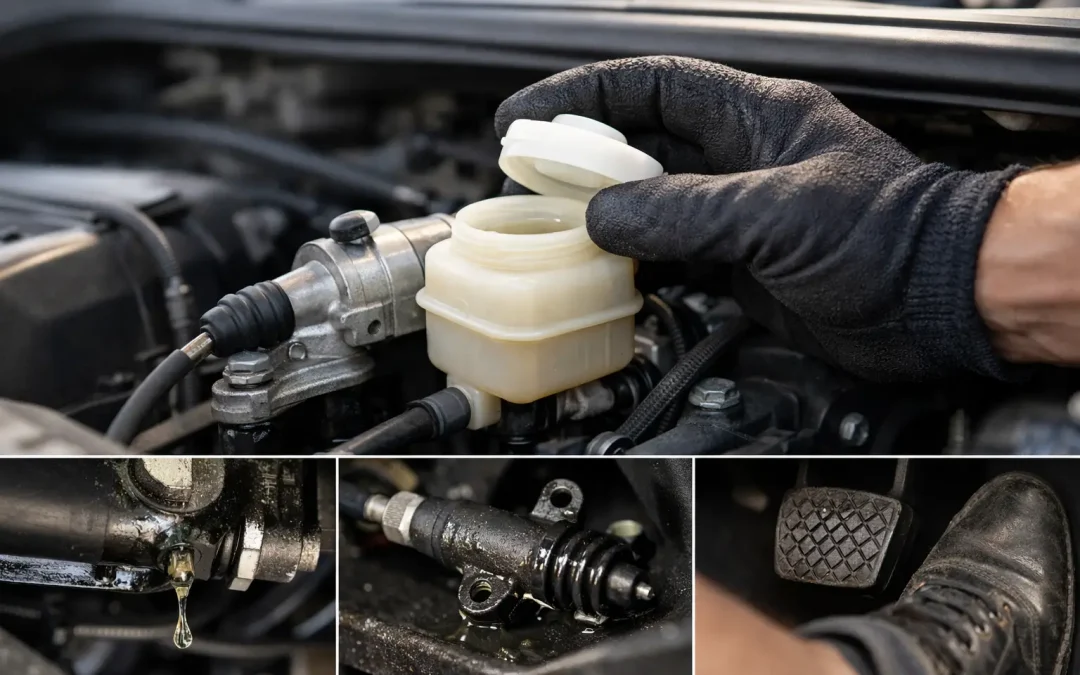
A clutch that feels different at the pedal can turn a normal drive into a frustrating one very quickly. The best signs of failing clutch hydraulics are often easy to miss at first, but acting early can prevent being stranded, damaging other clutch parts or facing a bigger repair than necessary.
Hydraulic clutch faults are common across many manual vehicles, including work utes, family cars and 4WDs. They are not always caused by a worn clutch disc. The master cylinder, slave cylinder, hydraulic line and clutch fluid all need to work properly for the pedal to disengage the clutch cleanly.
What clutch hydraulics actually do
When you press the clutch pedal, it operates a master cylinder that pushes fluid through a hydraulic line. That pressure moves the slave cylinder at the gearbox, which releases the clutch so you can select a gear.
If fluid leaks, air enters the system, or either cylinder wears internally, the pressure is reduced or becomes inconsistent. The clutch may not fully release, even if the clutch itself still has useful life left. This is why proper diagnosis matters. Replacing a clutch kit without checking the hydraulic system can leave the original problem unresolved.
The best signs of failing clutch hydraulics
1. The clutch pedal feels soft, spongy or inconsistent
A healthy clutch pedal should feel firm and predictable. If it suddenly feels soft, travels farther than normal or has a spongy sensation, air may have entered the hydraulic system or fluid may be escaping.
Sometimes the pedal will feel normal for part of the trip, then go soft in traffic. That inconsistency is a strong warning sign. Pumping the pedal may temporarily improve the feel, but it is not a repair. It usually points to air in the system, a leak or worn seals inside a master or slave cylinder.
2. The pedal sinks to the floor or does not return properly
If the clutch pedal gradually drops towards the floor while you are holding it down, the hydraulic pressure is bypassing internally or leaking externally. A pedal that stays on the floor or returns slowly is more urgent. You may be unable to disengage the clutch at the next set of lights.
Do not assume a pedal issue is just a broken return spring. While a mechanical pedal fault is possible, a hydraulic failure is common and needs to be checked promptly. If the vehicle cannot select gears cleanly, it is safer to arrange recovery than force it home.
3. Gear selection becomes difficult, especially first or reverse
Hard gear changes are one of the clearest symptoms. You may notice resistance when selecting first gear at a standstill, or hear a crunch when engaging reverse. This often happens because the clutch is dragging – it is not fully releasing when the pedal is pressed.
A worn clutch can cause similar symptoms, so this is where a specialist inspection saves guesswork. The pedal feel, fluid condition, clutch operation and any leaks all help identify whether the fault is hydraulic, inside the clutch assembly or in the gearbox linkage.
4. The clutch fluid level keeps dropping
Many vehicles use brake fluid for the clutch hydraulic system, usually stored in a separate reservoir or in a shared brake fluid reservoir. A low fluid level is not normal maintenance wear. It means the system needs inspection.
Look for fluid around the clutch master cylinder near the firewall, along the hydraulic line or around the gearbox bellhousing. A slave cylinder can leak inside the bellhousing, where the fluid is not always obvious from outside. In those cases, a falling fluid level and worsening pedal operation may be the first clues.
Never top up the reservoir and forget about it. Fluid can temporarily restore operation while concealing a leak that will return at the worst possible time.
5. There is fluid inside the cabin near the clutch pedal
A leaking clutch master cylinder can leave dampness or fluid on the carpet, insulation or firewall area above the clutch pedal. Brake fluid can damage paint and trim, so it should be cleaned carefully, but the cause must also be repaired.
This fault can be overlooked because the leak is hidden under the dash. If you notice an unusual oily feel around the pedal area, a chemical smell, or unexplained fluid loss with no visible leak under the vehicle, have the master cylinder checked.
6. The engagement point changes without warning
Most drivers know roughly where their clutch engages. If the bite point moves close to the floor, rises suddenly, or changes from one drive to the next, hydraulic pressure may be unstable.
A high engagement point can also be associated with a worn clutch disc, while a low or changing engagement point more often suggests a hydraulic issue. There is some overlap, which is why one symptom alone rarely gives a complete answer. A proper check looks at the whole system rather than relying on a single rule of thumb.
7. You need to pump the clutch pedal to select a gear
Needing two or three presses of the pedal before you can select first or reverse is a practical sign that the system is not holding pressure. The extra pumping may move enough fluid to disengage the clutch briefly, but the fault is still there.
This behaviour can become dangerous in busy traffic, at a railway crossing or while manoeuvring a trailer. If pumping the pedal has become part of your driving routine, book an inspection before it becomes a no-drive situation.
8. The pedal feels normal but the vehicle still will not disengage cleanly
Not every hydraulic fault produces a soft pedal. A slave cylinder may move poorly, a restriction in the line may limit travel, or internal wear may prevent the system from delivering enough movement at the clutch. The pedal can feel reasonably firm while the vehicle still crunches into gear or creeps forward with the pedal fully pressed.
This is also why bleeding the clutch is not always the answer. Bleeding can remove air, but it will not repair leaking seals, a damaged cylinder or a worn clutch component. If the problem returns after a bleed, further diagnosis is needed.
When should you stop driving?
If the clutch pedal stays on the floor, the vehicle will not go into gear, fluid is visibly leaking, or gear changes are crunching badly, stop driving where practical. Forcing the gear lever can damage gearbox synchronisers, and driving with poor clutch control can put you in an unsafe position.
If the pedal is only starting to feel different and gears are still selecting normally, you may be able to drive carefully to a workshop. That said, hydraulic faults can deteriorate quickly. Regional driving, towing, stop-start traffic and long trips all make an unreliable clutch more inconvenient and more costly if it fails away from home.
What a proper clutch hydraulic diagnosis involves
The right repair starts with confirming the source of the fault. A technician should inspect fluid level and condition, check the clutch pedal and master cylinder, inspect the hydraulic line and fittings, and assess the slave cylinder operation. They should also test how the clutch releases and consider whether the clutch assembly itself is worn or contaminated.
The repair depends on the vehicle and the fault. An external slave cylinder may be relatively straightforward to replace. On other vehicles, the slave cylinder is a concentric unit inside the bellhousing, so gearbox removal is required. If the clutch is already worn or has been contaminated by leaking fluid, replacing the clutch at the same time can be the sensible long-term option. If it is still in good condition, replacing only the failed hydraulic component may be appropriate.
At Albury Brake and Clutch Centre, the focus is on giving you straight answers about what has failed, what needs attention now and what does not. Quality parts and correct bleeding procedures matter because a clutch repair should restore dependable operation, not just get the vehicle moving for a few weeks.
A clutch pedal is not something to monitor and hope for the best. If it has become soft, inconsistent or difficult to use, getting it checked early gives you the best chance of a simpler repair and a vehicle you can trust on the road.