


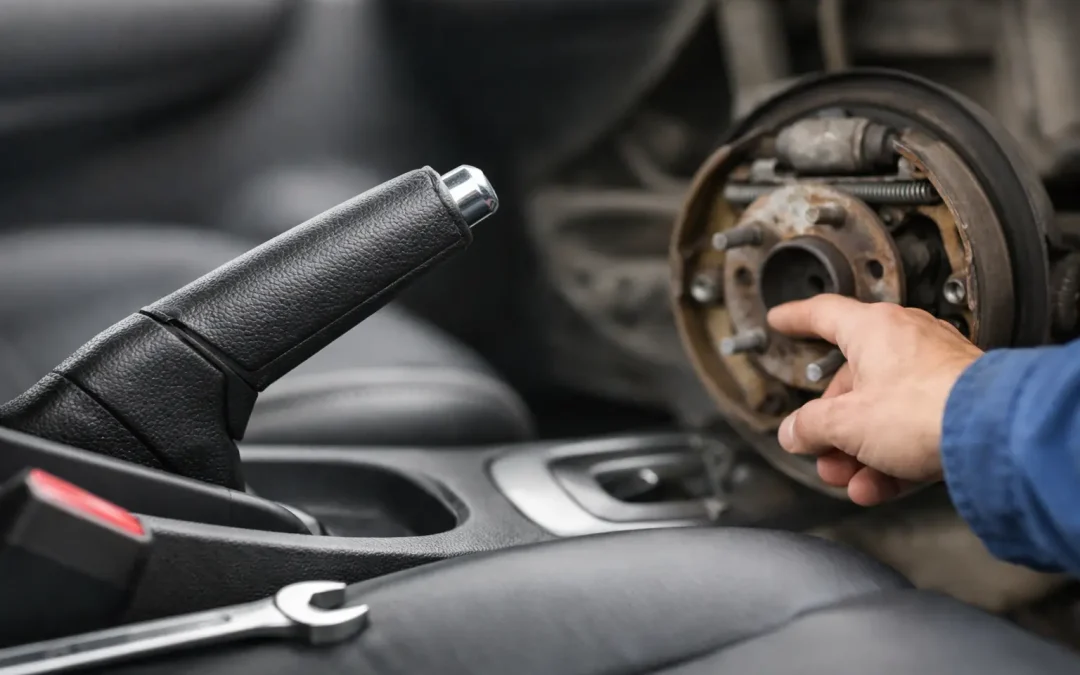
You park overnight, release the handbrake in the morning and the car refuses to roll. That sharp feeling of resistance is unsettling, particularly when you need to get to work or head out of town. So, why does handbrake stick? Usually, moisture, corrosion, seized cables or a fault inside the rear brake assembly is stopping the mechanism from releasing fully.
A sticking handbrake is not something to ignore or force repeatedly. It can leave a brake dragging while you drive, creating heat, wearing components quickly and affecting fuel use. In more serious cases, it can damage discs, drums, pads, shoes and wheel bearings. The right repair depends on what type of handbrake your vehicle has and where the fault sits.
Why does a handbrake stick in the first place?
Most conventional handbrakes operate mechanically. Pulling the lever or pressing the pedal tensions a cable, which applies the rear brakes. Depending on the vehicle, that cable may operate brake shoes inside a drum, a small drum mechanism built into the rear disc, or a lever on the rear brake caliper.
Because the system sits under the vehicle and around the rear wheels, it is exposed to water, road grime, dust and changing temperatures. For drivers around Albury Wodonga, cold winter mornings, wet weather and vehicles parked outside can make an existing issue more obvious.
The most common causes are straightforward, but proper diagnosis matters. A cable that feels seized can be the real fault, or it may simply be reacting to a stuck caliper or corroded brake shoes.
Moisture and surface corrosion
If a vehicle has been parked in rain, washed recently or left unused for several days, moisture can cause light corrosion between the brake pad and disc, or between the brake shoe and drum. Applying the handbrake while everything is wet can allow the friction material to bind to the braking surface as it dries.
This is common after a wet night and may release with gentle movement. But if the wheel remains locked, do not keep applying power through the clutch or accelerator. You can overheat the clutch, damage the tyre or tear friction material away from the brake shoe.
Seized or corroded handbrake cables
Handbrake cables run beneath the vehicle in protective outer sleeves. Over time, water can enter a damaged sleeve and corrode the cable inside. The cable may pull on normally when you apply the handbrake but fail to slide back when you release it.
A common sign is a handbrake lever that feels unusually stiff, does not return properly, or has a different feel from one day to the next. One rear wheel may also drag while the other releases. Cables are often best replaced rather than lubricated as a long-term fix. Lubricant may free a cable briefly, but it will not remove internal corrosion or repair a split outer casing.
Sticking rear brake calipers
Many vehicles use rear disc brakes with a handbrake mechanism built into the caliper. The caliper piston, slider pins or handbrake lever on the caliper can seize through corrosion, heat damage or neglected brake fluid servicing.
When this happens, the problem may be noticeable even when the handbrake has not been used. You might smell hot brakes after a short drive, notice the vehicle pulling slightly, or find one rear wheel is much hotter than the other. A stuck caliper needs attention promptly. Continuing to drive can rapidly ruin the pads and disc, and excessive heat can affect nearby components.
Seized brake shoes or damaged hardware
On some cars, utes and 4WDs, the handbrake uses shoes inside a rear drum or inside the hat section of a rear brake disc. Springs, adjusters and pivots inside this assembly can corrode or jam. A shoe lining can also separate from its metal backing, especially if it has been contaminated, overheated or simply reached the end of its service life.
This type of fault can lock a wheel unexpectedly. It is not usually visible from outside the vehicle, so the brake assembly needs to be removed and inspected before anyone can give a reliable answer on the repair required.
Electronic parking brake faults
Newer vehicles may use an electronic parking brake instead of a cable-operated lever. A failed actuator, wiring issue, weak battery, brake caliper fault or control-system error can prevent the brake from releasing.
Electronic systems should not be forced back with improvised tools. Many need a scan tool to place the system into service mode before components are removed. Attempting a shortcut can damage the actuator or create a warning fault that still needs professional rectification.
Signs your handbrake may be dragging
A fully stuck handbrake is obvious. A partially sticking one is easier to miss, and can be just as hard on the brakes over time. Pay attention if the vehicle feels reluctant to coast, needs more throttle than usual to move away, or has a burning smell after driving.
Other warning signs include a rear wheel that is noticeably hotter than the other side, reduced fuel economy, squealing or scraping from the rear brakes, or a handbrake warning light that stays on. You may also notice the lever requires excessive force or pulls much higher than it used to.
Do not touch a wheel, disc or drum immediately after driving to test its temperature. Brakes can become hot enough to burn skin. If you suspect a dragging brake, pull over safely, allow the vehicle to cool and arrange an inspection rather than continuing a long trip.
What to do when the handbrake will not release
Start by confirming the handbrake is fully released. In a manual vehicle, press the button on the lever, lift it slightly to take pressure off the ratchet, then lower it completely. In an automatic, keep your foot firmly on the brake pedal while releasing the parking brake. Check that the warning light goes out.
If the vehicle is on level ground and appears only lightly bound after rain, very gentle forward and reverse movement may release surface corrosion. Keep the movements short and controlled. Stop straight away if there is a loud bang, grinding noise, severe resistance or one wheel remains locked.
Avoid several common shortcuts. Do not repeatedly dump the clutch, spin the wheels, hit brake components with a hammer, pour water on hot brakes or drive with a dragging wheel to “clear it out”. These actions can turn a minor issue into a larger repair and may leave the vehicle unsafe.
If the handbrake is stuck on while parked, the safest option is usually roadside assistance or a tow to a brake specialist. If it has released but you suspect it was binding, book an inspection soon. A brake that frees itself has not necessarily fixed itself.
How a proper handbrake repair is diagnosed
A correct repair starts with checking whether the fault is in the cable, caliper, shoe assembly or electronic system. The technician will inspect wheel movement, brake condition, cable travel, adjustment and the condition of related hardware. With rear disc brakes, that can include checking caliper slides, piston operation and the mechanical handbrake lever.
The workshop should also inspect the condition of the pads, shoes, discs or drums. If a brake has dragged and overheated, replacing only the seized part may not be enough. Heat can glaze friction material, warp a disc, damage seals or create uneven braking from side to side.
For towing vehicles and 4WDs carrying heavier loads, this inspection matters even more. Extra vehicle mass, larger tyres and regular hill descents put more demand on the braking system. The handbrake needs to hold securely when parked, but it must also release cleanly every time.
Can you prevent a sticking handbrake?
You cannot prevent every fault, but regular brake servicing greatly reduces the risk. During a proper service, moving parts can be inspected, cleaned and lubricated with the correct brake-specific products where appropriate. Worn cables, damaged boots, weak springs and corroded hardware can be identified before they seize.
If your vehicle is parked for long periods, take it for a sensible drive occasionally to keep components moving. After driving through deep water, mud or heavy rain, be alert for unusual brake behaviour. On a level, secure surface, some owners of older vehicles choose to park in gear or Park rather than leave a wet mechanical handbrake applied for days. That is not suitable in every situation, particularly on slopes, so vehicle security must always come first.
A handbrake that sticks is a warning that something in a safety-critical system needs attention. Albury Brake and Clutch Centre can assess the cause, explain the repair in plain terms and fit quality parts where they are needed. Getting it checked now is usually far cheaper and safer than discovering a locked rear wheel when you are meant to be on the road.