


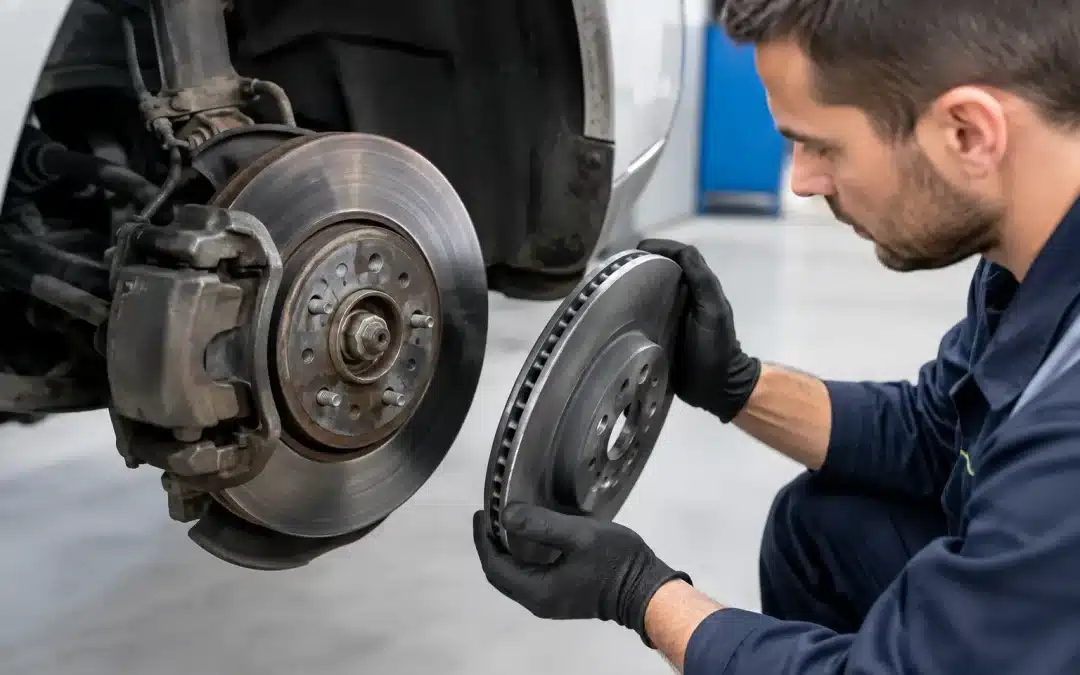
A vehicle can pass a quick glance at the wheels yet still have a serious braking issue developing behind them. This solving uneven brake wear example shows why fitting new pads is not always the answer. When one pad wears much faster than the other, the brake system is telling you that something is not moving, releasing or applying as it should.
Uneven wear can mean reduced stopping performance, a pull under brakes, excess heat and damage to rotors. Left too long, a relatively straightforward repair can turn into a larger job involving calipers, rotors, hoses and wheel bearings. The right approach is to find the cause first, then repair the fault properly.
What uneven brake wear usually looks like
Brake pads on the same axle will not always wear at exactly the same rate. Road conditions, driving style and vehicle loading can create small differences. What should concern you is a clear mismatch between the inner and outer pad on one wheel, or a pad on one side that is close to metal while the matching pad still has plenty of material left.
You might notice a squeal, scraping sound, steering wheel vibration, a burning smell after a drive or the vehicle pulling to one side during braking. Sometimes there are no obvious symptoms at all. A brake inspection during servicing may be the first sign that one corner is running hotter and wearing out sooner than it should.
For 4x4s used for towing, touring or carrying heavier loads, brake heat is a bigger factor. However, heavy use does not automatically explain uneven wear. A properly operating brake system should still apply and release evenly.
Solving uneven brake wear: a practical example
Consider a family SUV brought in after the owner noticed a squeal from the front left wheel. The vehicle did plenty of school runs and highway kilometres, with occasional trailer towing. It had received new front pads less than 12 months earlier, so the owner understandably expected the brakes to be fine.
On inspection, the outer front left pad had reasonable friction material remaining. The inner pad, however, was almost worn to the backing plate. The rotor was heat-spotted and scored on its inside face. The right-front pads were wearing evenly and had far more material left.
This pattern narrowed the diagnosis quickly. The caliper had not been sliding freely on its guide pins. When the driver applied the brakes, the piston could push the inner pad against the rotor. But the caliper body could not move properly to bring the outer pad into contact with the same force. The inner pad did most of the work and wore out early.
The cause was not the pad material
The guide pins had old, hardened lubricant and corrosion in the caliper bracket bores. The rubber boots were also damaged, allowing moisture and road grime to get in. Replacing only the worn pad would have been cheaper on the day, but it would not have fixed the seized sliding mechanism. The new inner pad would simply have worn down again.
The damaged rotor also mattered. A pad needs a clean, even rotor surface to bed in correctly. Installing pads against a deeply scored, heat-affected rotor can cause noise, reduced braking feel and an uneven contact pattern from the start.
The repair that made sense
The repair involved removing the caliper, cleaning and assessing the bracket and guide pins, replacing the damaged hardware and boots, and making sure the caliper moved freely. Both front rotors and pads were replaced as an axle set, using quality components suited to the vehicle. The brake fluid condition was checked, the system was inspected for leaks and hose issues, and the brakes were road-tested once reassembled.
Replacing pads and rotors on both sides of an axle is generally the sensible option. It gives even braking response left to right and avoids pairing a fresh rotor and pad set with worn parts on the other wheel. There are exceptions, but a specialist should explain those clearly rather than treating every job the same.
What a proper brake diagnosis should check
Uneven brake wear has several possible causes. The wear pattern provides clues, but it is only one part of the diagnosis. A proper inspection should look at how each component works together.
A seized or stiff caliper piston can keep a pad pressed against the rotor after you lift off the brake pedal. This often creates excessive heat, a sharp smell and wear on the inner pad. A restricted flexible brake hose can cause a similar problem by allowing brake fluid pressure into the caliper but not releasing it properly.
Sticking guide pins commonly affect floating calipers, particularly on vehicles exposed to water crossings, mud, road salt or long periods of sitting. Bent or corroded pad abutment clips can also stop pads from sliding freely in their bracket.
Rotor run-out and thickness variation should be measured where needed. These faults can contribute to pedal pulsation and may lead to inconsistent pad contact. Wheel bearing play, incorrect fitting of pads, damaged caliper mounting points and electronic brake system faults can also affect braking performance.
The key point is that a technician should not guess based on a single worn pad. They should inspect the caliper, hardware, rotor condition and hydraulic operation before recommending parts.
Why pads alone are often a false saving
Brake pads are wear items, so it is tempting to view every brake noise as a pad replacement job. That can be true when all components are working correctly and the pads have simply reached the end of their service life. It is not true when the pads are wearing unevenly.
Fitting pads without fixing the underlying issue may save money initially, but it risks another premature replacement, damaged rotors and compromised braking. In the worst cases, a dragging brake can overheat the fluid, reduce stopping ability and damage the caliper beyond practical repair.
Quality parts matter, but they cannot compensate for a faulty caliper or neglected hardware. Good repairs combine the correct parts with accurate diagnosis and careful fitting.
Preventing uneven brake wear from returning
There is no need to obsessively inspect your brakes, but regular servicing gives problems a chance to be found before they become expensive. If your vehicle is used for towing, steep regional roads, heavy loads, off-road work or frequent stop-start driving, tell the workshop. Those details help determine whether standard replacement parts are suitable or whether a brake upgrade is worth considering.
After brake work, pay attention to changes in how the vehicle feels. A pull to one side, a hot wheel, unusual dust build-up on one rim, new vibration or a persistent squeal deserves a check. Do not assume it will settle with more driving.
It also helps to avoid spraying lubricants around brake components at home. The wrong product can contaminate pads and rotors, swell rubber components or attract grit. Brake hardware needs the correct lubricant in the correct place, applied sparingly.
When uneven brake wear means stop driving
If you hear metal-on-metal grinding, feel a major pull under braking, smell strong burning from a wheel or see smoke, pull over safely and arrange an inspection. Continuing to drive can quickly destroy the rotor and may leave the vehicle unsafe to stop.
A brake warning light, soft pedal or noticeably reduced braking response should also be treated seriously. These symptoms are not always caused by uneven pad wear, but they require prompt attention.
For drivers around Albury Wodonga, a specialist inspection at Albury Brake and Clutch Centre can give you straight answers on what has failed, what needs replacing and what can safely remain in service. Brakes do not need guesswork or pressure sales. They need a careful look, quality work and a repair that lets you drive away with confidence.