


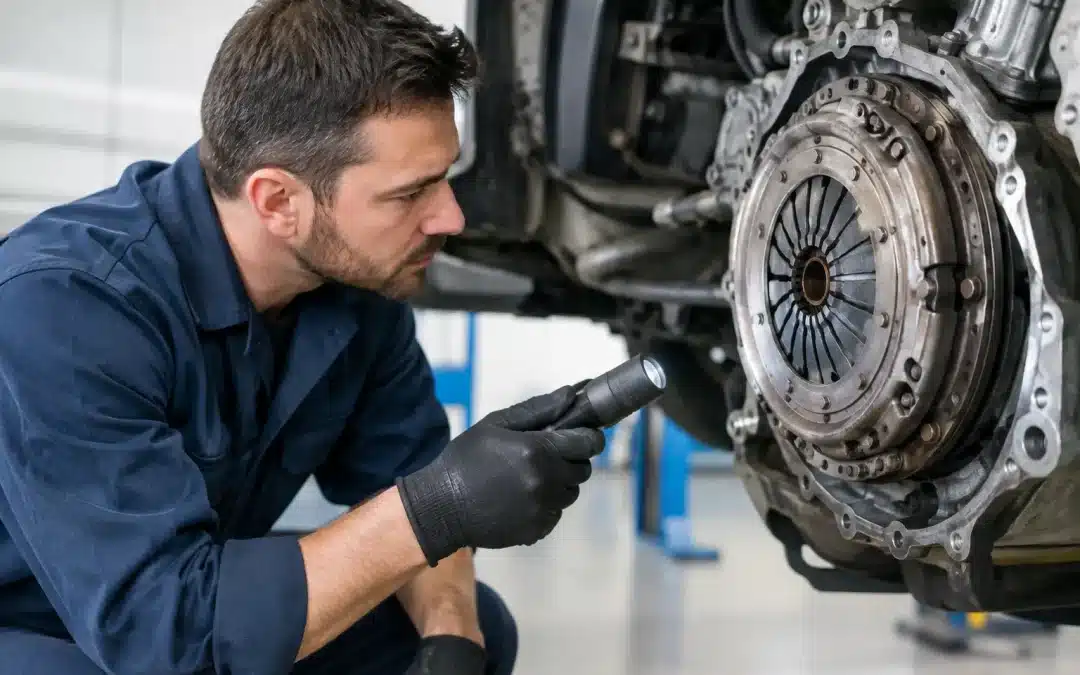
A clutch noise rarely stays a small annoyance for long. That squeak, rattle or grinding sound can point to anything from a dry pedal pivot to a worn release bearing or a damaged flywheel. Knowing how to diagnose clutch noise starts with one simple question: exactly when does the sound happen? The answer gives a specialist far more to work with than the noise alone.
Clutch faults can affect how safely and smoothly your vehicle drives, especially if you are towing, carrying tools in a ute or doing regular highway kilometres. There is no benefit in guessing or replacing parts on a hunch. A proper diagnosis identifies the cause, the likely repair and whether the vehicle should stay off the road.
Start by matching the noise to pedal position
The clutch system changes load as you press and release the pedal. That is why the timing of a noise matters. With the engine idling and the vehicle securely parked, listen first with the clutch pedal fully released, then press it down slowly and hold it to the floor. Do not put your head near moving engine components, and do not continue testing if you hear harsh grinding.
A noise that appears only when the pedal is pressed is commonly associated with the clutch release bearing, also called the throw-out bearing. This bearing is loaded when the pedal operates the clutch. A chirp, whirr, growl or rumble at this point can mean it is worn, though the sound still needs to be confirmed because gearbox bearings can create similar symptoms.
If the noise is present with the pedal up but reduces or disappears when the pedal is pressed, the issue may be inside the gearbox input shaft area. Depending on the vehicle, it could involve an input shaft bearing, a pilot bearing or a worn component in the clutch assembly. These are not all repairs of the same size or cost, which is exactly why accurate testing matters.
A squeak through the pedal travel may be less serious, particularly if it comes from the pedal pivot, a cable, bush or hydraulic linkage. It still deserves attention. A dry or worn external component can eventually affect pedal feel and clutch operation, but it is quite different from a bearing noise inside the bellhousing.
How to diagnose clutch noise while driving
The next clues come from gear changes and vehicle behaviour. On a quiet, safe road, pay attention to whether the noise occurs as you move away, change gears, coast, or let the clutch out. Keep the test gentle. Hard acceleration, repeated clutch slipping or towing to “see if it gets worse” can turn a manageable repair into a larger one.
A shudder or chatter as the clutch engages is often felt as much as heard. The vehicle may shake as you take off in first gear or reverse, sometimes with a knocking sound. Possible causes include an uneven flywheel surface, contaminated clutch friction material, worn engine or gearbox mounts, or problems with a dual-mass flywheel. Oil contamination from an engine rear main seal or gearbox seal can also damage a clutch, so replacing only the clutch plate without finding the leak is not a repair built to last.
A rattle at idle that changes when you press the clutch could be related to a dual-mass flywheel on some late-model vehicles. These flywheels are designed to absorb drivetrain vibration, but their internal springs and mechanisms wear over time. The rattle may be mild at first, yet it needs a proper inspection if it is increasing, comes with vibration or is accompanied by difficult gear selection.
Grinding when selecting a gear is not always a clutch noise, but it is a warning sign worth treating seriously. If reverse crunches, first gear is hard to engage at a standstill, or the vehicle wants to creep forward with the pedal fully down, the clutch may not be disengaging completely. Low hydraulic fluid, air in the hydraulic system, a failing master or slave cylinder, clutch cable adjustment, a worn clutch or gearbox synchroniser wear can all be involved.
What different clutch sounds can mean
No sound provides a guaranteed diagnosis on its own, but the pattern is useful. A light squeak from inside the cabin usually suggests a pedal or linkage issue. A high-pitched chirp or whine that begins as the pedal is depressed can indicate a release bearing. A deep rumble that changes with pedal position may point to a bearing in the clutch or gearbox area.
A metallic rattle at idle, particularly one that changes when the clutch is operated, needs closer attention on vehicles fitted with a dual-mass flywheel. A clunk as you engage or release the clutch can be caused by excessive driveline movement, worn mounts or backlash elsewhere in the drivetrain. Meanwhile, a scraping or grinding noise is more urgent. It can indicate severe bearing failure or contact between components that should not be touching.
Smell matters too. A burning smell after hill starts, towing or heavy traffic may indicate clutch slip rather than a noise fault. If the engine revs rise but the vehicle does not accelerate as it should, avoid loading it further. Excessive slip generates heat and can damage the clutch disc, pressure plate and flywheel.
Check the simple signs without pulling parts apart
There are a few observations any driver can make before booking the vehicle in. Note whether the noise is worse when cold or after a longer drive. Check if it changes in neutral, in gear, with the air conditioning on or off, and when the pedal is partly versus fully depressed. Record whether gears feel notchy, whether the pedal has become heavier, softer or spongy, and whether there is vibration under your foot.
For hydraulic clutch systems, check the brake and clutch fluid reservoir if it is accessible and clearly marked. A low fluid level can indicate a leak and should not simply be topped up and forgotten. Fluid loss may affect both clutch operation and, on many vehicles, braking because the systems can share a reservoir. Leave leak tracing and repairs to a qualified technician.
Avoid spraying lubricants into the bellhousing, adjusting components at random or continuing to drive through a grinding noise. These shortcuts can hide symptoms briefly while contaminating the clutch or causing further damage. Modern clutch systems are often tightly packaged, and the proper repair may require gearbox removal to inspect components that cannot be seen from outside.
When clutch noise needs urgent attention
Book an inspection promptly if the noise is becoming louder, the clutch pedal is sticking, gears are difficult to select or the vehicle shudders heavily when moving off. Stop driving and arrange assistance if the pedal stays on the floor, the vehicle cannot be selected into gear, there is severe grinding, or you smell strong burning from the clutch area.
This is especially relevant for 4x4s and work vehicles used for towing. Extra vehicle weight, larger tyres and frequent low-speed manoeuvring put more demand on the clutch and drivetrain. A minor noise that might be tolerable in an unloaded commuter can become a major issue when a caravan, trailer or load is involved.
What a proper clutch inspection involves
A specialist should road test the vehicle where appropriate, check pedal operation and hydraulic components, listen for changes at idle, and inspect mounts and driveline movement. If the gearbox needs to come out, the clutch disc, pressure plate, release bearing, flywheel, pilot bearing and seals should be assessed together. That prevents the false economy of replacing one worn component while leaving another at the end of its service life.
At Albury Brake and Clutch Centre, the focus is on explaining what has actually failed, what should be replaced at the same time and why. Quality parts matter, but so does identifying the underlying cause – particularly where oil leaks, worn mounts or flywheel damage have contributed to the problem.
If your clutch has started making a new sound, take note of when it occurs and get it checked before it leaves you unable to select a gear. A clear description and an early inspection usually provide the straightest path to a repair done properly.