


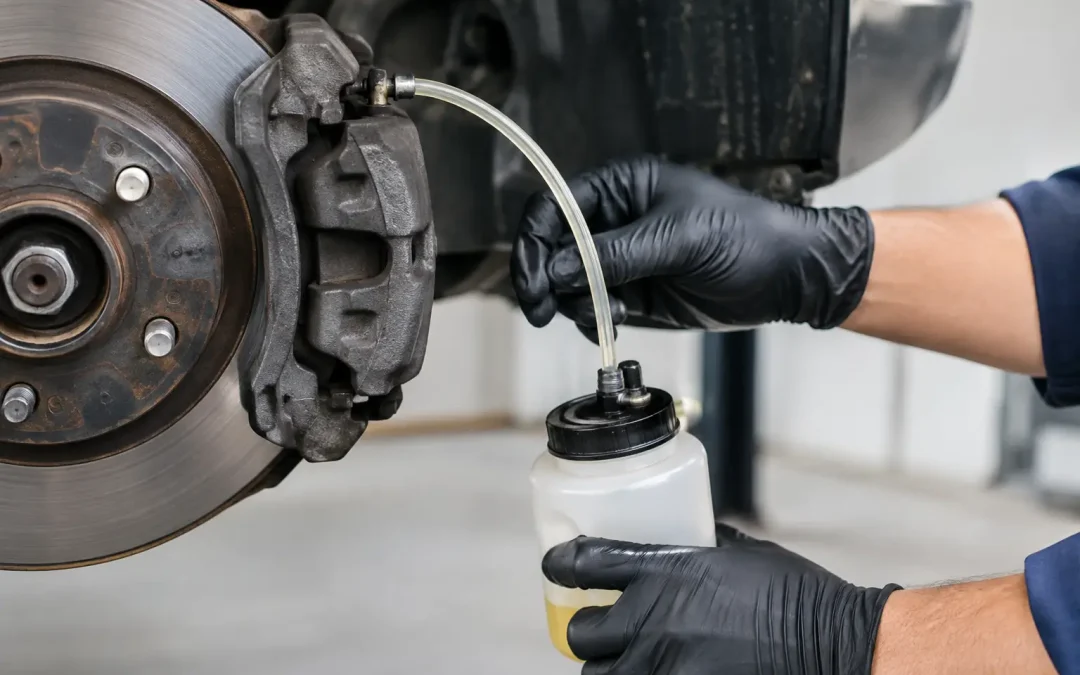
A soft brake pedal is not something to put off until the next service. When you need to bleed brake lines, the aim is simple: remove air from the hydraulic system so pedal pressure is transferred properly to the brakes. Done correctly, it restores a firm, predictable pedal. Done poorly, it can leave you with reduced braking performance when you need it most.
Brake bleeding is often treated as a quick driveway job. Sometimes it is straightforward, particularly after a planned fluid change on a simple older vehicle. But a spongy pedal can also point to a leak, a failing master cylinder, damaged flexible hose, worn components or an issue within the ABS hydraulic system. The right repair starts with finding out why air or poor pedal feel is there in the first place.
When do brake lines need bleeding?
Brake fluid is designed to be incompressible. Air is not. Even a small amount of air trapped in a brake line can compress under pedal pressure, making the pedal feel soft, long or inconsistent.
You may need a brake bleed after brake lines, hoses, calipers, wheel cylinders or a master cylinder have been replaced. It is also commonly required after a fluid leak has been repaired, or when old fluid is being flushed as part of scheduled brake servicing.
Pay attention if the brake pedal sinks further than usual, feels spongy, needs pumping before it firms up, or changes noticeably from one stop to the next. A brake warning light, visible fluid around a wheel, a falling brake fluid level, or a pedal that slowly drops while held down all deserve prompt inspection.
Not every braking concern is caused by air. Worn pads, seized caliper slides, warped discs, tyre issues and suspension faults can all affect how a vehicle feels under brakes. That is why proper diagnosis matters more than simply adding fluid or bleeding a line at random.
What happens when you bleed brake lines?
Bleeding works by pushing fresh brake fluid through the hydraulic system while releasing trapped air from bleed screws at the calipers or wheel cylinders. The sequence matters. On many vehicles, the process starts at the wheel furthest from the master cylinder and works towards the closest, but that is not a universal rule. Vehicle manufacturers may specify a different order.
A technician checks the brake fluid reservoir, uses the correct fluid specification, inspects lines and hoses, and works through the required sequence until the fluid runs clean and bubble-free. The reservoir must not run dry during the job. If it does, more air enters the system and the process needs to start again.
The final step is not just checking the pedal in the workshop. A proper brake service includes checking for leaks, confirming brake operation and, where appropriate, carrying out a controlled road test. A firm pedal alone does not prove every part of the braking system is working as it should.
Brake fluid condition matters too
Brake fluid absorbs moisture over time. That moisture can lower the fluid’s boiling point and contribute to internal corrosion in brake components. Under repeated heavy braking, such as towing a caravan, descending steep country roads or carrying a loaded ute, overheated or contaminated fluid can contribute to brake fade and reduced pedal confidence.
Fluid replacement intervals vary by manufacturer and vehicle use. For most drivers, following the service schedule is sensible. For 4x4s used for towing, touring, water crossings or rough tracks, more regular checks may be worthwhile. Mud, heat, corrosion and hard use can all expose weaknesses that a city commuter may never notice.
Why DIY brake bleeding can go wrong
There is no harm in understanding your vehicle, but brakes are safety-critical. The risk with a DIY bleed is not just getting a little fluid on the driveway. Incorrect fluid, a seized bleed screw, a damaged thread, a reservoir run dry or an incorrect procedure can turn a routine job into a larger repair.
Modern vehicles can add another layer of complexity. Some ABS systems require a scan tool to cycle valves and pumps if air has entered the hydraulic control unit. Vehicles with electronic brake systems, advanced stability control or certain hybrid and electric systems may have specific service modes. Skipping those steps can leave air trapped where conventional bleeding will not remove it.
Brake fluid also damages painted surfaces, so spills should be dealt with immediately. It should never be reused once collected, and it needs to be disposed of responsibly. Mixing fluid types because they are both labelled as brake fluid is another costly mistake. Always use the specification listed by the vehicle manufacturer.
If you are only topping up the reservoir because the level is low, stop and ask why it is low. Brake fluid can drop gradually as pads wear, but a sudden or substantial loss can indicate a leak. Topping it up may hide a problem without fixing it.
The proper approach to a soft brake pedal
When a vehicle arrives with poor pedal feel, the first step should be an inspection rather than an assumption. The condition of pads, discs, drums, calipers, hoses, hard lines, master cylinder and fluid is checked. Any leaks, corrosion, uneven wear or seized components need to be addressed before bleeding can provide a lasting result.
If parts have been replaced, the system is bled using the vehicle-specific procedure and the correct fluid. If the pedal remains soft, the diagnosis continues. There may be air in the ABS unit, an internal master cylinder fault, rear drum brake adjustment issues or a flexible hose breaking down internally.
This method avoids unnecessary replacement parts and gives you a clearer answer about what your vehicle actually needs. It also helps prevent the frustrating situation where the pedal feels better for a day or two, then the original fault returns.
Brake bleeding for towing and 4×4 vehicles
For a family SUV used around town, a firm pedal and healthy fluid are basic safety essentials. For a 4×4 that tows, carries tools or runs larger tyres, the margin for compromise is smaller. Extra weight and increased rolling diameter place greater demand on the entire braking system.
Bleeding the system will not compensate for undersized brakes, worn discs or poor-quality components. It is one part of the picture. A properly matched brake upgrade may be worth considering if your vehicle regularly tows heavy loads or has had a GVM upgrade, but it needs to be selected around the vehicle’s use, not sold as a blanket solution.
Quality pads, rotors, hoses and fluid all matter, as does the workmanship behind them. The cheapest option can become expensive if it delivers inconsistent braking, short service life or repeat repairs.
When to book a professional brake inspection
Book in promptly if the pedal is soft, the brake warning light comes on, fluid is leaking, the vehicle pulls under braking or you have recently had hydraulic brake work completed and the pedal does not feel right. Do not drive a vehicle with a pedal that drops to the floor or braking that is clearly reduced. Arrange safe transport instead.
For drivers across Albury Wodonga, Albury Brake and Clutch Centre can inspect the full braking system, explain the cause in plain language and complete only the work that is needed. Whether it is a routine fluid flush, a leaking caliper, an ABS-related concern or a brake setup for a hard-working 4×4, the job should be diagnosed properly and repaired to last.
Your brakes should feel predictable every time you press the pedal. If they do not, a timely inspection is a far better option than hoping the next stop feels different.