


A loaded caravan pushing down the Hume, a boat ramp run, or a steep descent with a camper in tow will show up weak brakes quickly. The best towing brake rotors are not simply the biggest, most drilled or most expensive option on the shelf. They are the rotors that suit your vehicle, its real loaded weight, the terrain you travel and the rest of the braking system.
For many utes and 4x4s, towing changes the job the brakes need to do. More mass means more heat every time you slow down. If that heat cannot be managed, braking performance can fade, pedal feel can change and rotor wear can accelerate. Choosing parts properly before a big trip is cheaper and safer than finding the limits of standard brakes on a long downhill run.
What makes the best towing brake rotors?
A brake rotor is a heat sink. When you apply the brakes, the pads clamp the rotor and convert the vehicle’s movement into heat. Under normal commuting, the system has plenty of time to cool between stops. Towing a caravan, work trailer or loaded horse float asks it to absorb far more heat, often repeatedly.
The right towing rotor therefore needs sufficient thermal capacity, stable friction surfaces and correct fitment. It also needs to work with quality brake pads, healthy callipers, good brake fluid and tyres in sound condition. Replacing rotors alone will not fix a seized calliper, a soft pedal or a trailer brake controller that is poorly adjusted.
For a vehicle that occasionally tows a modest trailer, a quality standard replacement rotor and suitable pad can be the sensible choice. For a 4×4 carrying touring gear, bigger tyres, a GVM upgrade and a heavy caravan, an engineered heavy-duty brake upgrade may be justified. There is no honest one-size-fits-all answer.
Rotor design matters, but not in the way advertising suggests
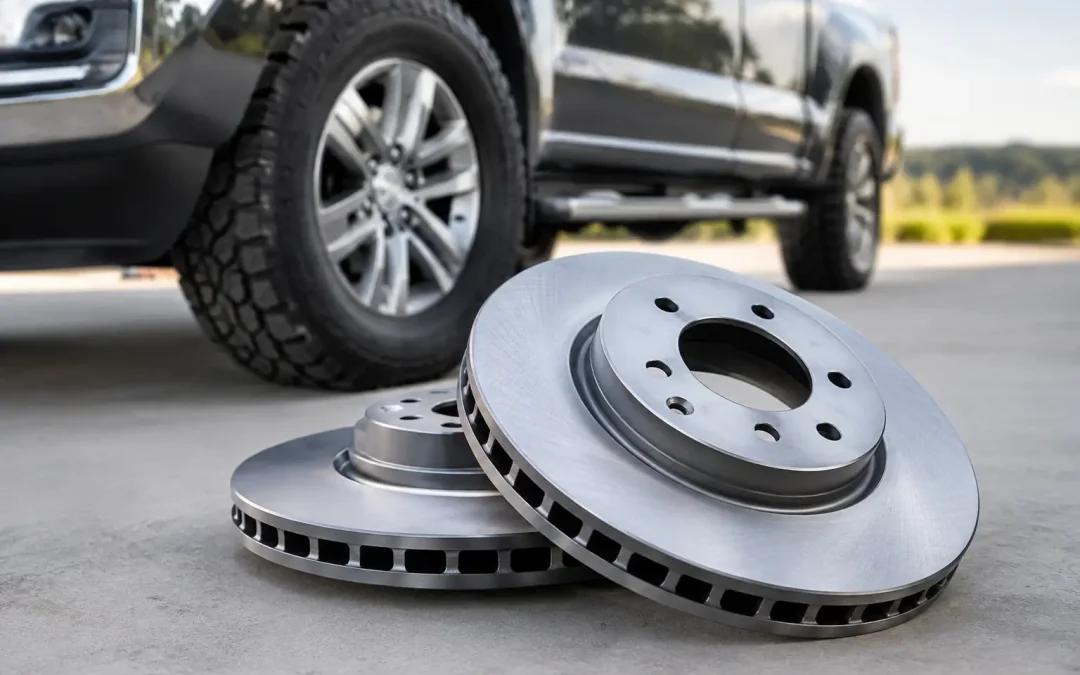
Most late-model vehicles use ventilated front rotors. Internal cooling vanes draw air through the disc as it turns, helping shed heat. A well-designed ventilated rotor is usually the starting point for towing applications.
Slotted rotors can help clear pad gases, dust and water from the contact surface, particularly where brakes work hard. The trade-off is that pad wear can be a little faster and some designs may create more audible brake noise. That does not make them unsuitable – it simply means they should be chosen for the job, not for appearance.
Cross-drilled rotors look purposeful, but they are not automatically the best choice for a heavily loaded tow vehicle. Drilling removes material and can create stress points in severe heat cycles, depending on the rotor design and use. Quality purpose-made drilled rotors have their place, but for sustained towing, a high-quality plain or slotted rotor is often the more sensible long-term option.
Match towing brake rotors to the full setup
Rotors and pads are a matched working pair. Fitting an aggressive pad to a rotor not designed for it can increase noise, dust or wear without delivering the towing improvement you expected. Conversely, a good rotor with a low-quality pad can still suffer fade, uneven deposits and poor pedal confidence.
A proper assessment starts with how the vehicle is actually used. Vehicle model and year matter, but so do the loaded trailer mass, ball weight, touring load, wheel and tyre size, routes travelled and frequency of towing. A Ranger used to tow a box trailer around town needs something different from a LandCruiser carrying drawers, long-range fuel, rooftop gear and a caravan through the High Country.
Consider these parts of the system together:
- Brake pads: A towing-focused pad compound should maintain predictable friction as temperatures rise, without being unnecessarily harsh for daily driving.
- Brake fluid: Old fluid absorbs moisture over time, lowering its boiling point. Fresh quality fluid can make a real difference to pedal consistency under heavy braking.
- Callipers and hoses: Sticky slide pins, seized pistons or ageing flexible hoses can cause pulling, uneven pad wear and excess heat on one wheel.
- Trailer brakes: Electric brakes need correct adjustment and a properly set controller. The tow vehicle brakes should not be doing all the work.
This is why diagnosis matters. If a rotor has overheated, warped in feel, or developed blue heat marks, the cause needs to be found before new parts go on. Otherwise, the same issue can ruin the replacement set.
Signs your current rotors are not coping with towing
A steering wheel shake or brake pedal pulsation under braking is a common reason drivers book in. It is often described as “warped rotors”, although uneven pad material transfer and rotor thickness variation can be the underlying issue. Either way, it needs checking rather than guessing.
Other warning signs include a burning smell after a descent, brake fade when towing, longer stopping distances, a vehicle pulling to one side, grinding noises, deep grooves in the rotors or a brake warning light. Do not assume a heavy trailer is the only cause. A dragging calliper or a poorly functioning trailer brake system can overload even good rotors.
Rotors also have a minimum thickness specification. Once they are at or below that limit, they must be replaced. Machining may be possible in some situations, but it only makes sense when enough material remains and the rotor is otherwise in sound condition. On a tow vehicle, fitting quality replacement rotors is often the more practical decision when the discs are worn or heat-affected.
When a larger brake upgrade is worth it
Some vehicles repeatedly exceed the demands their factory brake package was designed around. This is particularly common with 4x4s that have gained larger diameter tyres, added accessories and extra payload. Larger tyres increase leverage against the brakes, while extra mass adds more energy for the system to manage.
A larger rotor and calliper upgrade can provide greater thermal capacity and improved braking leverage. That can mean more consistent braking on long descents and better control when the vehicle is fully loaded. It is not about making a vehicle stop like a race car. It is about retaining predictable, dependable braking when the vehicle is doing the job it was built up for.
However, upgrades must be compatible with wheel clearance, suspension changes, vehicle specifications and legal requirements. The cheapest kit is rarely the best value if parts availability, engineering quality or ongoing servicing are questionable. Established brake brands such as DBA and Brembo offer options across standard replacement and performance-focused applications, but correct application remains more important than the logo on the box.
Getting the most life from new rotors
New rotors and pads need a proper bedding-in process. This transfers an even layer of pad material onto the rotor surface and helps prevent vibration, hot spots and reduced performance. Your technician should provide instructions suited to the pad compound fitted, but the general rule is to avoid repeated heavy stops or holding the vehicle stationary with very hot brakes immediately after installation.
When towing, use engine braking where appropriate, especially on long declines. Select a lower gear early rather than riding the brake pedal all the way down. Keep an eye on trailer brake adjustment, avoid overloading, and allow extra following distance. These habits reduce heat before it becomes a brake problem.
Regular inspections matter too. A brake check before a major towing trip can pick up worn pads, rotor thickness issues, leaks, uneven wear and fluid that is due for replacement. It is straightforward preventative maintenance, and it gives you a clearer picture of what your vehicle needs.
For drivers in Albury Wodonga, Albury Brake and Clutch Centre can assess the complete braking system and recommend a towing solution that matches the vehicle and load – no pressure, no unnecessary upgrades. The right rotor choice should leave you with a firm pedal, controlled stops and confidence when the road points downhill.