


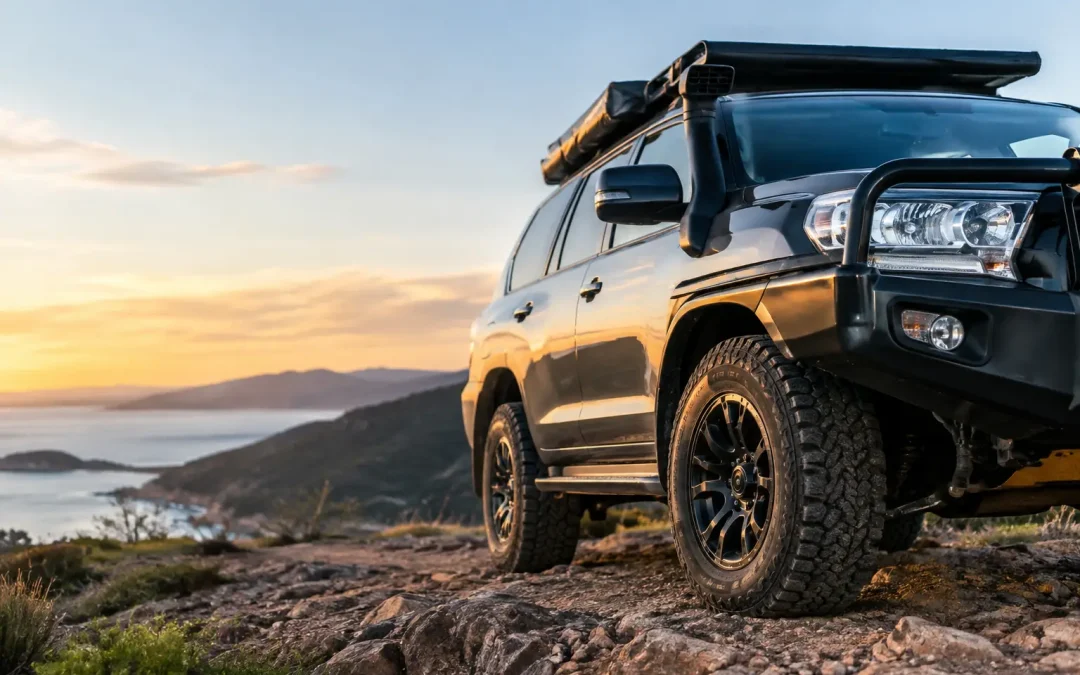
A loaded touring wagon descending the Great Dividing Range, or a ute hauling a caravan through stop-start traffic, asks far more of its brakes than the same vehicle did leaving the showroom. That is why 4WD braking trends are less about flashy modifications and more about matching braking performance to the way a vehicle is actually used. Bigger tyres, added accessories, higher weights and electronic safety systems all change the picture.
For everyday 4WD owners, the right answer is rarely to fit the biggest brake kit available. It starts with a proper inspection, an honest look at vehicle weight and use, and components chosen to work together. Brakes are safety-critical. They need to be done properly, not upgraded on guesswork.
4WD braking trends are being driven by weight
Modern 4WDs and utes are capable vehicles, but many spend their working life well beyond standard kerb weight. Canopies, drawers, long-range tanks, roof tents, recovery gear, bull bars, winches and second batteries add up quickly. Add passengers, tools or a towball load and the braking system has much more mass to control.
This is the biggest force behind current 4WD brake upgrades. Owners are moving away from replacing worn parts with the cheapest equivalent and asking whether their vehicle can repeatedly stop safely when fully loaded. That is a sensible question, particularly for touring rigs and work utes.
More weight does not automatically mean a vehicle needs an aftermarket big brake kit. A well-maintained standard system with quality rotors, pads, fluid and correctly operating calipers can be suitable for many applications. But where a vehicle is regularly carrying heavy loads, towing, or running larger tyres, an upgrade may be worth considering after the basics have been checked.
Bigger tyres change more than appearance
Larger-diameter tyres are a common 4WD modification. They can improve clearance and suit certain off-road conditions, but they also affect braking. A bigger rolling diameter gives the braking system more leverage to overcome, while heavier tyre and wheel packages increase rotating mass. The result can be longer stopping distances and more heat during repeated braking.
Tyre choice matters too. Aggressive all-terrain and mud-terrain patterns can behave differently on wet bitumen than road-focused tyres. No brake pad can fully compensate for poor tyre grip, incorrect pressures or badly worn tread. A braking assessment should consider the whole system, from the contact patch upward.
Heat management is the practical upgrade focus
Brake fade is not just an old problem for mountain descents. It can happen when a loaded 4WD is repeatedly slowing in traffic, controlling speed on long downhill sections or towing on hot days. As temperatures climb, pad material can lose effectiveness and brake fluid can degrade or boil. The pedal may feel long, braking effort can rise and confidence disappears at exactly the wrong time.
That is why better heat control is a genuine trend. Quality rotors and pads are selected for the job rather than simply for a brand name or advertised performance claim. For some heavy-duty applications, larger rotors, improved caliper capacity or vehicle-specific upgrade packages can provide more thermal capacity. For others, a premium pad compound and fresh fluid make a meaningful difference without changing the entire system.
There are trade-offs. Pads designed to handle high temperatures can sometimes produce more dust, noise or wear than a quiet, low-dust daily-driver compound. Slotted rotors can help clear dust and gases in demanding use, but they may increase pad wear compared with plain rotors. Drilled rotors have their place in some applications, but they are not automatically the best choice for a heavily loaded touring vehicle. The best setup depends on how the 4WD is used most of the time.
Electronic braking systems need careful diagnosis
Current utes and 4WDs rely on more than hydraulic brakes. Anti-lock braking, stability control, traction control, electronic brake-force distribution and autonomous emergency braking all use sensors and software to influence how the vehicle stops and behaves under pressure.
This technology is valuable, but it makes accurate diagnosis more important. A warning light, inconsistent pedal feel or unusual intervention from traction control should not be brushed off as a minor electrical fault. Wheel-speed sensors, wiring, brake switches, hydraulic components and calibration can all affect the system.
Modifications also need to be considered carefully. Changes to tyre size, suspension height and vehicle mass can alter the assumptions built into factory safety systems. In some cases, calibration or engineering requirements may apply. A brake upgrade should not create a new problem by interfering with ABS operation, wheel clearance or legal compliance. Straight answers are better than fitting parts first and asking questions later.
Electric trailer brakes remain part of the equation
For towing owners, the tow vehicle brakes are only one half of safe stopping. Trailer brakes, the brake controller, wiring, breakaway system and trailer loading all matter. A correctly set controller should give firm, controlled trailer braking without the trailer snatching or pushing the tow vehicle.
Brake controller settings are not set-and-forget. A lightly loaded box trailer and a fully loaded caravan need different adjustment. Drivers should also be alert to signs such as a trailer that pulls to one side, brakes that grab after sitting idle, a controller fault message or a hot wheel hub after a trip. These faults need attention before the next run, not after an emergency stop reveals them.
Servicing is becoming more use-specific
One positive shift in 4WD maintenance is that more owners understand a basic logbook service may not reflect their vehicle’s actual workload. A family wagon used mainly around town has different needs from a diesel ute that tows machinery every week. Likewise, a vehicle that sees dust, mud, water crossings and steep tracks benefits from closer checks of brake hoses, caliper condition, wheel bearings and fluid condition.
Brake fluid is often overlooked because it is out of sight. It absorbs moisture over time, which lowers its boiling point and can contribute to internal corrosion. Replacing fluid at the right interval is affordable preventative maintenance, particularly on vehicles that tow or work hard. It is also a good opportunity to inspect for seized slide pins, uneven pad wear, damaged hoses and fluid leaks.
Quality parts matter here. Rotors, pads, caliper components and clutches are not areas to gamble on unknown products. Reputable brands such as Bendix, Brembo, DBA, Exedy, Aisin and Powerdrive offer options for different vehicles and duties. The point is not to fit a premium brand for the sake of it. It is to choose parts with the right fit, specification and proven performance for the job.
What a sensible 4WD brake check should cover
Before recommending an upgrade, a specialist should establish what is actually happening. A vibration through the pedal may point to rotor run-out, uneven pad deposits or suspension issues. A vehicle pulling under brakes can come from a sticking caliper, contaminated pad, tyre problem or alignment concern. A soft pedal may be fluid-related, but it can also indicate a hydraulic fault that should not wait.
A proper inspection looks at pad thickness and wear pattern, rotor condition and measurement, caliper operation, hoses, fluid, wheel bearings, tyre condition and the operation of warning systems. It should also include a conversation about towing weight, modifications, tyre size and where the vehicle is driven. That context turns a parts replacement into a repair plan.
At Albury Brake and Clutch Centre, that approach matters because a 4WD owner needs to know whether they require a repair, maintenance work or a genuine upgrade. No pressure, no unnecessary upselling – just work that suits the vehicle and is built to last.
When an upgrade is worth considering
A brake upgrade deserves discussion if your 4WD regularly tows near its limits, carries substantial permanent accessories, has larger and heavier tyres, or shows fade during repeated braking despite being correctly maintained. It can also make sense where a standard system has proven inadequate for a legal, engineered higher-GVM setup.
On the other hand, if the vehicle is lightly used and its brakes are simply worn, quality standard-specification parts may be the most sensible and cost-effective fix. Bigger is not always better. Poorly matched components can create noise, premature wear, clearance issues or an unbalanced brake feel.
Pay attention to changes in how your 4WD stops: a longer pedal, vibration, pulling, squealing, warning lights or a burning smell after normal driving are all reasons to have it checked. For a vehicle that carries the family, the tools or the caravan, reliable braking is not a trend to follow. It is confidence you should expect every time you press the pedal.