


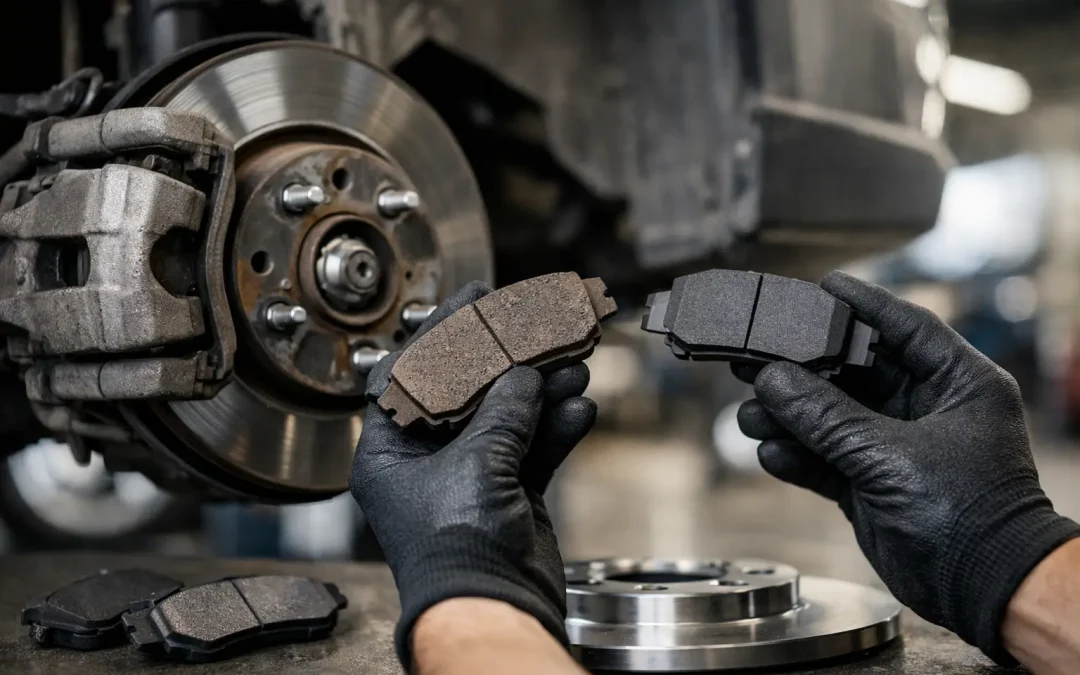
You usually notice brake pad wear at the worst possible time – rolling towards a roundabout, pulling up in school traffic, or coming down a hill with the caravan on the back. If you’re asking when do brake pads need replacing, the short answer is before they wear down enough to affect stopping performance or damage other brake components.
That sounds obvious, but brake pads do not all wear at the same rate. Some drivers get years out of a set. Others need replacements much sooner because of traffic conditions, towing, driving style, vehicle size, or the type of pads fitted. The key is not waiting for a loud noise or a clear failure. By that point, what should have been a straightforward pad replacement can turn into a bigger brake repair.
When do brake pads need replacing in real terms?
Brake pads need replacing when the friction material has worn too thin to work safely and effectively. In many cases, that means replacing them once they are down to around 3mm or less, although the exact point can vary depending on the vehicle and how it is used.
New brake pads have a much thicker layer of friction material bonded to a metal backing plate. As you brake, that material gradually wears away. Once it gets too low, the pad cannot absorb and manage heat properly, braking performance can drop off, and the metal backing plate can start contacting the rotor. That is where repair costs climb quickly.
A proper inspection matters here. Looking through a wheel is not always enough, and guessing based on kilometres alone is unreliable. A specialist workshop will measure pad thickness, inspect rotor condition, check for uneven wear, and make sure the whole braking system is working as it should.
The signs your brake pads may be worn out
Sometimes worn brake pads give clear warnings. Sometimes they do not. That is why routine brake inspections are worthwhile, especially if the vehicle is doing regular stop-start driving, towing, or carrying extra weight.
One of the most common signs is a squealing or screeching noise when braking. Many pads are designed with a wear indicator that makes noise once the pad gets low. It is an early warning, not something to ignore for another few months.
A grinding noise is more serious. That can mean the pad material has worn away and metal is contacting metal. If that happens, you are often looking at rotor damage as well as pad replacement.
You might also notice the vehicle taking longer to stop, a brake pedal that feels less responsive, or vibration through the pedal or steering. Those symptoms do not always mean the pads alone are the problem. Rotors, calipers, brake fluid condition and suspension issues can all play a part. That is why proper diagnosis matters more than replacing parts on a guess.
A brake warning light can also point to a problem, although not every warning light means worn pads specifically. It still means the vehicle should be checked sooner rather than later.
How long should brake pads last?
There is no single number that fits every vehicle. A rough guide is anywhere from 30,000 to 70,000 kilometres, but that range is broad for a reason.
If you mostly do highway driving with light braking, pads can last well. If you drive in town, sit in traffic, tow a trailer, head into the hills often, or run a heavy 4×4 with larger tyres, they can wear much faster. Front pads also tend to wear more quickly than rear pads because most vehicles do more braking through the front axle.
Pad quality makes a difference too. Cheaper pads may wear faster, create more dust, or not cope with heat as well. Better quality components generally offer more consistent braking and better durability, but the best choice depends on how the vehicle is used. A family SUV doing school runs has different needs from a touring 4×4 set up for towing.
Why brake pads can wear out sooner than expected
Brake pad wear is not always just normal wear and tear. Sometimes fast wear points to another issue in the system.
A sticking caliper can keep a pad in contact with the rotor, wearing it out far too quickly. Worn rotors can chew through new pads. Poor quality friction material may not handle heat properly. Heavy loads, frequent towing and steep descents all add more stress. Even tyre size and vehicle modifications can affect brake demand.
This is especially relevant for utes and 4x4s that have been fitted with accessories, bigger tyres or GVM upgrades. Once a vehicle is carrying more weight, the brakes have more work to do. In those cases, simply fitting another standard set of pads may not be the best long-term answer. Sometimes the smarter move is a brake upgrade suited to how the vehicle is actually being used.
When do brake pads need replacing if they still seem to work?
This catches plenty of drivers out. The vehicle may still stop. The pedal may still feel normal enough. But brake pads can be well past their best before the braking feels obviously unsafe.
As pads wear down, they lose their ability to deal with heat. That can lead to brake fade under load or repeated braking. You might not notice it on a quiet trip to the shops, but you may notice it fast on a downhill stretch, in wet weather, or in an emergency stop.
So if the brakes still seem fine, that does not automatically mean the pads are fine. Brake systems usually give you some warning, but not always in a way that is obvious day to day. That is why regular inspections are the safer and cheaper option.
Can you check brake pads yourself?
You can sometimes spot thin pads through the wheel, and if you hear squealing or grinding, that is a clear sign to get the vehicle checked. But a basic visual check has limits.
On many vehicles, it is hard to get a clear angle without removing the wheel. Even then, pad thickness is only one part of the picture. Uneven wear between inner and outer pads, rotor scoring, heat spots, caliper movement and fluid condition all matter. A pad might look acceptable from one angle while the inside pad is nearly gone.
If you are unsure, it is better to have the brakes inspected properly than assume they have more life left.
What happens if you leave worn brake pads too long?
This is where a modest repair can turn into an expensive one. Once the friction material wears away completely, the metal backing plate contacts the rotor. That can score or gouge the rotor badly enough that it needs machining or replacement, and in some cases it can affect calipers as well.
Stopping distances can increase, braking can become unpredictable, and heat damage can spread through the system. For drivers towing or travelling regionally, that risk is even harder to justify. The last thing you want is brake trouble when you are a long way from home or carrying a load.
Leaving worn pads too long also removes choice. If the problem is picked up early, you may only need pads and a routine service. If it is ignored, you could be up for pads, rotors and extra labour.
The value of proper diagnosis
Brake repairs are not an area where guesswork helps. If a vehicle has noise, poor stopping, vibration or uneven pad wear, the right repair depends on finding the cause properly.
At a specialist workshop, that means checking pad thickness, rotor condition, caliper operation and the rest of the brake system rather than just fitting parts and hoping for the best. For local drivers around Albury and Wodonga, that straight-up approach matters. You want to know what actually needs doing, what can wait, and what will keep the vehicle safe and reliable.
That is where experience counts. At Albury Brake and Clutch Centre, the job is not just replacing worn parts. It is making sure the brakes are repaired properly, using quality components suited to the vehicle and the way it is driven.
So when should you book a brake check?
If you can hear noise when braking, feel vibration, notice reduced braking performance, or simply cannot remember the last brake inspection, it is worth booking in. The same applies before a long trip, before towing, or after buying a used vehicle with an unknown service history.
You do not need to wait for complete failure. In fact, the best time to deal with brake pads is before they become an urgent problem. That keeps repair costs down, protects other brake components, and gives you confidence that the vehicle will stop the way it should when you need it to.
If something about the brakes does not feel right, trust that instinct and get them checked. A straight answer early is usually the cheapest part of the whole job.