


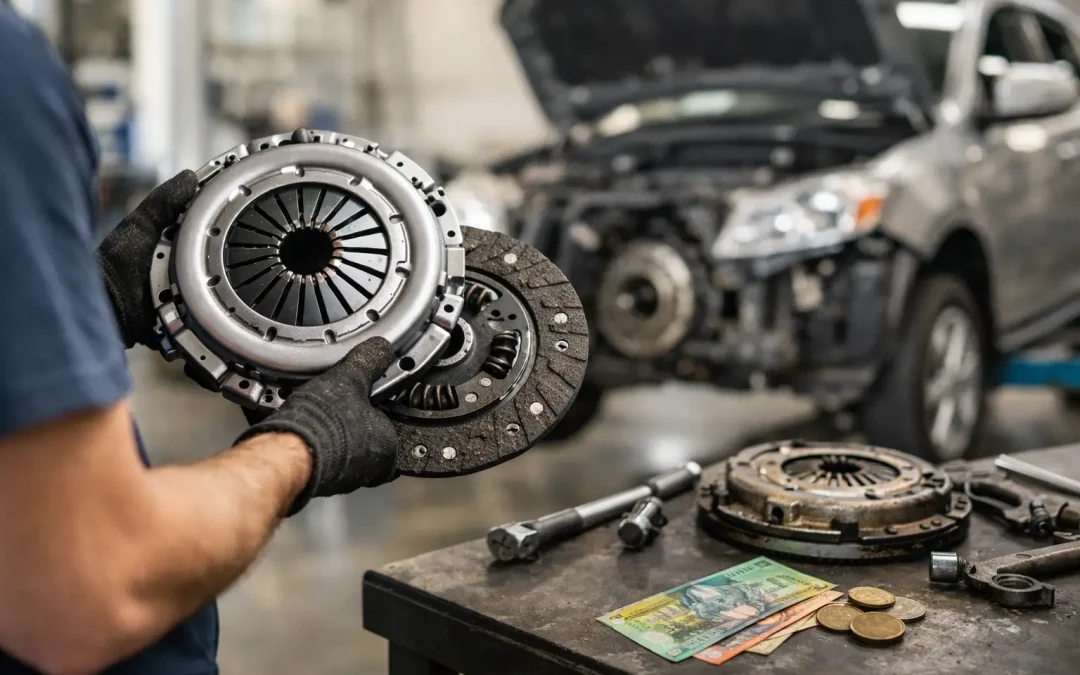
If your clutch has started slipping in traffic, shuddering on take-off, or making gear changes feel harder than they should, the first question is usually the same – what is the clutch replacement cost Australia drivers should expect? The honest answer is that it varies a lot by vehicle, parts quality and how much labour is involved, but most people are really asking something simpler: am I looking at a manageable repair, or a major bill?
What does clutch replacement cost in Australia?
For many passenger vehicles in Australia, a clutch replacement often lands somewhere from around $1,200 to $2,500. Some smaller cars can come in below that range, while larger 4x4s, utes and performance vehicles can climb well beyond it. If a dual-mass flywheel is involved, or there is additional damage found once the gearbox is removed, the final cost can rise quickly.
That broad range is not a workshop trying to avoid a straight answer. It is simply the reality of clutch work. Two vehicles can both need a clutch, but one may need a basic kit and straightforward labour, while the other needs a flywheel, hydraulics and significantly more workshop time.
For regional drivers around Albury and Wodonga, where many vehicles are used for commuting, towing, farm work or touring, that difference matters. A hatchback that spends its life in town places different demands on a clutch than a 4×4 regularly towing a camper or carrying extra weight.
Why clutch replacement prices vary so much
When people compare quotes, they often assume one workshop is expensive and another is cheap. Sometimes that is true. Often, though, they are not quoting the same job.
The type of vehicle matters
Front-wheel-drive cars can involve a fair bit of labour because access is tight and the gearbox can be more time-consuming to remove. Rear-wheel-drive utes and 4x4s may look simpler on paper, but they can involve heavier components, transfer cases or extra driveline work. European vehicles can also carry higher parts pricing.
Parts quality changes the total
A proper clutch repair is not just about fitting the cheapest kit available. The quality of the pressure plate, friction disc, release bearing and related components affects how the vehicle feels afterwards and how long the repair lasts. Good quality brands usually cost more up front, but they can save money and frustration later.
Labour is a big part of the job
Clutch replacement is labour-intensive. The gearbox has to come out, the old clutch inspected, mating surfaces checked and everything reassembled correctly. That is why a clutch quote can look substantial even before any extra parts are added.
The flywheel can change everything
This is one of the biggest variables in clutch replacement cost Australia quotes. Some vehicles have a conventional flywheel that can be machined if it is still serviceable. Others use a dual-mass flywheel, which can be far more expensive to replace. If the flywheel has heat damage, cracking or excessive play, ignoring it usually means trouble later.
Extra repairs may be needed
Sometimes the clutch itself is not the only problem. Rear main oil leaks, worn slave cylinders, damaged hydraulics, gearbox input shaft issues or engine and transmission mounts can all affect the repair. A proper inspection matters because replacing only part of the problem is rarely money well spent.
What is usually included in a clutch replacement quote?
A standard quote will often include the clutch kit itself, labour to remove and refit the gearbox, and consumables required for the job. Depending on the vehicle, it may also include machining the flywheel or replacing related parts that are best done at the same time.
That is why it is worth asking a few simple questions when you get a price. Does the quote include the release bearing? Has the flywheel been allowed for? Are hydraulic components included if needed, or only if faults are found later? Straight answers at the start make the final invoice far less stressful.
A good workshop should also explain what is confirmed, what is likely, and what can only be assessed once the vehicle is apart. That is not vague quoting – that is honest quoting.
Signs your clutch may need replacement
Not every clutch problem means immediate replacement, but there are some common warning signs that should not be ignored.
If engine revs rise without the vehicle accelerating properly, the clutch may be slipping. If the pedal feels unusually heavy, the engagement point has changed, or the vehicle shudders when moving off, wear is likely. Crunching gears, difficulty selecting gears and burning smells under load can also point to clutch or hydraulic issues.
For 4x4s and towing vehicles, symptoms can show up earlier under strain. A clutch that feels acceptable in daily driving may start slipping when towing uphill or carrying extra load. That is why use case matters just as much as kilometres travelled.
Is it always worth replacing the clutch straight away?
Usually, once a clutch is genuinely worn out, replacement is the sensible option. Clutches do not repair themselves, and waiting too long can lead to extra damage. A slipping clutch generates heat, and that heat can damage the flywheel and related parts. What could have been a more straightforward job can become a more expensive one.
That said, not every symptom is definitely a failed clutch. Hydraulic faults, linkage issues or driver-reported concerns can sometimes mimic clutch wear. This is where specialist diagnosis saves money. Replacing a clutch that was not actually the root problem is not a cheap mistake.
Cheap quote or proper repair?
This is where many drivers get caught out. A low quote can look attractive when you are already facing an unexpected repair bill, but it is worth looking closely at what is included.
A cheaper price may use lower-grade parts, skip related components, or assume the flywheel is fine without proper inspection. It may also leave out items that become chargeable later. On the other hand, the highest quote is not automatically the best either. What matters is whether the repair is being diagnosed properly, explained clearly and done with the right components for the vehicle.
For a work ute, family car or touring 4×4, reliability matters. Having to pull the gearbox out again because a cheap component failed early is usually far more expensive than getting it done properly the first time.
How long should a clutch last?
There is no fixed number that suits every vehicle. Some clutches last well over 150,000 kilometres. Others wear out much sooner, especially in stop-start driving, towing work, off-road use or vehicles driven regularly under load.
Driving style plays a big part. Riding the clutch, excessive slipping on hills, repeated heavy launches and towing beyond the vehicle’s comfort zone all shorten clutch life. In regional areas, where many vehicles work harder than city-only cars, that wear can show up earlier.
If your vehicle is used for towing, larger tyres, added weight or tougher 4×4 work, it is also worth asking whether a heavy-duty clutch setup is more appropriate than a standard replacement. Spending a bit more on the right setup can make sense if the vehicle is regularly pushed beyond normal suburban use.
How to get an accurate clutch quote
The quickest way to get a useful quote is to provide more than just the make and model. Rego, engine type, transmission details and a clear description of the symptoms all help. So does being upfront about how the vehicle is used.
If you tow, say so. If the vehicle has bigger tyres, mention it. If the issue only appears when hot or under load, include that too. These details help a workshop give a more realistic estimate and recommend the right parts.
At Albury Brake and Clutch Centre, this is exactly why clutch repairs start with proper diagnosis rather than guesswork. It is the best way to give drivers a straight answer, avoid unnecessary parts, and make sure the repair suits the vehicle’s real use.
When should you book it in?
If the vehicle is slipping, struggling to select gears, or becoming unpredictable to drive, book it in sooner rather than later. A failing clutch is not just inconvenient. It can leave you stranded, damage other components and make the vehicle unsafe in traffic or under load.
Even if the symptoms are mild, getting it checked early gives you more options. You may be able to plan the repair before it becomes urgent, and you are less likely to be hit with extra damage caused by continuing to drive on a worn clutch.
The best approach is simple – do not chase the cheapest number in isolation. Ask what is included, make sure the fault has been diagnosed properly, and choose a repair that is built to last. When it comes to clutch work, clear advice and quality workmanship are usually what save money in the long run.